Netherlands doubles order of MQ-9 Reaper drones, plans to arm them荷兰将MQ-9“死神”无人机的订单增加了一倍,并计划为其配备武器。
The Dutch want to be able to conduct more missions in more places, according to a government spokesperson.
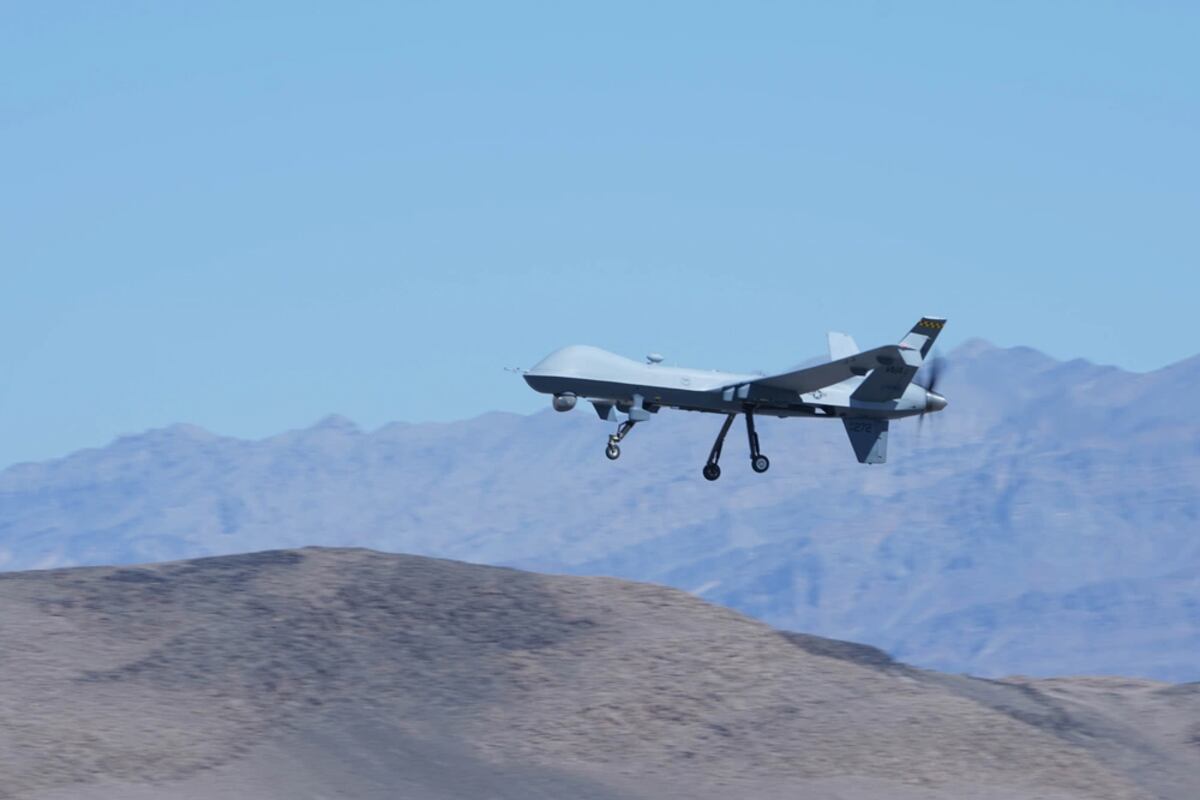
MILAN — The Netherlands is set to receive four additional MQ-9 Reaper drones that will carry guided bombs and missiles.
More than a decade after launching the process to buy MQ-9A Reapers from General Atomics Aeronautical Systems, the Dutch government announced it will not only double its order but also arm them for the first time.
“When the [Ministry of Defence] started the project in 2011, there was no need to arm the aircraft yet. However, the threat picture has changed considerably since then. The aircraft must now be able to protect the safety of its own troops,” Defence Secretary Christophe van der Maat wrote in a letter to parliament in May.
The Netherlands first signed a deal to purchase four unarmed MQ-9A Reaper Block 5 drones from the General Atomics division in 2018 that were solely intended for intelligence-gathering and surveillance missions. The U.S. company delivered the initial batch and associated ground control stations last year.
The MoD now plans to upgrade these systems to carry GBU-12 laser-guided bombs and AGM-114 Hellfire II air-to-surface missiles. The latter currently equip the AH-64 helicopters operated by the Royal Netherlands Air Force.
The Netherlands will buy the weapons from the U.S. government through the Foreign Military Sales program, and the package will cost between $108 million and $270 million, van der Maat said in his statement.
The aim is to have the first ammunition ready for initial deployment by 2025 so it can fully deploy in 2028.
On Aug. 21, General Atomics Aeronautical Systems confirmed in a news release that the Air Force was doubling the number of MQ-9As on order, taking the total quantity from four to eight unmanned aircraft. According to the manufacturer, with this new set of capabilities, the Netherlands will have the most capable set of Block 5 drones in the world.
“The expansion to eight aircraft will enable the Dutch MoD to support international missions on more than one axis, giving it the capability to operate the aircraft from one main operating base and two forward operating bases simultaneously,” Tom van Hout, a spokesperson for the ministry, told Defense News. “The sensor capacity of the platforms will also be improved with maritime surveillance radar and electronic support measures pods.”
The drones will be based and flown from the main operating location of Leeuwarden Air Base, and operated by the 306 Squadron. Van Hout noted that subject matter experts and liaison officers of the Royal Netherlands Navy will also support this squadron in specific naval operations.
The Dutch Reapers are not certified to fly in civil airspace alongside routine air traffic, but van Hout said the manufacturer “and partners” are working on this capability.
European countries have wrestled with the question of buying armed drones for years. As a result, most countries’ forces were only allowed to deploy unarmed drones for reconnaissance.
But evolving threats as well as Russia’s full-scale invasion of Ukraine in February 2022 triggered a wider appetite for arms and a change in defense policies.
In April 2022, Germany’s parliamentary Defence Committee approved for the first time the purchase of missiles to arm Israeli-made Heron TP drones.
In January 2023, Greece announced it is locally building its first combat drone, the Grypas, of which a scaled version is expected in 2025.
And while there has long been talk that Spain might arm its fleet of Reapers, there has been no official confirmation. Nonetheless, in July the Spanish government approved the purchase of nine Airbus-made SIRTAP packages, 27 drones total, that can conduct armed intelligence, surveillance and reconnaissance missions, according to Spanish news outlet Infodefensa.
Prior to this, in 2021, Italy revealed its intention to arm its Reapers, allocating $69 million for the effort over the next seven years.
Additionally, although France operates armed MQ-9s, it unveiled its new French-made Aarok combat drone at the 2023 Paris Air Show, which could rival the Reaper.
Belgium, however, has a large number of government officials who remain opposed to arming the country’s MQ-9B fleet based on ethical issues.
Elisabeth Gosselin-Malo was a Europe correspondent for Defense News. She covers a wide range of topics related to military procurement and international security, and specializes in reporting on the aviation sector. She is based in Milan, Italy.
米兰——荷兰将接收四架MQ-9“死神”无人机,这些无人机将携带制导炸弹和导弹。
在启动从通用原子航空系统公司购买 MQ-9A“死神”无人机的流程十多年后,荷兰政府宣布不仅将订单数量增加一倍,而且将首次为其配备武器。
“国防部在2011年启动该项目时,尚无必要为飞机配备武器。然而,自那时以来,威胁形势已发生显著变化。如今,该飞机必须能够保护己方部队的安全,”国防部长克里斯托夫·范德马特在5月份致议会的一封信中写道。
荷兰于2018年首次与通用原子公司签署协议,购买四架未配备武器的MQ-9A“死神”Block 5无人机,这些无人机仅用于情报收集和监视任务。这家美国公司于去年交付了首批无人机及相关地面控制站。
英国国防部计划升级这些系统,使其能够携带GBU-12激光制导炸弹和AGM-114“地狱火II”空对地导弹。后者目前装备于荷兰皇家空军的AH-64直升机上。
范德马特在声明中表示,荷兰将通过对外军售计划从美国政府购买这些武器,总价值在 1.08 亿美元至 2.7 亿美元之间。
目标是在 2025 年之前准备好第一批弹药进行初步部署,以便在 2028 年全面部署。
8月21日,通用原子航空系统公司在一份新闻稿中证实,美国空军将MQ-9A无人机的订单数量翻了一番,从4架增加到8架。据制造商称,凭借这些新增能力,荷兰将拥有世界上性能最强的Block 5无人机。
荷兰国防部发言人汤姆·范·豪特告诉《防务新闻》:“将飞机数量扩充至八架将使荷兰国防部能够支持多方面的国际任务,使其能够同时从一个主作战基地和两个前沿作战基地操作飞机。此外,这些平台的传感器性能也将得到提升,配备海上监视雷达和电子支援措施吊舱。”
这些无人机将以吕伐登空军基地为主要作战地点,并由第306中队操控。范·豪特指出,荷兰皇家海军的相关专家和联络官也将为该中队在特定海军行动中提供支持。
荷兰的“死神”无人机尚未获得在民用空域与常规空中交通一起飞行的认证,但范豪特表示,制造商“及其合作伙伴”正在努力实现这一能力。
欧洲各国多年来一直在争论是否应该购买武装无人机。因此,大多数国家的军队只被允许部署非武装无人机进行侦察。
但不断变化的威胁以及俄罗斯在 2022 年 2 月对乌克兰的全面入侵,引发了人们对武器的更大需求和国防政策的改变。
2022 年 4 月,德国议会国防委员会首次批准购买导弹,用于武装以色列制造的 Heron TP 无人机。
2023 年 1 月,希腊宣布正在本地建造其首款作战无人机 Grypas,预计 2025 年将推出其缩小版。
尽管长期以来一直有传言称西班牙可能会为其“死神”无人机机队配备武器,但官方尚未证实。不过,据西班牙新闻媒体Infodefensa报道,西班牙政府在7月份批准购买了9套空客公司制造的SIRTAP系统,共计27架无人机,这些无人机可以执行武装情报、监视和侦察任务。
在此之前,意大利在 2021 年透露了其武装“死神”无人机的计划,并在未来七年内为此拨款 6900 万美元。
此外,尽管法国拥有武装的 MQ-9 无人机,但它在 2023 年巴黎航展上推出了其新型法国制造的 Aarok 战斗无人机,该无人机可能与 Reaper 无人机相媲美。
然而,比利时有很多政府官员仍然反对为该国的 MQ-9B 机队配备武器,这是出于道德方面的考虑。
伊丽莎白·戈斯林-马洛曾任《防务新闻》欧洲通讯员。她的报道涵盖军事采购和国际安全等广泛领域,尤其擅长航空领域的报道。她常驻意大利米兰。