It’s hard times now — and ahead — for US-Russian nuclear arms control现在对美俄核军控而言,形势严峻,未来也充满挑战。
Opinion: U.S.-Russian nuclear arms control, as it has been practiced for the past five decades, may have run its course.
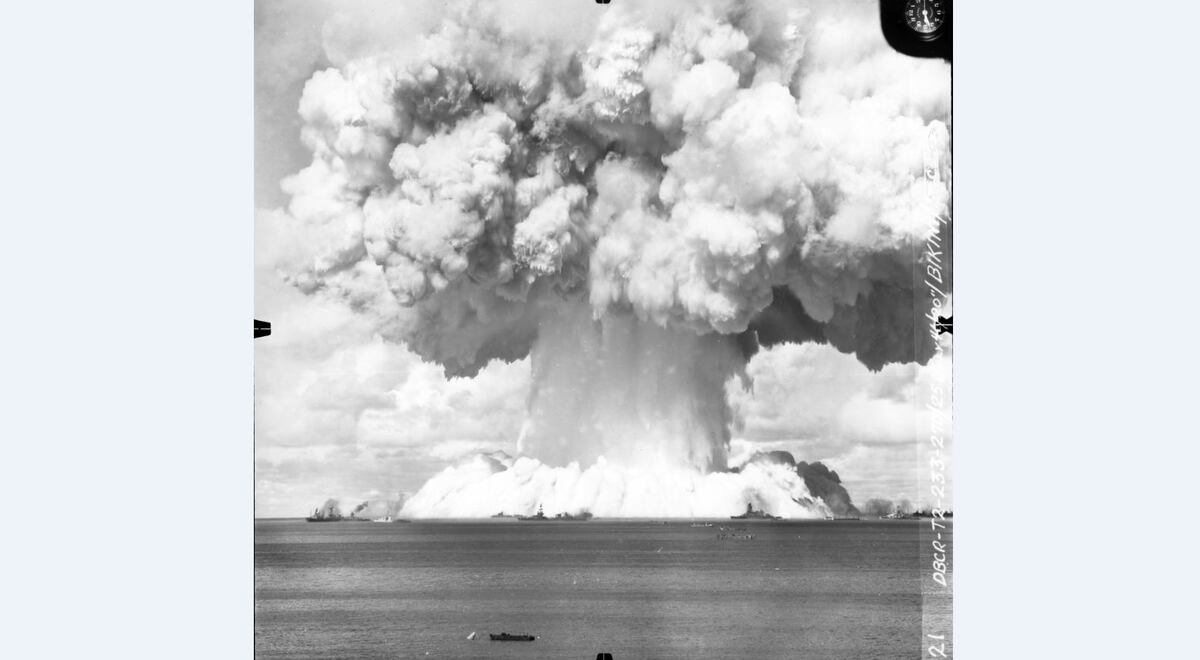
This summer’s blockbuster movie “Oppenheimer” tells the story of the scientists who developed the first U.S. atomic bombs during World War II. It also recounts how J. Robert Oppenheimer and others subsequently struggled to devise an approach to lessen the threat posed by the awesome weapons they had created. These efforts bore little fruit at the time. After the Soviet Union tested its first atomic bomb in August 1949, Washington and Moscow entered a massive arms race, each side stockpiling tens of thousands of nuclear weapons.
In the late 1960s, U.S. and Soviet diplomats began to negotiate a series of treaties that imposed increasing constraints on the numbers and, in some cases, capabilities of nuclear forces. Six agreements entered into force starting in 1972. The sole remaining one is the 2010 Treaty on Measures for the Further Reduction and Limitation of Strategic Offensive Arms, known as New START . Under its terms, each country can deploy no more than 700 long-range ballistic missiles and heavy bombers and mount no more than 1,550 nuclear warheads on those delivery systems — numbers far below those possessed by both sides during the Cold War.
One of U.S. President Joe Biden’s first foreign policy actions was to approve an extension of New START, which was due to expire less than three weeks after he entered office. Moscow followed suit.
New START is now slated to expire in February 2026 and cannot be extended. In June 2021, Biden and Russian President Vladimir Putin announced their two countries would conduct a “strategic stability” dialogue to lay groundwork for future restraints. Only three meetings were held before Russia launched its full-scale invasion of Ukraine , bringing the dialogue to a halt.
Shortly thereafter, New START began to unravel. In August 2022, Russia refused to allow the U.S. to conduct an on-site inspection at one of its military bases as permitted by the treaty. Moscow then backed out of a meeting to discuss matters related to its implementation.
In January 2023, the U.S. State Department informed Congress that it could no longer certify Russia was complying with the treaty. A month later, Putin “ suspended ” Russia’s participation in New START, saying it would no longer exchange required information on the status of its nuclear forces.
Despite these actions, Russian officials claim their country will continue to abide by New START limits on the numbers of deployed long-range nuclear forces. However, if New START collapses or is not replaced before it expires, these limits will no longer be legally binding. In this event, Russia could pursue several courses of action:
Maintain long-range nuclear forces at New START levels. For over two decades Russia has been replacing its Cold War-era nuclear delivery systems. Moscow might see its newly modernized force as sufficient to deter a major U.S. nuclear attack.
Upload additional nuclear warheads on existing long-range ballistic missiles. To stay within New START limits, Russia loads fewer warheads on those systems than they are capable of carrying. Moscow could choose to increase the number of deployed warheads to address its long-held concerns about future U.S. air and missile defenses.
Substantially build up its long-range nuclear forces. Moscow could feel it needs to bolster its nuclear capabilities to demonstrate that it remains a military superpower, despite the poor showing of its conventional forces in Ukraine. Russia has extensive infrastructure to manufacture nuclear warheads and produce new delivery systems.
A breakout from New START limits might not be a top Kremlin priority. It seems to be focused instead on expanding shorter-range nuclear systems to heighten Russia’s capacity to threaten Ukraine and NATO’s European allies, including by announcing plans to deploy such systems in neighboring Belarus .
Moreover, some in Moscow might be uneasy with the Kremlin’s irresponsible nuclear rhetoric. Recently, several prominent Russian arms control experts joined with former leaders and specialists from 50 countries to warn that the collapse or expiration of New START without a replacement “would threaten a destabilising arms race.”
A buildup of Russian long-range nuclear forces could have implications for U.S. nuclear policy. Even if an increase did not alter the strategic balance, political or diplomatic considerations could lead the U.S. to respond in militarily significant or visible ways.
Defense analysts have described U.S. policy options as ranging from “uploading” more warheads on existing delivery systems; to accelerating the ongoing programs to modernize the aging fleet of U.S. long-range ballistic missiles, bombers and submarines; to increasing the size of the planned U.S. nuclear force.
U.S.-Russian nuclear arms control, as it has been practiced for the past five decades, may have run its course. The prospect of negotiating a legally binding treaty to replace New START before it expires in 2026 diminishes with each day Russia’s war in Ukraine rages on and the Kremlin continues to take a hard line in dealing with the West.
Biden administration officials have already begun to talk in more modest terms of engaging Russia (and China) on ways to “manage nuclear risks and develop a post-2026 arms control framework.”
This approach is unlikely to produce meaningful outcomes any time soon. It is worth recalling that U.S.-Soviet arms control negotiations did not achieve agreements that actually reduced nuclear weapons or enhanced verification through on-site inspections until a liberalizing Soviet leader, Mikhail Gorbachev, ushered in glasnost and perestroika, and met face to face with President Ronald Reagan.
The next chapter in U.S.-Russia nuclear arms control, if there is to be one, may not be written until rulers in Moscow ease repression at home, pull troops out of Ukraine, and recognize the mutual benefits of reducing, rather than stoking, nuclear tensions.
Frank Klotz is an adjunct senior fellow at the think tank Rand. He previously led Air Force Global Strike Command and served as undersecretary of energy for nuclear security. William Courtney is also an adjunct senior fellow at Rand and a former U.S. ambassador to both Kazakhstan and Georgia, as well as a former deputy negotiator in U.S.-Soviet defense and space talks.
今年夏天上映的重磅电影《奥本海默》讲述了二战期间美国科学家们研制出第一批原子弹的故事。影片也回顾了罗伯特·奥本海默等人随后如何努力寻找方法来减轻他们所研制出的威力强大的武器所带来的威胁。然而,这些努力在当时收效甚微。1949年8月苏联成功试爆第一颗原子弹后,华盛顿和莫斯科之间爆发了大规模的军备竞赛,双方都囤积了数万枚核武器。
20世纪60年代末,美苏外交官开始谈判一系列条约,这些条约对核力量的数量,在某些情况下也包括其能力,施加了越来越大的限制。其中六项协议于1972年生效。目前唯一仍在生效的条约是2010年签署的《关于进一步削减和限制进攻性战略武器措施的条约》(简称《新START条约》)。根据该条约,每个国家部署的远程弹道导弹和重型轰炸机不得超过700枚,且这些运载系统上携带的核弹头不得超过1550枚——这些数字远低于冷战时期双方拥有的核力量。
美国总统乔·拜登上任后的首批外交政策举措之一,就是批准延长《新削减战略武器条约》(New START),该条约原定于他上任不到三周后到期。莫斯科随后也采取了同样的做法。
新版《削减战略武器条约》(New START)将于2026年2月到期,且无法延期。2021年6月,拜登和俄罗斯总统普京宣布两国将举行“战略稳定”对话,为未来的克制措施奠定基础。然而,在俄罗斯全面入侵乌克兰之前,双方仅举行了三次会谈,对话也随之中断。
此后不久,《新削减战略武器条约》开始瓦解。2022年8月,俄罗斯拒绝美国按照条约规定对其一处军事基地进行现场核查。随后,莫斯科退出了原定举行的关于条约执行情况的会谈。
2023年1月,美国国务院通知国会,已无法确认俄罗斯遵守该条约。一个月后,普京“暂停”了俄罗斯参与《新削减战略武器条约》,称俄罗斯将不再交换有关其核力量状况的必要信息。
尽管如此,俄罗斯官员声称该国将继续遵守《新削减战略武器条约》(New START)对部署远程核力量数量的限制。然而,如果《新削减战略武器条约》失效或在其到期前未被取代,这些限制将不再具有法律约束力。在这种情况下,俄罗斯可能会采取以下几种行动:
将远程核力量维持在《新削减战略武器条约》规定的水平。二十多年来,俄罗斯一直在替换其冷战时期的核武器运载系统。莫斯科可能认为,其新近现代化的核力量足以威慑美国的大规模核攻击。
在现有远程弹道导弹上加挂更多核弹头。为了遵守《新削减战略武器条约》的限制,俄罗斯在这些系统上装载的弹头数量少于其最大承载能力。莫斯科可以选择增加已部署的弹头数量,以应对其长期以来对美国未来防空和导弹防御系统的担忧。
大幅增强远程核力量。尽管莫斯科常规部队在乌克兰表现不佳,但它可能感到需要加强核能力,以证明自己仍然是一个军事超级大国。俄罗斯拥有制造核弹头和新型运载系统的完善基础设施。
突破《新削减战略武器条约》的限制可能并非克里姆林宫的首要任务。相反,它似乎更专注于扩充短程核武器系统,以增强俄罗斯威胁乌克兰和北约欧洲盟国的能力,包括宣布计划在邻国白俄罗斯部署此类系统。
此外,莫斯科内部一些人可能对克里姆林宫不负责任的核言论感到不安。最近,几位俄罗斯知名的军控专家与来自50个国家的前领导人和专家联名警告说,如果《新削减战略武器条约》失效或到期而没有替代方案,“将威胁到一场破坏稳定的军备竞赛”。
俄罗斯远程核力量的增强可能会对美国的核政策产生影响。即使这种增强不会改变战略平衡,政治或外交方面的考量也可能导致美国采取具有重大军事意义或引人注目的回应。
国防分析人士将美国的政策选项描述为:从在现有运载系统上“上传”更多弹头;到加快正在进行的现代化美国老旧远程弹道导弹、轰炸机和潜艇舰队的计划;再到增加计划中的美国核力量规模。
过去五十年来美俄之间奉行的核军控机制或许已经走到尽头。随着俄罗斯在乌克兰的战争持续不断,以及克里姆林宫在与西方打交道时继续采取强硬立场,在2026年《新削减战略武器条约》(New START)到期前达成一项具有法律约束力的条约以取代该条约的前景日益渺茫。
拜登政府官员已经开始以较为温和的措辞谈论与俄罗斯(和中国)就“管理核风险和制定 2026 年后军控框架”进行接触。
这种方法短期内不太可能取得实质性成果。值得注意的是,直到苏联领导人米哈伊尔·戈尔巴乔夫推行开放政策和改革,并与美国总统罗纳德·里根举行会晤后,美苏军控谈判才最终达成切实削减核武器或通过现场核查加强核查的协议。
美俄核军控的下一个篇章(如果真有的话)可能要等到莫斯科的统治者放松国内的镇压、从乌克兰撤军,并认识到减少而不是加剧核紧张局势对双方都有利之后才会书写。
弗兰克·克洛茨是兰德智库的兼职高级研究员。他曾任空军全球打击司令部司令,并担任过负责核安全的能源部副部长。威廉·考特尼也是兰德智库的兼职高级研究员,曾任美国驻哈萨克斯坦和格鲁吉亚大使,也曾担任美苏防务和太空谈判的副谈判代表。