Could MQ-9B drones draw Canada and Denmark closer in Arctic surveillance?MQ-9B无人机能否拉近加拿大和丹麦在北极监视领域的距离?
Both countries have ordered MQ-9B drones from General Dynamics, a hardware choice that some experts believe offers cooperation prospects in the High North.
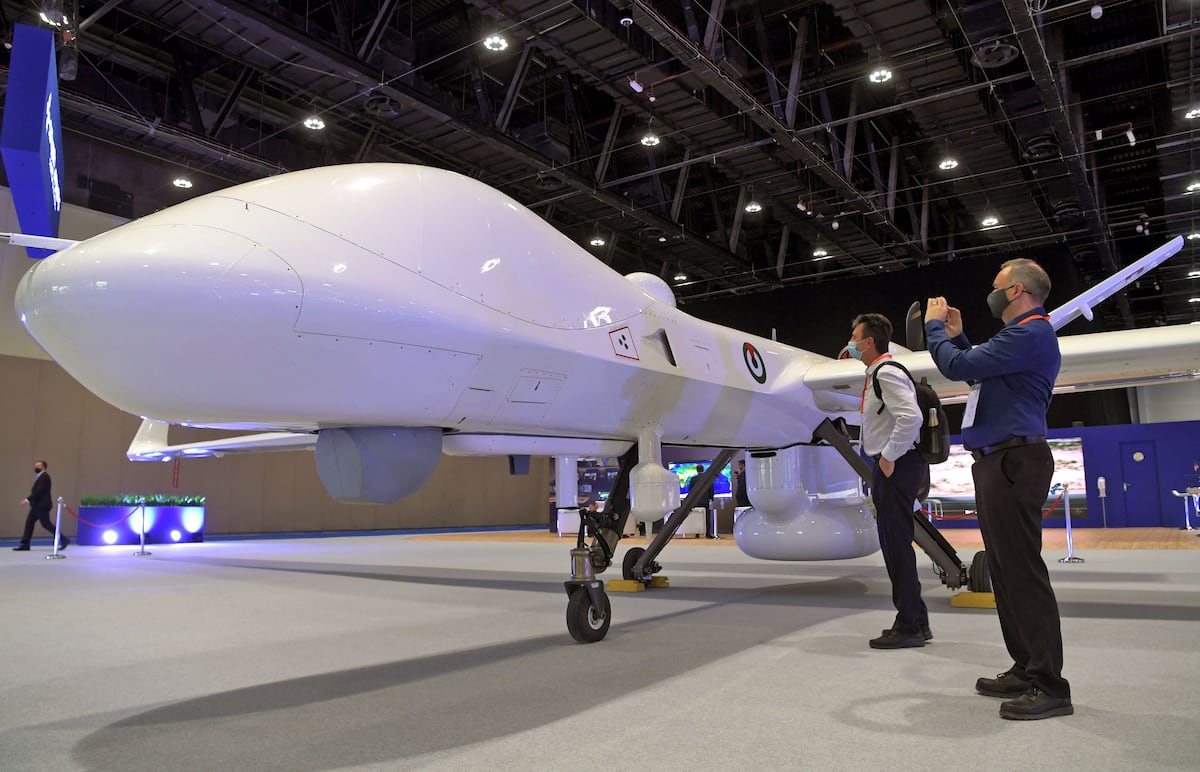
MILAN — Armed with a fresh defense-cooperation agreement, Denmark and Canada stand to exploit their shared use of MQ-9B drones as a practical touchpoint for Arctic surveillance, according to issue experts.
The Danish Air Force officially established Squadron 729 on Feb. 16, which will operate the four MQ-9B long-range unmanned aircraft out of Aalborg Air Base, located in northern Denmark, starting from 2028.
Earlier this month, Canada, which has acquired 11 of the same General Atomics-made drones that it will receive around the same time, signed a defense cooperation agreement with Denmark at the Munich Security Conference. The systems are planned to be based in different locations, including Nova Scotia on the east coast and British Columbia on the Canadian west coast.
The team-up brings together two Arctic nations that have repeatedly drawn the ire of Donald Trump since he assumed his second term as U.S. president in early 2025. Trump harbors a grudge against Canada for not wanting to be part of the United States, and against Denmark for having no interest in giving him the Danish autonomous territory of Greenland.
The defense-technical nexus around the MQ-9B drone holds promise in forging a closer connection between Ottawa and Copenhagen, as there is currently no formal maintenance-sharing or data-sharing arrangement between the two nations, according to issue experts.
“A joint logistics or maintenance hub would absolutely be strategically beneficial for them – maintaining equipment and operating bases in the region is very expensive – sharing facilities and having an integrated logistics system can make operations easier and more efficient for all parties involved,” Jens Marquard Sørensen, director of a Danish consulting company, said.
Still, both countries must first evaluate whether their operational plans match up.
For example, basing the Danish fleet at Aalborg Air Base would colocate the equipment with air force maintenance expertise there, but it’s a long way from strategic patrol points in Greenland, said Sørensen.
“The long distances [from Aalborg] to Greenland may pose operational challenges – flight times are long, increasing wear on drones before they arrive for a mission, and they would lose fuel going there. … It also means that any kind of rapid reaction using the MQ-9Bs is not possible, so having a forward operating station in the Arctic itself would be a notable advantage,” he said.
To put this into perspective, the straight-line distance between the Danish air base and Nuuk is approximately 3,324 kilometres (2,065 miles), and commercial jets covering the same route average flight times of about four to five hours.
Rune Raunow, a defense consultant at the Copenhagen-based Rethink Advisory, which advises the Danish Armed Forces, said a Denmark-Canada pact around the U.S.-made surveillance drones would be especially relevant for contingency plans, refueling or emergency landings.
Cooperation on sensors, too, could factor into the equation, Raunow said. While the Canadian government has opted for L3 Harris Wescam MX-20D sensor systems for intelligence and surveillance missions, Denmark has not publicly disclosed its preference.
“The drones are essentially just a platform; what will be more relevant is whether they will buy the same set of communication networks, sensors, optic detection systems, etc. … Being able to track threats in these very remote places would be extremely easier if they were using the same equipment,” Raunow said.
Canada’s MQ-9B purchase was driven by its need to bolster Arctic operations and provide continuous intelligence, surveillance, and reconnaissance, according to government statements.
While stationing its fleet in southern bases is consistent with existing airfields and maintenance infrastructure, these areas are still far from the high Arctic and other regional chokepoints, where the country has increased monitoring needs.
Sørensen suggests that if NATO was to re-open the Keflavík Air Base in Iceland, as a common allied base, even just for emergencies, it could also serve as a possible site for the countries’ MQ-9B fleets. He noted that this location is the easiest point for patrolling north, east, and south of Greenland.
Keflavík Air Base was closed in 2006 and was primarily operated by the U.S. Navy on behalf of NATO. Today, allies conduct routine and rotational fighter and bomber deployments from there, focused on air policing missions.
As a member of NATO, Iceland has no armed forces of its own.
Sørensen added that its position south of the Arctic Circle makes operations easier and less prone to weather-related disruptions, offering a closer alternative than flying from Nuuk or Canada.
“Shipping routes are also always open year-round, making it cheaper to maintain a station or base than anywhere else in the region – technicians, spare parts or even larger equipment can be transported relatively cheaply via regular civilian shipping routes versus shipping to Greenland, which can cost up to 20$ per kilogram in some areas,” Sørensen said.
Other locations to consider may include Northern Canada, which Hans Peter Michaelsen, a defense analyst and former member of the Royal Danish Air Force, highlights as geographically close to the Danish Arctic territory. However, he notes that many of these areas face significant infrastructure limitations that would obstruct the construction of year-round drone facilities.
Elisabeth Gosselin-Malo was a Europe correspondent for Defense News. She covers a wide range of topics related to military procurement and international security, and specializes in reporting on the aviation sector. She is based in Milan, Italy.
米兰——据相关领域的专家称,凭借一项新的防务合作协议,丹麦和加拿大将利用其共同使用 MQ-9B 无人机作为北极监视的实用触点。
丹麦空军于 2 月 16 日正式成立了第 729 中队,该中队将从 2028 年开始在位于丹麦北部的奥尔堡空军基地操作四架 MQ-9B 远程无人机。
本月初,加拿大在慕尼黑安全会议上与丹麦签署了一项防务合作协议。加拿大已采购了11架通用原子公司制造的无人机,并将于大致同一时间接收。这些无人机计划部署在不同地点,包括东海岸的新斯科舍省和西海岸的不列颠哥伦比亚省。
此次合作将两个北极国家聚集在一起,自唐纳德·特朗普于2025年初就任美国总统第二任期以来,这两个国家屡次激怒了他。特朗普对加拿大怀恨在心,因为加拿大不愿成为美国的一部分;他对丹麦也怀恨在心,因为丹麦无意将丹麦的自治领土格陵兰岛割让给他。
据该领域专家称,MQ-9B无人机的国防技术联系有望在渥太华和哥本哈根之间建立更紧密的联系,因为目前两国之间还没有正式的维护共享或数据共享安排。
丹麦咨询公司董事 Jens Marquard Sørensen 表示:“联合物流或维护中心对他们来说绝对具有战略优势——在该地区维护设备和运营基地成本非常高昂——共享设施和拥有一体化的物流系统可以使所有相关方的运营更加轻松高效。”
不过,两国首先必须评估各自的行动计划是否一致。
索伦森说,例如,将丹麦机队驻扎在奥尔堡空军基地,可以将设备与空军维护技术集中在一起,但这距离格陵兰岛的战略巡逻点很远。
“从奥尔堡到格陵兰岛的漫长距离可能会带来行动上的挑战——飞行时间长,会增加无人机在执行任务前到达目的地前的损耗,而且飞行途中还会消耗燃料。……这也意味着使用MQ-9B无人机进行任何快速反应都是不可能的,因此在北极地区设立前沿作战站将是一个显著的优势,”他说道。
为了便于理解,丹麦空军基地与努克之间的直线距离约为 3,324 公里(2,065 英里),而商业喷气式飞机飞越同一航线的平均飞行时间约为四到五个小时。
总部位于哥本哈根的 Rethink Advisory 公司的国防顾问 Rune Raunow 表示,丹麦和加拿大就美国制造的侦察无人机达成协议,对于应急计划、加油或紧急着陆尤其重要。Rethink Advisory 为丹麦武装部队提供咨询服务。
劳诺表示,传感器方面的合作也可能是一个重要因素。虽然加拿大政府已选择L3 Harris Wescam MX-20D传感器系统用于情报和监视任务,但丹麦尚未公开表明其选择。
“无人机本质上只是一个平台;更重要的是它们是否会采购同一套通信网络、传感器、光学探测系统等等……如果它们使用相同的设备,那么在这些非常偏远的地方追踪威胁将会变得极其容易,”劳诺说。
据政府声明,加拿大购买 MQ-9B 无人机是为了加强其在北极地区的行动,并提供持续的情报、监视和侦察。
虽然将机队部署在南部基地符合现有的机场和维护基础设施,但这些地区仍然远离北极高地和其他区域咽喉要道,而该国在这些地区有着日益增长的监测需求。
索伦森建议,如果北约重新启用位于冰岛的凯夫拉维克空军基地,作为盟军共同基地,即使仅用于紧急情况,该基地也可以作为各国MQ-9B无人机机队的潜在驻地。他指出,该地点是巡逻格陵兰岛北部、东部和南部最便捷的地点。
凯夫拉维克空军基地于2006年关闭,主要由美国海军代表北约运营。如今,盟国从那里进行例行和轮换的战斗机和轰炸机部署,主要任务是空中警戒。
作为北约成员国,冰岛没有自己的武装部队。
索伦森补充说,由于其位于北极圈以南,运营更加便捷,受天气影响较小,因此比从努克或加拿大起飞更方便。
索伦森说:“航运路线全年畅通,因此维护一个站点或基地比该地区其他任何地方都便宜——技术人员、备件甚至更大的设备都可以通过常规民用航运路线相对便宜地运输,而运往格陵兰岛的成本在某些地区可能高达每公斤 20 美元。”
其他可考虑的地点包括加拿大北部,国防分析师、丹麦皇家空军前成员汉斯·彼得·米凯尔森指出,该地区地理位置靠近丹麦北极地区。然而,他也指出,这些地区大多面临基础设施严重不足的问题,这将阻碍全年运行的无人机设施的建设。
伊丽莎白·戈斯林-马洛曾任《防务新闻》欧洲通讯员。她的报道涵盖军事采购和国际安全等广泛领域,尤其擅长航空领域的报道。她常驻意大利米兰。