Estonia begins buying hundreds of pop-up bunkers to fortify border with Russia爱沙尼亚开始购买数百个简易掩体,以加强与俄罗斯的边境防御。
The Baltic nations are installing a variety of border security features meant to repel an invasion from Russia or Belarus.
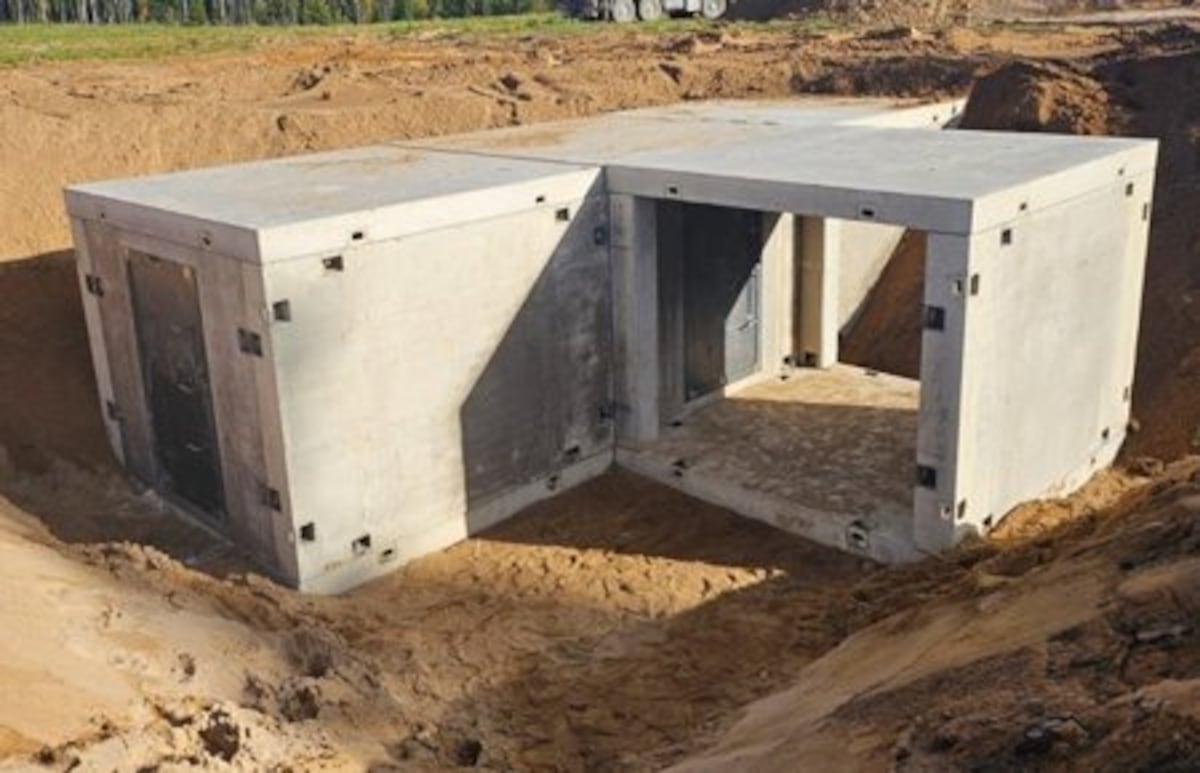
BERLIN — Estonia has started public procurement of 600 modular bunkers as part of a joint push by the Baltic states to secure their long border with Russia and Belarus, marking a crucial next phase in the region’s ambitious fortification drive.
The Estonian Centre for Defence Investments announced the competitive negotiated procurement on Feb. 19, seeking companies capable of manufacturing and delivering large quantities of concrete structures to Baltic Defence Line storage areas. The tender has been published in the Estonian Public Procurement Register.
The Baltic Defence Line is a joint initiative of Estonia, Latvia and Lithuania designed to ensure military defense from what officials describe as “the first meter of national territory.” It’s a real-world reflection of NATO’s doctrinal departure from earlier thinking that had tolerated trading Baltic territory for time, pending reinforcement from allies.
Latvia’s Ministry of Defence has expressed interest in joining the bunker procurement and is in talks with Tallinn about potential involvement, Estonian officials said. Though the Baltic Defense line is a joint project across Estonia, Latvia and Lithuania, the procurement and construction work under the project has largely been independent.
Asko Kivinuk, deputy director general of the ECDI, pointed to the economic logic of Baltic cooperation. “A joint procurement enables cost savings through economies of scale,” he said. Estonia has allocated €60 million ($71 million) to the project.
“The first bunkers for the Baltic Defence Line have already been delivered, and their installation is progressing step by step in Southeast and Northeast Estonia,” Kivinuk said. “The experience gained gives us the confidence to move forward with a larger-scale procurement.”
Estonia says all previously acquired “counter-mobility assets” have been positioned in pre-designated storage areas. Work on an anti-mobility trench system is also underway. ECDI’s stated goal is a speedy completion of the Baltic Defence Line by the end of 2027.
Defense News reported in December that Estonia had deployed the first five bunkers along the line, a symbolic milestone aimed at gaining experience with the quick and effective deployment of the modular buildings.
At the time, Estonian officials said in an interview that there were unanticipated challenges with terrain, land ownership, and production costs that had to be ironed out before full-scale construction could commence.
Estonian media report that nine bunkers have been installed to date.
Linus Höller is Defense News' Europe correspondent and OSINT investigator. He reports on the arms deals, sanctions, and geopolitics shaping Europe and the world. He holds master’s degrees in WMD nonproliferation, terrorism studies, and international relations, and works in four languages: English, German, Russian, and Spanish.
柏林——爱沙尼亚已开始公开采购 600 个模块化掩体,这是波罗的海三国为加强与俄罗斯和白俄罗斯漫长边界的安全而共同努力的一部分,标志着该地区雄心勃勃的防御工事建设行动进入了至关重要的下一个阶段。
爱沙尼亚国防投资中心于2月19日宣布启动竞争性谈判采购,旨在寻找能够为波罗的海防线储存区生产和交付大量混凝土结构的公司。该招标已在爱沙尼亚公共采购登记册上发布。
波罗的海防线是爱沙尼亚、拉脱维亚和立陶宛的联合倡议,旨在确保从官方所称的“国家领土第一米”开始的军事防御。这体现了北约在理论上的转变,即不再容忍为了争取时间而牺牲波罗的海领土,等待盟国增援。
据爱沙尼亚官员透露,拉脱维亚国防部已表示有意参与掩体采购项目,并正与塔林方面就潜在参与事宜进行磋商。尽管波罗的海防线是爱沙尼亚、拉脱维亚和立陶宛三国的联合项目,但该项目的采购和建设工作大多各自独立进行。
爱沙尼亚经济发展委员会(ECDI)副总干事阿斯科·基维努克指出,波罗的海国家开展合作具有经济意义。“联合采购能够通过规模经济降低成本,”他说道。爱沙尼亚已为该项目拨款6000万欧元(约合7100万美元)。
“波罗的海防线的首批掩体已经交付,目前正在爱沙尼亚东南部和东北部逐步安装,”基维努克说。“积累的经验使我们有信心推进更大规模的采购。”
爱沙尼亚方面表示,此前所有采购的“反机动装备”均已部署在预先指定的储存区域。反机动战壕系统的建设工作也在进行中。爱沙尼亚国防工业公司(ECDI)的目标是在2027年底前迅速完成波罗的海防线的建设。
《防务新闻》12 月报道称,爱沙尼亚已沿防线部署了首批五个掩体,这是一个具有象征意义的里程碑,旨在积累快速有效部署模块化建筑的经验。
当时,爱沙尼亚官员在接受采访时表示,在地形、土地所有权和生产成本方面存在一些意想不到的挑战,这些问题必须得到解决,才能开始全面建设。
据爱沙尼亚媒体报道,目前已建成九个掩体。
林努斯·霍勒是《防务新闻》的欧洲记者和开源情报调查员。他报道影响欧洲乃至全球的军火交易、制裁和地缘政治。他拥有大规模杀伤性武器不扩散、恐怖主义研究和国际关系三个硕士学位,并精通英语、德语、俄语和西班牙语四种语言。