Explainer-Five things to know about the college sports bill that passed the US Senate解读——关于美国参议院通过的大学体育法案,你需要了解的五件事
WASHINGTON, Sept 29 (Reuters) - The US Senate passed legislation this week to regulate college sports, a multibillion-dollar industry that has been upended in recent years by increased earning opportunities for student athletes.
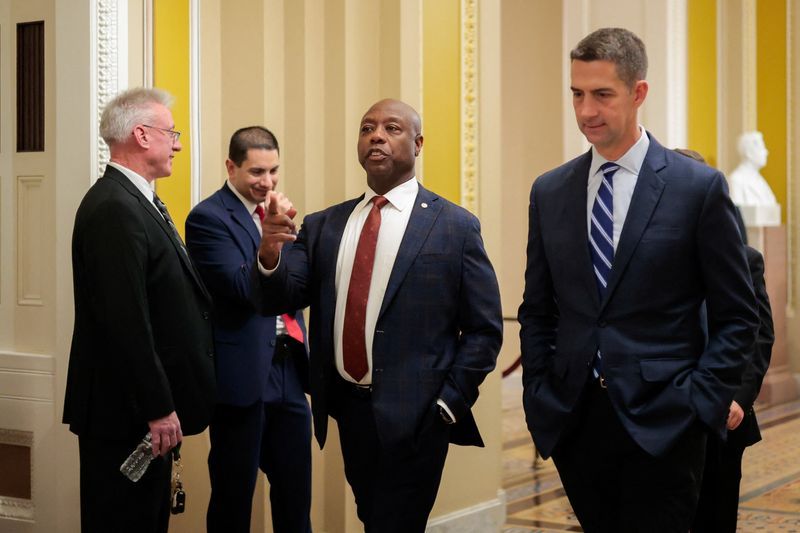
US Senator Tim Scott (R-SC) and Senator Tom Cotton (R-AR) walk through the US Capitol ahead of a Senate vote on the "Protect College Sports Act" on Capitol Hill in Washington, D.C., US, September 28, 2026. REUTERS/Kylie Cooper
WASHINGTON, Sept 29 (Reuters) - The US Senate passed legislation this week to regulate college sports, a multibillion-dollar industry that has been upended in recent years by increased earning opportunities for student athletes.
Here are five things to know about the bill's passage:
WHAT JUST HAPPENED?
The Senate voted 77-22 on Monday evening to pass the proposal, which now heads to the US House of Representatives.
HOW WOULD IT CHANGE COLLEGE SPORTS?
The proposal would create national standards around student athlete transfers, eligibility and compensation for name, image and likeness use.
It would permit one school transfer "without losing or delaying eligibility to participate." A student athlete who transferred institutions a second time would be ineligible for one year aside from four exceptions including the departure of a head coach, sexual assault or harassment and the discontinuation of a sport.
Student athletes would also be limited to five years of eligibility with exceptions for pregnancy, religious missions, active-duty military service and a "serious athletic injury or medical condition."
The measure would protect student athletes' rights to NIL compensation and require disclosure of NIL deals that exceed $600.
IS IT CONTROVERSIAL?
The legislation includes several controversial components. For example, its national standards on transfers, eligibility and name, image and likeness deals would preempt state laws. More than 30 states have already enacted their own name, image and likeness laws.
The bill sidesteps one of college sports' biggest legal battles: whether the athletes should be classified as employees rather than students participating in extracurricular activities.
The proposal allows athletes to sue to enforce its provisions, rather than requiring arbitration, though critics say lawsuits are burdensome to individuals.
"Student-athletes often have limited time, resources, and legal expertise," Senator Lisa Blunt Rochester, a Delaware Democrat, said in a statement. "They should not bear primary responsibility for identifying violations and suing their schools or athletic programs to secure the protections provided by the bill."
Blunt Rochester also warned that Congress should not lock in terms "that could limit student-athletes' ability to negotiate or collectively bargain over them in the future."
Fifty of the chamber's 53 Republicans supported the legislation. Senator Dan Sullivan of Alaska did not vote. Senators Rick Scott of Florida and Rand Paul of Kentucky opposed it. Paul proposed an amendment that would have gutted the bill. Paul's amendmentwas overwhelmingly rejected, failing 1-94 with only Paul voting in favor of it.
Twenty-seven members of the Democratic Caucus backed the legislation.
Opponents said the measure could limit athletes' leverage in future labor and antitrust disputes, even as it created new health, safety and compensation protections.
The measure now moves to the House, which has recessed until after November 3's midterm elections. A majority of the 433-member House — two seats are vacant — would have to approve the bill to send it to President Donald Trump's desk to be signed into law.
(Reporting by Nolan D. McCaskill; additional reporting by Andy Sullivan; Editing by Michael Learmonth and Cynthia Osterman)
Thank you for your report!
2026年9月28日,美国参议员蒂姆·斯科特(南卡罗来纳州共和党籍)和汤姆·科顿(阿肯色州共和党籍)在华盛顿特区国会山,于参议院就《保护大学体育法案》进行投票前,走过国会大厦。路透社/凯莉·库珀摄
华盛顿,9 月 29 日(路透社)——美国参议院本周通过了一项法案,旨在规范大学体育。大学体育是一个价值数十亿美元的产业,近年来,由于学生运动员收入机会的增加,该产业发生了翻天覆地的变化。
以下是关于该法案通过的五件需要了解的事情:
刚才发生了什么?
周一晚间,参议院以 77 比 22 的投票结果通过了这项提案,该提案现在将提交给美国众议院。
它将如何改变大学体育?
该提案将制定有关学生运动员转学、资格以及姓名、肖像和形象使用补偿的国家标准。
该规定允许学生运动员转学一次,“不会丧失或延迟参赛资格”。学生运动员第二次转学将被取消参赛资格一年,但有四种例外情况,包括主教练离职、性侵犯或性骚扰以及停止参加某项运动。
学生运动员的参赛资格也将限制在五年以内,但怀孕、宗教使命、现役军人服役以及“严重的运动损伤或疾病”除外。
该措施将保护学生运动员获得姓名、形象和肖像权补偿的权利,并要求披露超过 600 美元的姓名、形象和肖像权交易。
它有争议吗?
该法案包含几项颇具争议的内容。例如,其关于球员转让、资格以及姓名、肖像和形象权交易的全国性标准将凌驾于各州法律之上。目前已有超过30个州颁布了各自的姓名、肖像和形象权法律。
该法案回避了大学体育界最大的法律争论之一:运动员是否应该被归类为雇员,而不是参加课外活动的学生。
该提案允许运动员通过诉讼来强制执行其条款,而不是要求进行仲裁,但批评人士表示,诉讼对个人来说是一种负担。
“学生运动员往往时间、资源和法律专业知识有限,”特拉华州民主党参议员丽莎·布伦特·罗切斯特在一份声明中表示,“他们不应该承担发现违规行为并起诉学校或体育项目以获得该法案所赋予的保护的主要责任。”
布朗特·罗切斯特还警告说,国会不应该锁定“可能限制学生运动员未来就此进行谈判或集体协商能力”的条款。
参议院53名共和党议员中有50人支持这项法案。阿拉斯加州参议员丹·沙利文没有投票。佛罗里达州参议员里克·斯科特和肯塔基州参议员兰德·保罗投了反对票。保罗提出了一项修正案,旨在彻底废除该法案。保罗的修正案遭到压倒性否决,以1比94的投票结果被否决,只有保罗本人投了赞成票。
民主党党团会议的27名成员支持这项法案。
反对者表示,这项措施虽然带来了新的健康、安全和补偿保护,但可能会限制运动员在未来的劳资纠纷和反垄断纠纷中的筹码。
该法案现在提交众议院审议,众议院已休会至11月3日中期选举之后。众议院共有433个席位(目前有两个席位空缺),需要获得多数票通过才能将其送交唐纳德·特朗普总统签署生效。
(诺兰·D·麦卡斯基尔报道;安迪·沙利文补充报道;迈克尔·利尔蒙斯和辛西娅·奥斯特曼编辑)
感谢您的报告!