This Image Of A Naval Strike Missile Launch Shows A Key Tenet Of Stealth Design这张海军打击导弹发射的图片展示了隐身设计的一个关键原则。
The Navy's newest ship-killing missile features critical stealth technology that dates back to the SR-71 Blackbird and its predecessor.
新闻视频
Updated Dec 1, 2019 6:03 AM EST
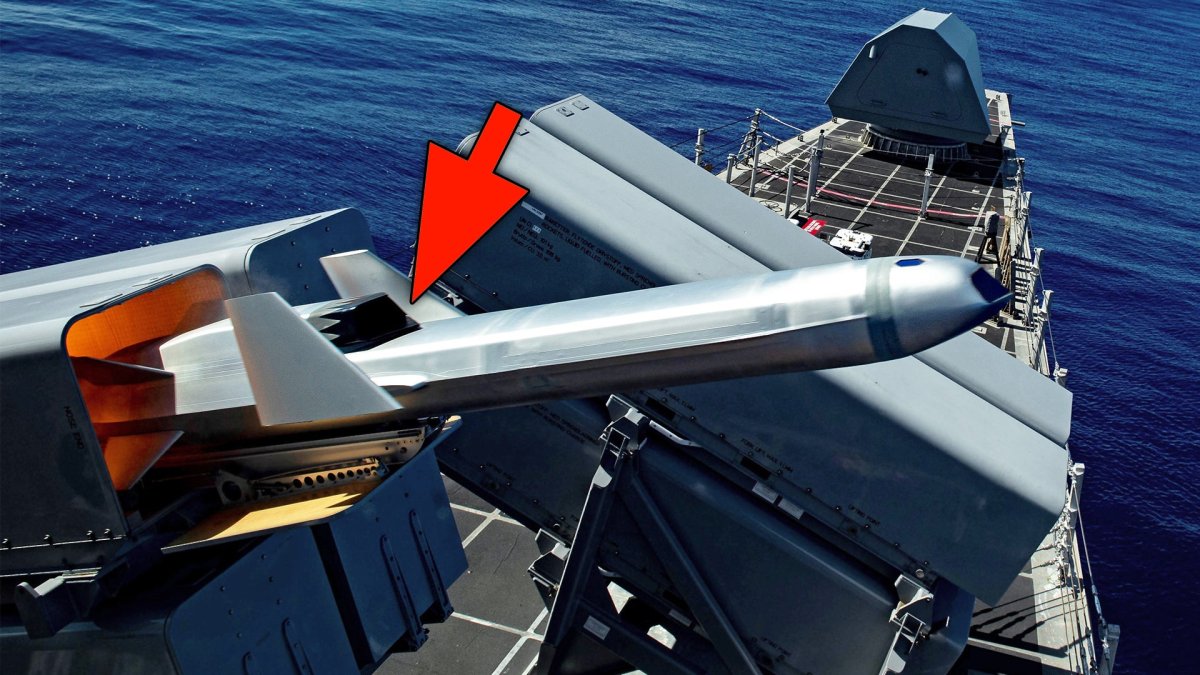
The Independence class Littoral Combat Ship USS Gabrielle Giffords (LCS-10) is in the waters off Guam taking part in exercise Pacific Griffin, during which she fired off a Naval Strike Missile (NSM). This is a big deal considering giving the LCS more combat punch and a far longer kinetic reach has been a long time coming and the Naval Strike Missile is an incredibly capable and relevant weapon , as is its even more advanced cousin, the Joint Strike Missile . Images and video from the launch were interesting, but one image, in particular, serves as a unique example of one of the basic tenets of low-observable “stealth” design.
The Navy Strike Missile, which is a product of Norway’s Kongsberg Defense and Aerospace, was designed with reduced radar cross-section in mind, and especially from the head-on aspect from which it will barrel towards its maritime target. The missile uses passive imaging infrared, not radar, to locate and attack its prey. As a result, it doesn’t give away its presence by emitting RF radiation during its terminal phase of flight. It also isn’t susceptible to ‘soft kill’ electronic warfare tactics like jamming. In addition, its small radar cross-section makes it hard to spot on radar as it skims low and fast over the waves.
Generally speaking, warships depend on a missile’s radar emissions and its radar signature to detect it and defend against it. Lacking one of these things entirely and manifesting the other in very limited quantities, you can imagine that the Naval Strike Missile is one diabolical and deadly anti-ship cruise missile. Oh, it also has a secondary land-attack capability, too.
Beyond its faceted nose, trapezoidal airframe, and chined edges, the NSM achieves its low radar cross-section via the incorporation of composite structures. But just using composites for a missile’s wings and tail surfaces does not provide a high degree of low observability in itself. Using composites creatively along with underlying radar defeating shapes and structures does. It also happens to be a major low-observable trick that dates back to the dawn of stealth technology.
You can see a great example of this type of stealthy design application on the intake of the NSM. Note the sawtooth edges surrounding the intake. That is a proven way to deflect radar energy away from its source and especially from the head-on aspect, which is where the most threatening radar systems will be pointing at the NSM as it makes its kamikaze run at its naval target. But that type of sawtooth structure isn’t the most conducive for an air inlet design, or for airframe design in general. The air inlet must provide consistent and even airflow to the jet engine buried at the end of its serpentine duct—also another stealth design trick .
So, a seamless composite fairing that is translucent to the radar bands that are most likely to threaten such a missile is placed over the sawtooth edge. This provides the best of both worlds—low observability via a sawtooth leading edge, while the air doesn’t know the difference between a composite structure or a metallic one, and the radars that matter most don’t even “see” the fairing at all. It works very much like a composite radome on the nose of an aircraft, providing an aerodynamic necessity without being opaque to the radar’s beams.
While we are most accustomed to hearing about radar-absorbent coatings on the skin of stealthy aircraft, these composite structures may be left without those coatings, letting the RF energy in to be dealt with via the structures and material it conceals, instead of attenuating it just by surface coatings and shape.
You can see a very similar treatment was used in the creation of what would become known as the Blackbird family of legendary high-speed spyplanes. These aircraft were the first operational planes that incorporated low-observable technologies as major components of their designs., Lockheed/Public Domain
This type of arrangement, and far more advanced ones, are used in low-observable aircraft like the F-117, B-2, F-22, F-35, and J-20 . For instance, the frontal area of a trapezoidal air inlet on a fighter jet may actually be a large composite structure that is invisible to certain radar frequencies, while concealing complex radar defeating structures and material underneath. A long and smooth wing leading edge may actually conceal highly intricate geometric structures that work as radar baffles and are buried below a radar translucent composite outer skin and a layer of radar-absorbing filler. We saw a glimpse of this recently when an F-22 with crumbling skin was flown to an air show. You can read my exclusive writeup on this unique peek into the shadowy world of low-observable design by clicking here .
The U.S. no longer has a monopoly on stealth technology. China’s J-20 is a remarkable aircraft considering it is the country’s first low observable production aircraft., Chinese Internet
You can see similar composite edge structures and sawtooth arrangements on this unpainted J-20., Chinese Internet
Sometimes people superficially conclude there are ‘radar traps’ in certain areas of stealth aircraft just by looking at them. But what they may not realize is that even though a certain airframe component looks solid and opaque, it isn’t to radar and structures are concealed below them that deflect and attenuate radar returns. This ability to build almost two different airframes in one—one that is an aerodynamic and stealthy shaped outer shell of sorts, and one that sits below the skin with areas that provide massive decreases in radar reflectivity where it’s needed most, is truly fascinating. The fact that this is able to happen at all also creates the possibility that low-observable design teams and aerodynamic design teams can get to a point where both are satisfied while working together on a high-performance stealth aircraft.
The F-22’s outer shell conceals advanced low observable technologies and material science that lies beneath., Air Force photo by Bill Orndorff
The big takeaway here is that the blended relationship between these substructures and outer skins are usually not apparent when viewing stealthy aircraft visually. Their smooth skin can actually make stealthy aircraft look eerily simple in appearance, but an entirely different world lies beneath, and especially in key areas. This reality makes stealth aircraft even more of a technological accomplishment than they already appear to be, especially considering some of these designs are meant to be battered ruthlessly and heated and cooled for thousands of hours as they careen through the air under high G forces and rip across the sky at supersonic speeds.
So, just remember, when it comes to stealthy aircraft and missiles, they are truly so much more than what meets the eye.
Hat tip to @divert_thruster on Twitter for posting the Navy shots
Contact the author: Tyler@thedrive.com
Comments couldn’t be loaded. Please refresh the page.
更新于美国东部时间2019年12月1日上午6:03
“独立”级濒海战斗舰“加布里埃尔·吉福兹”号(LCS-10)正在关岛附近海域参加“太平洋狮鹫”演习,期间发射了一枚海军打击导弹(NSM)。考虑到增强濒海战斗舰的作战能力和更远的射程早已势在必行,而海军打击导弹及其更先进的同系武器——联合打击导弹——都是一款性能卓越且极具实用价值的武器,因此此次发射意义重大。发射现场的图片和视频引人入胜,其中一张图片尤其独特,完美诠释了低可探测性“隐身”设计的基本原则之一。
这款由挪威康斯伯格防务与航空航天公司生产的海军打击导弹,在设计之初就充分考虑了降低雷达反射截面积,尤其是在迎头攻击海上目标时。该导弹采用被动成像红外技术而非雷达来定位和攻击目标。因此,它在飞行末段不会发射射频辐射,从而避免暴露自身位置。此外,它也不易受到干扰等“软杀伤”电子战战术的影响。更重要的是,其极小的雷达反射截面积使其在低空高速掠过海面时难以被雷达探测到。
一般来说,军舰依靠导弹的雷达辐射和雷达特征来探测和防御。海军打击导弹完全缺乏其中一项特征,而另一项特征又极其有限,可想而知,它是一种极其邪恶且致命的反舰巡航导弹。哦,对了,它还具备对陆攻击能力。
除了多面体弹头、梯形弹体和棱角分明的边缘外,NSM导弹还通过复合材料结构实现了极低的雷达反射截面。然而,仅仅在导弹的机翼和尾翼上使用复合材料本身并不能提供高度的隐蔽性。只有巧妙地将复合材料与潜在的雷达反导形状和结构相结合,才能真正实现这一点。这恰好也是一项重要的低可探测性技巧,其历史可以追溯到隐身技术的萌芽时期。
在NSM的进气口上,你可以看到这种隐身设计应用的绝佳范例。请注意进气口周围的锯齿状边缘。这是一种行之有效的偏转雷达能量的方法,尤其能够有效阻挡正面雷达波——NSM在向海上目标发起“神风特攻”时,最危险的雷达系统往往会瞄准正面。但是,这种锯齿状结构并非最适合进气口设计,甚至对机身设计本身也并非最佳选择。进气口必须为位于其蜿蜒管道末端的喷气发动机提供稳定均匀的气流——这也是隐身设计的另一项技巧。
因此,在锯齿状前缘上覆盖了一层对最有可能威胁到此类导弹的雷达波段透明的无缝复合材料整流罩。这兼顾了两种优势:锯齿状前缘可降低导弹的可探测性,同时空气无法区分复合材料结构和金属结构,而最重要的雷达甚至根本“看不到”这层整流罩。它的工作原理与飞机机头上的复合材料雷达罩非常相似,既满足了空气动力学的必要性,又不会阻挡雷达波束。
虽然我们最常听到的是隐形飞机蒙皮上的雷达吸波涂层,但这些复合材料结构可能没有这些涂层,让射频能量进入,通过其隐藏的结构和材料来处理,而不是仅仅通过表面涂层和形状来衰减它。
你可以看到,在后来被称为“黑鸟”系列传奇高速间谍飞机的研发过程中,也采用了非常类似的处理方法。这些飞机是首批将低可探测性技术作为其主要设计组成部分的作战飞机。(洛克希德/公共领域)
这种设计,以及更先进的设计,被应用于F-117、B-2、F-22、F-35和J-20等低可探测性飞机上。例如,战斗机梯形进气口的正面可能实际上是一个大型复合材料结构,在某些雷达频率下不可见,同时其下方还隐藏着复杂的雷达屏蔽结构和材料。修长光滑的机翼前缘实际上可能隐藏着高度复杂的几何结构,这些结构起到雷达挡板的作用,并被埋在半透明的复合材料外壳和一层雷达吸波填充物之下。最近,一架蒙皮破损的F-22战斗机飞抵航展,让我们得以一窥这种设计。点击此处,即可阅读我关于此次低可探测性设计神秘世界的独特报道。
美国不再垄断隐形技术。中国的歼-20是一款卓越的飞机,因为它是中国首款低可探测性量产飞机。(中国互联网)
在这架未涂装的歼-20上,你可以看到类似的复合边缘结构和锯齿状排列。(中国互联网)
有时人们仅凭肉眼观察就断定隐形飞机的某些区域存在“雷达陷阱”。但他们可能没有意识到,即使某个机身部件看起来坚固不透明,雷达也未必能探测到它,其下方隐藏着能够偏转和衰减雷达反射的结构。这种将近乎两种不同的机身结构合二为一的能力——一种是符合空气动力学原理且具有隐形外形的外壳,另一种则是位于其下方、能够大幅降低雷达反射率(尤其是在最需要的地方)的结构——着实令人叹为观止。而这种能力的实现,也使得低可探测性设计团队和空气动力学设计团队能够携手合作,共同打造高性能隐形飞机,并最终达成双方都满意的目标。
F-22战斗机的外壳下隐藏着先进的低可探测性技术和材料科学。(美国空军照片,摄影:比尔·奥恩多夫)
这里最重要的启示是,隐形飞机的底层结构与外壳之间的融合关系通常从视觉上难以察觉。它们光滑的外壳实际上会让隐形飞机看起来异常简洁,但其内部,尤其是在关键区域,却隐藏着一个截然不同的世界。考虑到有些隐形飞机的设计需要经受严酷的考验,在高过载和超音速飞行中,承受数千小时的反复加热和冷却,以及无情的冲击,这一事实更凸显了隐形飞机的技术成就。
所以,请记住,隐形飞机和导弹远比我们看到的要复杂得多。
感谢推特用户@divert_thruster发布了海军的照片。
联系作者:Tyler@thedrive.com
评论加载失败,请刷新页面。