French UN troops in Lebanon jam, chase off drone coming from Israel驻黎巴嫩的法国联合国部队干扰并驱离了来自以色列的无人机。
According to a UNIFIL spokesperson, peacekeeping forces were “aggressively” approached by the drone that flew as close as 30 meters above them.
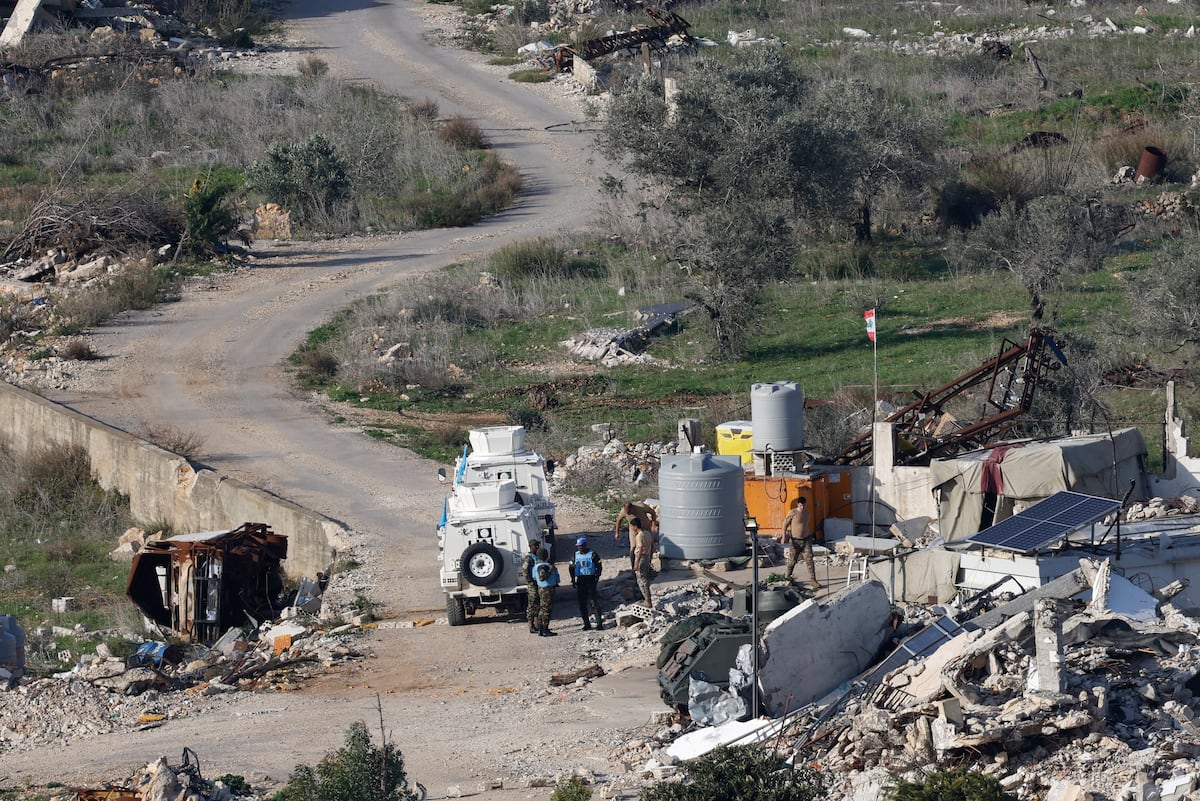
MILAN – French troops part of the United Nations Interim Force countered a hostile drone in southern Lebanon by deploying French-made jamming rifles that repelled the craft back toward Israel.
Earlier this month, footage circulated on social media showing a group of UNIFIL forces stationed in the southern part of Lebanon pointing a jammer at the sky in an apparent operation against a drone.
The French military command confirmed to Defense News that the personnel shown in the video, filmed by a local resident on Jan. 5, 2026, are French UNIFIL peacekeepers. They were on foot patrol at the time, when a drone began illegally flying over them in the municipality of Meiss Ej Jabal, after which they moved closer to their light armored vehicle.
“In accordance with the rules of engagement and with a constant concern for proportionality and protection of civilians, the patrol carried out a jamming operation, aimed solely at stopping the drone from flying overhead, without causing it to crash, in order to avoid any risk of material damage or bodily harm,” Lt. Laura, a spokeswoman for the French Armed Forces General Staff, said in an emailed response to questions.
According to UNIFIL spokesperson Kandice Ardiel, the peacekeepers were “aggressively” approached by the drone that flew as close as 30 meters above them. This prompted them to employ defensive measures that ultimately forced the drone to turn back.
The jammer used by the UN peacekeepers seen in the video is the Nerod F5 manufactured by the France-based M2 Technology, according to a company representative.
The device is designed to counter commercial drones by carrying out non-destructive jamming, which means that it does not physically damage or destroy them, rather interfering with their radio signals. The interference occurs once an operator has positioned the target in his sights and pulled the trigger, transmitting jamming signals on up to five different frequency bands.
The French military command declined to comment on whether the drone was deployed by Israel, and UNIFIL was not able to confirm its provenance.
The Long War Journal, a project from the Washington-based Foundation for Defense of Democracies research institute, tracked Israeli operations in Lebanon against Hezbollah from Jan. 5-11. During that period, it recorded that the Israeli Defense Forces conducted missions across 37 Lebanese localities, which included eight quadcopter activities and nine drone strikes.
On Jan. 5 the Lebanon National News Agency, or NNA, reported that an Israeli drone had targeted a vehicle, though in a different district than the one the French peacekeepers were located in. The following day, the NNA stated that an Israeli quadcopter had dropped an explosive in Meiss Ej Jabal.
The Israeli Ministry of Defense said it had no comment on the incident.
In a Facebook post , the Israel-based Alma Research and Education Centre shared the Jan. 5 video, writing that “UNIFIL is trying to disrupt the IDF’s efforts to disarm Hezbollah.”
In the Jan. 5 incident, UNIFIL said its peacekeepers acted “in self-defense” to ensure that no bystanders were harmed, as it took place in a crowded civilian area.
The UN-mandated force and its contingents have been provided with various kinds of equipment that allows them to jam drones, following several cases of drones, at times armed, operating above their locations and patrols.
According to the spokeswoman, peacekeepers posted in southern Lebanon and along the Blue Line – a 120-kilometer UN-demarcated line that follows the country’s southern border with Israel – have observed daily drone intrusions.
“In all actions, peacekeepers are guided by the established rules of engagement – they use necessary countermeasures only when the field commander determines that the drone poses a [direct] danger to the ones operating in the area and such actions are taken strictly in self-defense,” Ardiel told Defense News.
Beyond Israeli drone overflights, personnel stationed in areas close to the Blue Line are themselves observing frequent jamming of their equipment, which Lebanese officials and analysts say comes from Israel.
“Israeli jamming is carried out without any respect for Lebanese sovereignty or international laws. … It disrupts military communications, weakens navigation and data exchange, and complicates field coordination and routine tasks,” retired Brig. Gen. Mounir Shehade, a former Lebanese Armed Forces officer and government designated coordinator for UNIFIL, said.
Shehade said that while the Lebanese Army does have some counter-drone capabilities, they are not comparable with its southern neighbour’s “technical superiority used without international accountability.”
A UNIFIL statement published on Jan. 16 stated that an Israeli drone hovered and dropped a grenade approximately 30 meters away from peacekeepers that were conducting a planned patrol near Adeisse. The peacekeeping body said that it sent a stop-fire request to the IDF, adding that such activities on Lebanese territory are a violation of the Security Council’s 1701 resolution.
The 19-paragraph long resolution was adopted unanimously in 2006 with the purpose of ending hostilities between Hezbollah and Israel, with the Council calling for a permanent ceasefire based on the creation of a buffer zone. It urged the immediate stop of all Hezbollah attacks and Israeli offensive operations.
When Israeli or Lebanese authorities want to carry out any activities in proximity to the Blue Line, UNIFIL calls on them to provide an advance notice to allow the peacekeepers and all parties informed to avoid misinterpretations that could escalate tensions.
Rudy Ruitenberg in Paris contributed to this report. Stracquadanio reported from Beirut.
Elisabeth Gosselin-Malo was a Europe correspondent for Defense News. She covers a wide range of topics related to military procurement and international security, and specializes in reporting on the aviation sector. She is based in Milan, Italy.
Agnese Stracquadanio is a Middle East correspondent for Defense News. She has a background in writing and photojournalism, holds a master's degree in international relations, and previously worked for Reuters.
米兰——作为联合国临时部队一部分的法国军队在黎巴嫩南部部署了法国制造的干扰步枪,击退了一架敌对无人机,使其飞回以色列方向。
本月初,社交媒体上流传的一段视频显示,驻扎在黎巴嫩南部的联合国驻黎巴嫩临时部队(联黎部队)一群士兵正在用干扰器指向天空,显然是在执行针对无人机的行动。
法国军方向《防务新闻》证实,这段由当地居民于2026年1月5日拍摄的视频中出现的人员是驻黎巴嫩临时部队(联黎部队)的法国维和人员。当时他们正在梅斯埃杰贾巴尔市进行徒步巡逻,一架无人机开始非法飞越他们的上空,之后他们靠近了他们的轻型装甲车。
法国武装部队总参谋部发言人劳拉中尉在回复提问的电子邮件中表示:“根据交战规则,并始终关注比例原则和保护平民,巡逻队开展了干扰行动,其目的仅仅是阻止无人机飞越上空,而不是导致其坠毁,以避免任何物质损失或人身伤害的风险。”
据联合国驻黎巴嫩临时部队(联黎部队)发言人坎迪斯·阿尔迪尔称,一架无人机“咄咄逼人”地接近维和人员,飞行高度一度达到距离他们仅30米。这促使维和人员采取防御措施,最终迫使无人机返航。
据该公司代表称,视频中联合国维和人员使用的干扰器是法国 M2 Technology 公司生产的 Nerod F5。
该装置旨在通过非破坏性干扰来对抗商用无人机,这意味着它不会对无人机造成物理损坏或摧毁,而是干扰其无线电信号。干扰发生在操作员将目标锁定在瞄准镜中并扣动扳机之后,该装置会在多达五个不同的频段上发射干扰信号。
法国军方拒绝就该无人机是否由以色列部署发表评论,而联合国驻黎巴嫩临时部队也无法确认其来源。
总部位于华盛顿的保卫民主基金会研究机构的《长期战争日志》项目追踪了以色列在1月5日至11日期间在黎巴嫩针对真主党的军事行动。在此期间,该日志记录了以色列国防军在黎巴嫩37个地区执行任务,其中包括8次四旋翼飞行器行动和9次无人机袭击。
1月5日,黎巴嫩国家通讯社(NNA)报道称,一架以色列无人机袭击了一辆汽车,但袭击地点与法国维和部队所在的区域不同。第二天,NNA又报道称,一架以色列四旋翼无人机在梅斯埃杰贾巴尔投掷了一枚爆炸物。
以色列国防部表示对此事不予置评。
以色列阿尔玛研究与教育中心在 Facebook 上发帖分享了 1 月 5 日的视频,并写道:“联合国驻黎巴嫩临时部队正试图破坏以色列国防军解除真主党武装的努力。”
1月5日发生的事件中,联合国驻黎巴嫩临时部队表示,由于事发地点位于人口密集的平民区,其维和人员采取了“自卫”行动,以确保没有旁观者受到伤害。
此前曾发生多起无人机(有时携带武器)在其驻地和巡逻区域上空活动的事件,联合国授权部队及其特遣队已配备了各种能够干扰无人机的设备。
据发言人称,驻扎在黎巴嫩南部和蓝线(一条由联合国划定的120公里长的线,沿着该国与以色列的南部边界)沿线的维和人员每天都会观察到无人机入侵。
“在所有行动中,维和人员都遵循既定的交战规则——只有当现场指挥官认定无人机对在该区域行动的人员构成(直接)危险时,他们才会采取必要的反制措施,而且此类行动严格属于自卫行为,”阿尔迪尔告诉《防务新闻》。
除了以色列无人机飞越上空外,驻扎在蓝线附近地区的人员也注意到他们的设备经常受到干扰,黎巴嫩官员和分析人士称这些干扰来自以色列。
“以色列的干扰行为完全无视黎巴嫩主权和国际法……它扰乱了军事通信,削弱了导航和数据交换,并使现场协调和日常任务变得复杂,”黎巴嫩武装部队前军官、政府指定的联合国驻黎巴嫩临时部队协调员、退役准将穆尼尔·谢哈德说。
谢哈德表示,虽然黎巴嫩军队确实具备一些反无人机能力,但这与南部邻国“在缺乏国际问责的情况下使用的技术优势”相比,是无法相提并论的。
联合国驻黎巴嫩临时部队(联黎部队)1月16日发表声明称,一架以色列无人机在阿代塞附近盘旋,并在距离正在进行例行巡逻的维和人员约30米处投掷了一枚手榴弹。该维和机构表示,已向以色列国防军发出停止射击请求,并补充说,在黎巴嫩领土上进行此类活动违反了安理会第1701号决议。
这份长达19段的决议于2006年获得一致通过,旨在结束真主党和以色列之间的敌对行动。安理会呼吁在建立缓冲区的基础上实现永久停火,并敦促立即停止真主党的一切袭击和以色列的进攻行动。
当以色列或黎巴嫩当局想要在蓝线附近开展任何活动时,联合国驻黎巴嫩临时部队呼吁他们提前发出通知,以便维和人员和所有知情各方避免可能加剧紧张局势的误解。
鲁迪·鲁伊滕贝格(Rudy Ruitenberg)在巴黎对此报道亦有贡献。斯特拉夸达尼奥(Stracquadanio)从贝鲁特发回报道。
伊丽莎白·戈斯林-马洛曾任《防务新闻》欧洲通讯员。她的报道涵盖军事采购和国际安全等广泛领域,尤其擅长航空领域的报道。她常驻意大利米兰。
阿格尼斯·斯特拉夸达尼奥是《防务新闻》的中东记者。她拥有写作和摄影新闻背景,持有国际关系硕士学位,此前曾在路透社工作。