Trump’s madman diplomacy isn’t working on Iran特朗普的疯狂外交对伊朗行不通。
Opinion: Compounding the problem is Trump’s misapplication of the madman theory itself, argues CATO Institute analyst Benjamin Giltner.
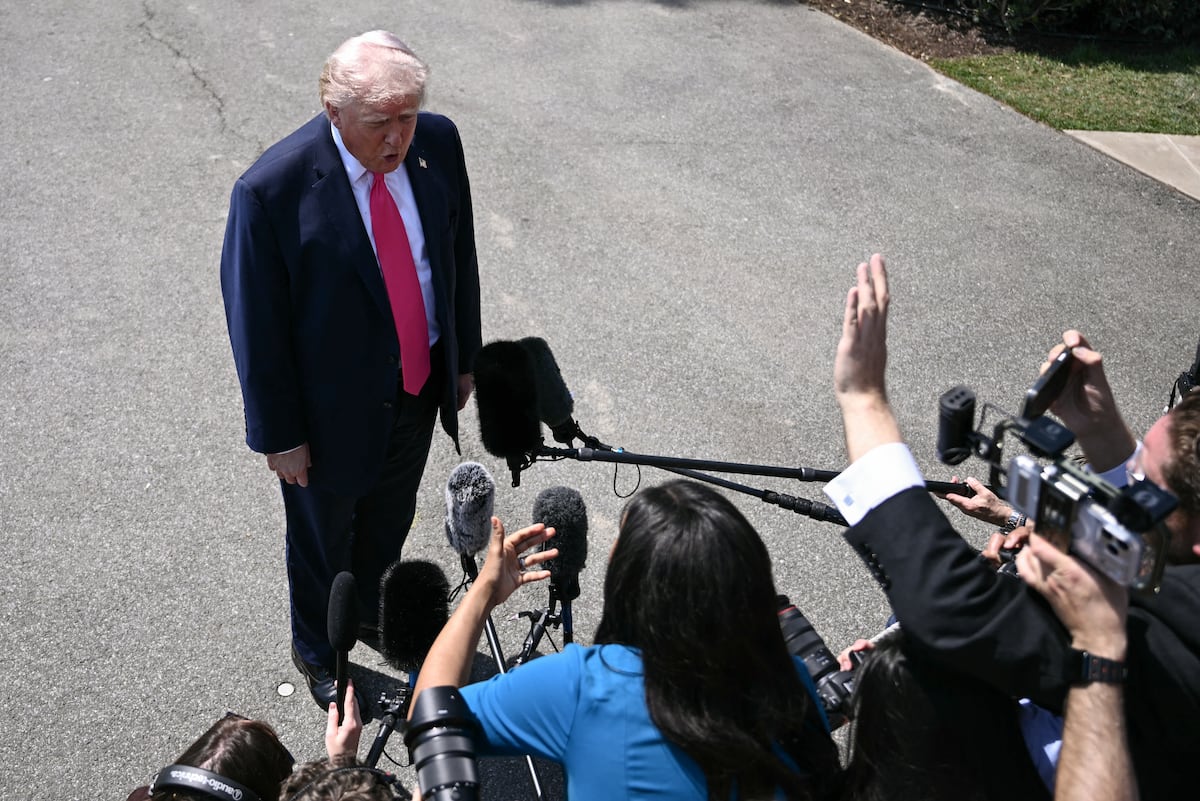
Despite the recent ceasefire between Iran and the United States, the Islamic Republic continues to restrict shipping through the Strait of Hormuz. In response, the United States has established its own naval blockade in the strait and sends thousands more troops to the region. All of this follows multiple threats from President Trump, including one promising to destroy Iran’s civilization . These threats have failed to open the Strait of Hormuz, which had been open prior to the joint U.S.-Israeli attacks.
Why didn’t the president’s maximalist threats work? Indeed, his bombastic form of diplomacy appears to have undermined the prospects for peace between the United States and Iran. To understand why Trump has failed to change Iran’s behavior, it is necessary to examine his approach to diplomacy.
Trump relies on a version of the “madman theory” in many of his disputes. His approach resembles a distorted, MAGA version of Theodore Roosevelt’s famous maxim – that is, scream loudly and swing a big golf club.
In practice, it often amounts to boisterous threats without a clear or credible strategy behind them.
And despite the president’s rather novel use of the theory, it does have a sketchy if unsuccessful history.
While President Nixon’s political aide, H. R. Haldeman, popularized the term “madman theory,” it was developed more fully by economist and deterrence theorist Thomas Schelling and military analyst Daniel Ellsberg. The madman theory is a deterrent technique, to be used in limited circumstances: it signals to an adversary, “Do not take this action, or the consequences will be severe.”
To succeed, however, the adversary must believe the threat will be carried out. The more frequent or outlandish the threats, the more the madman’s credibility deteriorates. Success stories of the madman theory are few and far between. Richard Nixon signaled that he would use nuclear weapons against North Vietnam in 1969 to bring it and the Soviet Union to the negotiating table. It failed. Nikita Khrushchev’s nuclear blackmail were unconvincing for NATO forces to withdraw from West Berlin. Saddam Hussein cultivated ambiguity about weapons of mass destruction to deter Iran and the United States from invading. And that story did not end well for him.
Given its lackluster record, it is unclear why policymakers continue to rely on this approach.
Besides the madman theory being flawed, the U.S. lacks the will and capabilities to back up President Trump’s threats. Iran’s leadership is likely aware of the American people’s unwillingness to fight another ground war in the Middle East .
Trump’s threat to destroy Iran produced massive backlash from the American public, including his base. Such public disapproval of madman behavior undermines its credibility and effectiveness. What’s more, American munitions are in short supply and rapidly depleting.
Take Tomahawk cruise missiles . In just slightly over four weeks, the United States launched about 850 of these missiles against Iran out of the total 3,100 missiles in its inventory, and only produces around 90 missiles per year. These two facts already rendered Trump’s threats kaput.
Trump’s frequent use of bombastic rhetoric further erodes that credibility. He has issued sweeping threats across multiple contexts—from “fire and fury” toward North Korea to threatening to withdraw from NATO, as well as to “take” Greenland. Over time, this creates a “boy who cried wolf” dynamic, making it difficult to take his most worrisome threats seriously.
Compounding the problem is Trump’s misapplication of the madman theory itself.
Trump continues to tell Iran, “Do this, or I’ll blow up everyone.” This rhetoric reflects what Schelling described as “compellence”—an effort to force an adversary to change its behavior—rather than deterrence, which seeks to prevent an action in the first place. But compellence is typically more difficult to achieve, as it requires the target to abandon the status quo, of which humans are psychologically inclined to prefer. Deterrence, by contrast, reinforces it. This distinction helps explain why threats that might prevent an action often fail to reverse one already underway.
President Trump’s overuse and misapplication of the madman theory has placed the United States in a difficult position. The risk of deeper involvement in the Middle East is rising at a time when the margin for error in U.S. foreign policy is limited. Yet the current approach offers few clear pathways to either de-escalation or success.
The United States is stuck with an inept form of coercion in its war with Iran—one that generates heat but no leverage. Trump’s use of the madman theory has failed to produce security or stability. It has only revealed the madness of America’s current policy towards Iran.
Benjamin Giltner is a Policy Analyst in defense and foreign policy at the Cato Institute, where he works on issues related to U.S. military strategy and foreign policy, great-power competition, nuclear weapons and deterrence.
尽管伊朗和美国近期达成了停火协议,但伊朗伊斯兰共和国仍继续限制通过霍尔木兹海峡的航运。作为回应,美国在海峡实施了海上封锁,并向该地区增派了数千名士兵。此前,特朗普总统曾多次发出威胁,包括扬言要摧毁伊朗文明。然而,这些威胁并未导致霍尔木兹海峡重新开放,该海峡在美以联合袭击之前一直保持畅通。
为什么总统的极端威胁没有奏效?事实上,他这种夸张的外交手段似乎破坏了美伊和平的前景。要理解特朗普为何未能改变伊朗的行为,就必须审视他的外交策略。
特朗普在许多争端中都依赖于某种形式的“疯子理论”。他的做法类似于扭曲的、MAGA(让美国再次伟大)版的西奥多·罗斯福名言——大声叫嚣,挥舞大号高尔夫球杆。
实际上,这往往表现为没有明确或可信战略的喧嚣威胁。
尽管总统对这一理论的运用相当新颖,但该理论的历史却并不光彩,甚至可以说是不成功的。
虽然尼克松总统的政治助理霍尔德曼推广了“疯子理论”这一术语,但经济学家兼威慑理论家托马斯·谢林和军事分析家丹尼尔·埃尔斯伯格对其进行了更全面的阐述。疯子理论是一种威慑手段,只能在特定情况下使用:它向对手发出信号:“不要采取这种行动,否则后果将不堪设想。”
然而,要想成功,对手必须相信威胁会付诸实施。威胁越频繁或越离谱,疯子的可信度就越低。疯子理论的成功案例寥寥无几。1969年,理查德·尼克松曾暗示将对北越使用核武器,以此迫使北越和苏联坐到谈判桌前。结果失败了。尼基塔·赫鲁晓夫的核讹诈也未能说服北约部队撤出西柏林。萨达姆·侯赛因故意在大规模杀伤性武器问题上含糊其辞,以阻止伊朗和美国入侵。而他的结局也并不好。
鉴于这种方法效果不佳,尚不清楚政策制定者为何继续依赖这种方法。
除了“疯子理论”本身存在缺陷之外,美国也缺乏兑现特朗普总统威胁的意愿和能力。伊朗领导层很可能也清楚美国民众不愿在中东再次爆发地面战争。
特朗普威胁要摧毁伊朗的言论引发了美国公众,包括其支持者在内的强烈反弹。公众对这种疯狂行为的强烈反对削弱了其可信度和有效性。更重要的是,美国的军火储备短缺且正在迅速消耗殆尽。
以战斧巡航导弹为例。短短四周多时间里,美国就向伊朗发射了约850枚战斧导弹,而其库存导弹总数仅为3100枚,且年产量仅为90枚左右。这两个事实已经让特朗普的威胁彻底失效。
特朗普频繁使用夸张的言辞进一步削弱了他的可信度。他曾在多个场合发出过范围极广的威胁——从对朝鲜的“炮火与怒火”到威胁退出北约,再到“占领”格陵兰岛。久而久之,这就造成了一种“狼来了”式的局面,让人难以认真对待他那些最令人担忧的威胁。
雪上加霜的是,特朗普对“疯子理论”本身也存在误用。
特朗普不断威胁伊朗:“要么照做,要么我就把他们都炸死。”这种言论反映了谢林所说的“强制”——即试图迫使对手改变其行为——而非威慑,后者旨在从一开始就阻止某种行动的发生。但强制通常更难实现,因为它要求目标放弃现状,而人类在心理上倾向于维持现状。相比之下,威慑反而会强化现状。这种区别有助于解释为什么那些可能阻止某种行动的威胁,往往无法扭转已经发生的行动。
特朗普总统对“疯子理论”的过度使用和误用,使美国陷入了困境。在当前美国外交政策容错空间有限的情况下,美国深陷中东泥潭的风险却在不断上升。然而,目前的做法几乎没有提供任何明确的途径来缓和局势或取得成功。
美国在对伊战争中陷入了一种无能的胁迫手段——这种手段只会激化矛盾,却无法产生任何实际的筹码。特朗普对伊朗的“疯子理论”未能带来安全或稳定,反而暴露了美国当前对伊政策的荒谬之处。
本杰明·吉尔特纳是卡托研究所国防和外交政策的政策分析师,他的研究方向包括美国军事战略和外交政策、大国竞争、核武器和威慑等问题。