Pentagon acknowledges tough quest to counter Iranian drones五角大楼承认应对伊朗无人机是一项艰巨的任务
Pete Hegseth and other military leaders warned lawmakers that gaps in counter-drone technology could leave U.S. forces and assets increasingly vulnerable.
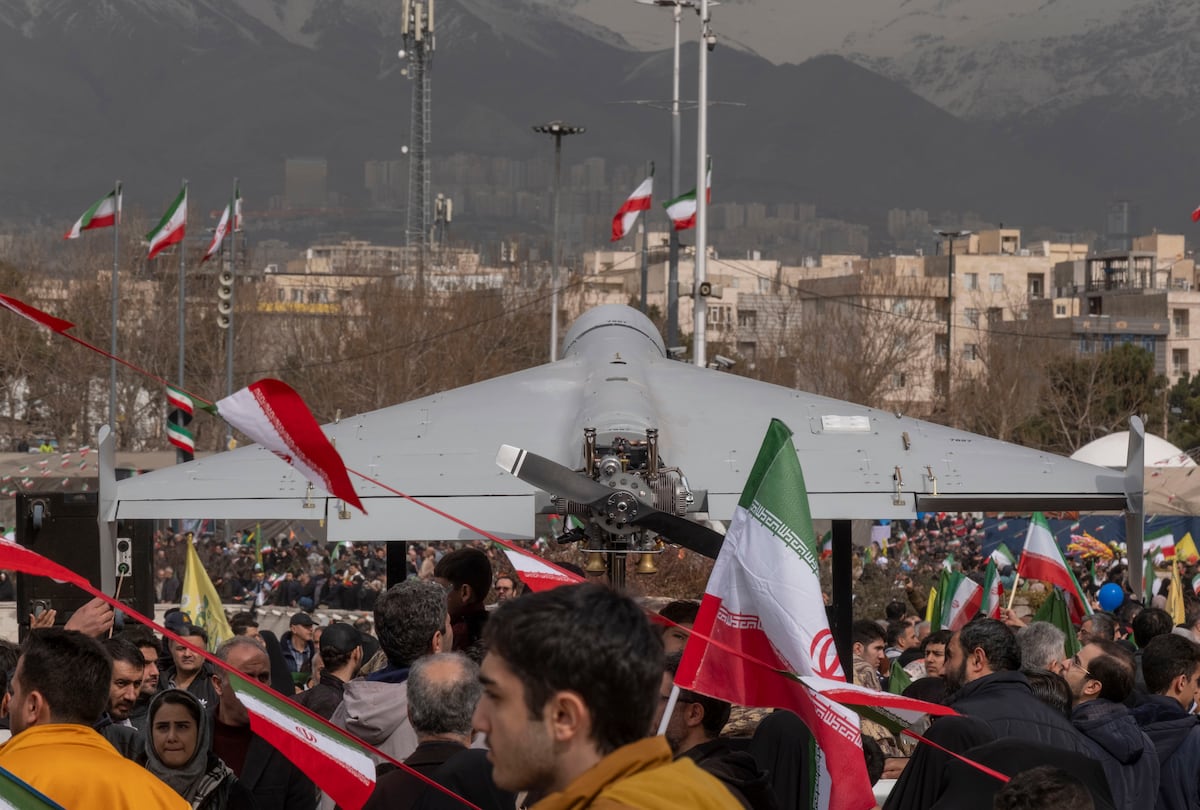
Trump administration officials conceded during a private briefing on Capitol Hill this week that Iran’s Shahed-136 drone is proving more disruptive on the battlefield than the Pentagon had anticipated, two people familiar with the matter told Military Times.
Secretary of Defense Pete Hegseth and Chairman of the Joint Chiefs of Staff Gen. Dan Caine led the group of senior military leaders who warned lawmakers that gaps in counter-drone technology could leave U.S. forces and assets increasingly vulnerable.
“They were ill-prepared,” one person inside the briefing said, referring to U.S. defense plans in the Middle East.
Iran’s Islamic Revolutionary Guard Corps has launched thousands of one-way drones toward U.S. military bases and diplomatic sites across the region since the start of the war, according to the Department of Defense. While American forces and their allies have thwarted most of the onslaught – largely with the Patriot missile system – some projectiles have still managed to reach their targets.
One drone that penetrated air defenses at a U.S. installation in Kuwait on Sunday killed at least six American service members and wounded several others. The Iranian drone barrage has also expanded to 12 other countries in the region, CENTCOM Commander Adm. Brad Cooper said, adding that on Thursday the Islamic Republic fired seven attack drones at civilian residential neighborhoods in Bahrain.
The Shahed-136 is a triangle-shaped munition approximately 11 feet long. It carries an explosive warhead in its nose that detonates on impact. The drones can be assembled from relatively simple components and volleyed from the back of a truck, allowing operators to conceal and disperse launch sites. Shaheds cost between $20,000 and $50,000 apiece – a fraction of the price of the American missiles needed to shoot them down.
“Iran knows it can’t match the U.S. or Gulf states plane for plane or missile for missile, but it can change the economics of the conflict,” Patrycja Bazylczyk, an associate director with the Missile Defense Project at the Center for Strategic and International Studies in Washington, D.C., said in an interview with Military Times. “Drones let Iran punch above its weight, keep its adversaries off balance, and project power across the region at minimal cost.”
“We can’t just play whack-a-mole in the sky,” Bazylczyk continued. “Shooting drones down one by one is the most expensive way to fight the cheapest threat. We have to go after the roots – the launch sites, the production lines, and the storage depots.”
The Pentagon has surged aircraft carriers and fighter jets to the region – its largest agglomeration of air and naval power in the Middle East in decades – but intercepting swarms of low-cost drones is rapidly draining U.S. missile stockpiles.
The U.S. has turned to Ukraine for assistance in countering the drones, the country’s President Volodymyr Zelenskyy announced Thursday. Drone warfare has become a fixture during the four-year war sparked by Russia’s invasion of Ukraine. The Kremlin began deploying the Iranian-designed drone in 2022 and has since launched thousands against Ukraine. Engineers in Kyiv have developed a range of anti-drone laser systems, some of which cost as little as $1,000.
“We received a request from the United States for specific support in protection against ‘shaheds’ in the Middle East region,” Zelenskyy wrote in a post on X. “I gave instructions to provide the necessary means and ensure the presence of Ukrainian specialists who can guarantee the required security.”
In a statement to Military Times, White House spokesperson Anna Kelly insisted, “The Iranian regime is being absolutely crushed.”
“Their ballistic missile retaliation is decreasing every day, their navy is being wiped out, their production capacity is being demolished, and proxies are hardly putting up a fight,” Kelly claimed.
Tanya Noury is a reporter for Military Times and Defense News, with coverage focusing on the White House and Pentagon.
据《军事时报》报道,两名知情人士透露,特朗普政府官员本周在国会山的一次私人简报会上承认,伊朗的“沙赫德-136”无人机在战场上造成的破坏比五角大楼预期的要大。
国防部长皮特·赫格塞斯和参谋长联席会议主席丹·凯恩将军率领一群高级军事领导人向立法者发出警告,反无人机技术的不足可能会使美国军队和资产越来越容易受到攻击。
“他们准备不足,”一位参加简报会的人士说道,他指的是美国在中东的国防计划。
据美国国防部称,自战争爆发以来,伊朗伊斯兰革命卫队已向该地区各地的美国军事基地和外交机构发射了数千架单向无人机。尽管美军及其盟友主要依靠“爱国者”导弹系统挫败了大部分袭击,但仍有一些无人机成功击中目标。
周日,一架无人机突破了位于科威特的美国军事设施的防空系统,造成至少六名美军士兵死亡,另有多人受伤。美国中央司令部司令布拉德·库珀海军上将表示,伊朗的无人机袭击范围已扩大到该地区的其他12个国家。他还补充说,周四,伊朗向巴林的居民区发射了七架攻击型无人机。
“沙赫德-136”是一种三角形弹药,长约11英尺(约3.4米)。它的弹头装有爆炸性弹头,撞击目标后引爆。这种无人机由相对简单的部件组装而成,可从卡车后部进行轮番投放,操作人员可以隐蔽并分散发射阵地。“沙赫德-136”的成本在2万至5万美元之间,仅为击落它们所需的美国导弹价格的一小部分。
“伊朗深知自己无法在飞机或导弹数量上与美国或海湾国家匹敌,但它可以改变冲突的经济格局,”华盛顿特区战略与国际研究中心导弹防御项目副主任帕特里夏·巴兹尔奇克在接受《军事时报》采访时表示。“无人机让伊朗能够发挥超乎自身规模的影响力,扰乱对手的节奏,并以最低的成本向整个地区投射力量。”
“我们不能只是在空中玩打地鼠游戏,”巴兹尔奇克继续说道,“逐一击落无人机是应对最廉价威胁的最昂贵方式。我们必须从根源上解决问题——发射场、生产线和存储仓库。”
五角大楼已向该地区增派航空母舰和战斗机——这是几十年来美国在中东最大的空中和海上力量集结——但拦截大量低成本无人机正在迅速消耗美国的导弹库存。
美国已向乌克兰寻求帮助,以应对无人机袭击。乌克兰总统泽连斯基周四宣布了这一消息。在俄罗斯入侵乌克兰引发的这场持续四年的战争中,无人机战争已成为常态。克里姆林宫于2022年开始部署伊朗设计的无人机,此后已向乌克兰发射了数千架。基辅的工程师们已经研发出一系列反无人机激光系统,其中一些系统的成本低至1000美元。
泽连斯基在X网站上发帖写道:“我们收到美国的请求,希望我们能提供具体支持,以保护中东地区免受‘烈士’的袭击。我已经指示提供必要的资源,并确保有乌克兰专家在场,以保障所需的安全。”
白宫发言人安娜·凯利在接受《军事时报》采访时坚称:“伊朗政权正在被彻底摧毁。”
凯利声称:“他们的弹道导弹报复能力正在逐日下降,他们的海军正在被摧毁,他们的生产能力正在被摧毁,他们的代理人几乎没有进行任何抵抗。”
Tanya Noury 是《军事时报》和《防务新闻》的记者,她的报道主要集中在白宫和五角大楼。