Europe’s 2025 defense winners include Saab, Rheinmetall; FCAS falters欧洲2025年国防采购案的赢家包括萨博和莱茵金属;未来空中作战系统(FCAS)项目进展缓慢
The rising tide of higher defense budgets in Europe lifted most industry boats, though some more than others.
PARIS — With Europe spending record amounts on defense in 2025 on everything from ammunition to battle tanks, air defenses and naval ships, local industry winners included Germany’s Rheinmetall, Sweden’s Saab and the United Kingdom’s BAE Systems.
France’s Naval Group had a less successful year, missing out on several contracts in 2025, while a joint effort by France, Germany and Spain to develop a next-generation fighter stalled amid infighting between main contractors Dassault Aviation and Airbus.
With the caveat that the rising tide of higher defense budgets lifted most boats, here is a selection of European industry winners and losers picked by Defense News local staff:
Saab finished the year in style, with France ordering two of the company’s GlobalEye early warning and control aircraft. That’s after Poland selected the company’s A26 submarines for the Orka program in November. Other business in 2025 included Gripen sales to Thailand and Colombia, short-range air defense for Sweden, Czechia and Latvia, electronic-warfare suites for Germany’s Eurofighters and the go-ahead from the Swedish Defence Material Administration to continue concept studies for future fighter systems. The company in October raised its outlook for 2025 organic sales to grow between 20% and 24%.
Rheinmetall had another banner year with billions of euros worth of orders and multiyear contracts, including vehicles and ammunition for the German armed forces and Skyranger anti-drone cannons for the Netherlands, while its joint venture with Leonardo booked the first order from Italy for the Lynx combat vehicle. The firm increased its defense footprint, buying a German shipyard to expand into warships, and winning an order with partner ICEYE to supply the German Armed Forces with a satellite-intelligence constellation. Rheinmetall’s defense business sales rose 28% in the first nine months of 2025.
BAE Systems ’ wins in 2025 included Norway’s selection of the British Type 26 frigates, primarily manufactured by the company, in a £10 billion deal. The U.K. firm was also one of the few European companies to win significant contracts in the United States, including a $1.7 billion contract for laser-guidance kits for the U.S. Navy, and was a main beneficiary of the sale of 20 Eurofighter Typhoon jets to Turkey in a deal worth as much as £8 billion. BAE raised its full-year sales and operating profit outlook in July after a “strong operational performance” in the first half.
Pan-European missile maker MBDA benefited from European spending on air defense in 2025, with Denmark becoming the third EU customer for the SAMP/T air-defense system, picking the MBDA-led weapon over the American Patriot. France and Italy placed additional orders for Aster missiles to replenish stockpiles. The company expanded missile production capacity across France, Italy and the U.K. in response to government demand, with air and missile defense identified as a priority capability by the EU and NATO. MBDA won an order to deliver a laser weapon system to the U.K.’s Royal Navy, as the company expands beyond missiles.
The Global Combat Air System (GCAP) continued to forge ahead in 2025 even as rival programs faltered. Commenting in November on the news emerging from the sixth-generation, tri-nation fighter effort, veteran analyst Bill Sweetman wrote in The Strategist: “The silence is deafening”, and he meant it as a compliment. The partners may have had some gripes, as Japan reportedly complained the program is moving too slowly and Italy claimed the U.K. is not sharing all its technology, but otherwise development has moved ahead quietly and apparently steadily, with an Italy-U.K.-Japan government office now working alongside industrial consortia dedicated to sensors, propulsion and integration. The first hiccup could come if and when other nations want to climb on board as the program heads towards its 2035 delivery date.
European Union defense policy took shape in 2025 with publication of the bloc’s first defense white paper in March and adoption of a €150 billion loan program for joint defense procurement by member states under the ReArm Europe plan, tying EU defense policy to major fiscal instruments. Other milestones included political agreement on the European Defence Industry Programme instrument and adoption of the Defence Readiness Roadmap 2030 in October.
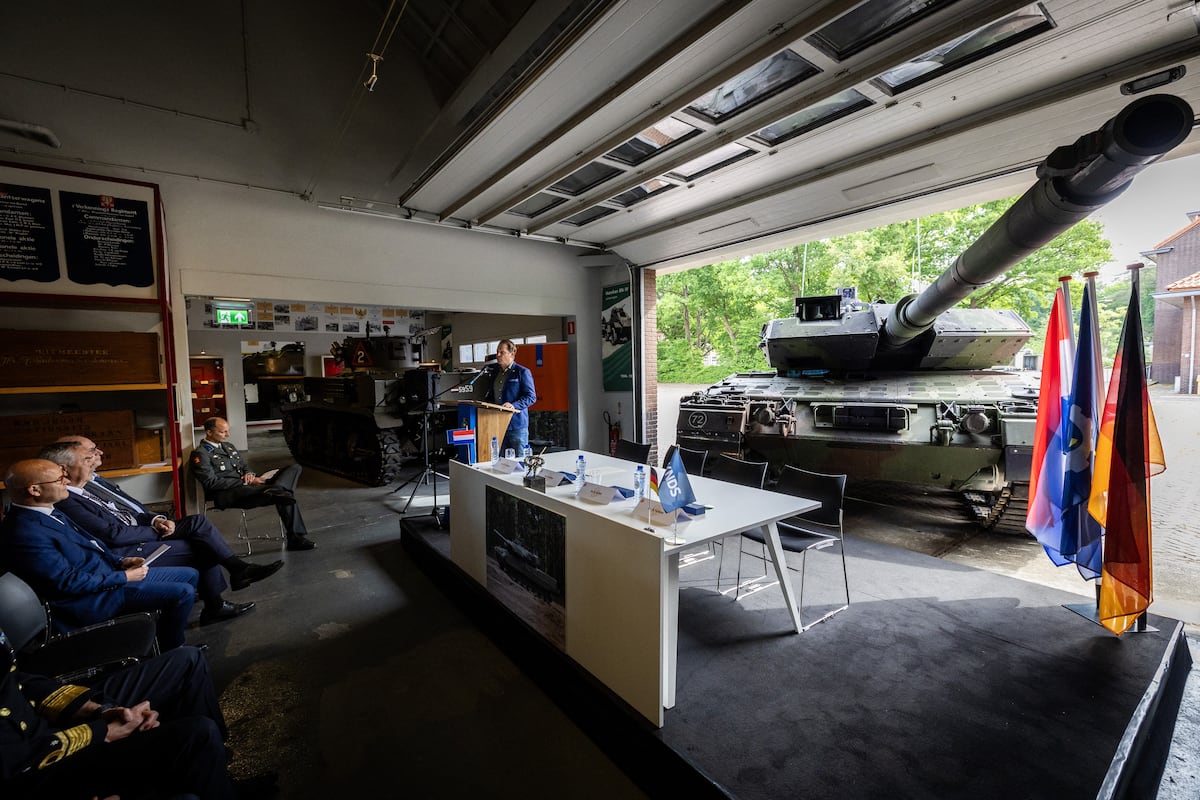
French-German armored vehicle maker KNDS benefited from surging European demand for land systems in response to the war in Ukraine, winning multiple billion-plus contracts for the Leopard 2 A8 main battle tank and announcing the first new production of the venerable behemoth since 1992. KNDS artillery was also in demand, with new orders for the RCH 155 howitzer and ongoing deliveries of the PzH 2000 and Caesar systems. The company’s joint venture with Rheinmetall in October won a €3.4 billion contract to supply Germany and the Netherlands with more than 200 infantry fighting vehicles based on the Boxer wheeled chassis.
As the EU worked hard in 2025 to prove the bloc could spend more and better on defense by countries teaming up, two major member states bucked the trend by squabbling for most of the year over how to build a new fighter jet. The fate of the long stalled Future Combat Air System program, or FCAS, teaming France and Germany as well as Spain, looked ever more uncertain in December when Eric Trappier, CEO of French firm Dassault said “Will it happen? I don’t know.” Dassault has been seeking leadership of the program in a rebuke of Airbus, which is bristling at France’s longstanding suspicion of joint programs and proposals that Germany and Spain limit themselves to handling the drones that will fly alongside the fighter.
Naval Group faced a challenging year in 2025 in terms of securing new business, losing several major export competitions. Canada selected Hanwha and TKMS as the qualified suppliers for its new submarine program, while Poland awarded the Orka submarine contract to Saab. In Norway, the French shipbuilder lost a bid for new frigates to BAE Systems’ Type 26 design. While Naval Group continued to execute on existing build programs, delivering frigates to the French and Greek navies, the company had no new large-scale foreign contracts to report for the year.
Rudy Ruitenberg is a Europe correspondent for Defense News. He started his career at Bloomberg News and has experience reporting on technology, commodity markets and politics.
Tom Kington is the Italy correspondent for Defense News.
巴黎——2025年,欧洲在国防上的支出将创下历史新高,涵盖从弹药到坦克、防空系统和海军舰艇等各个方面。本土工业的赢家包括德国的莱茵金属公司、瑞典的萨博公司和英国的BAE系统公司。
法国海军集团今年的业绩不太理想,错失了 2025 年的几份合同;与此同时,法国、德国和西班牙联合研发下一代战斗机的项目,由于主要承包商达索航空和空客之间的内讧而陷入停滞。
需要注意的是,不断增长的国防预算惠及了大多数企业,以下是《防务新闻》当地工作人员评选出的欧洲工业赢家和输家:
萨博公司以法国订购两架GlobalEye预警与控制飞机的佳绩为2025年画上了圆满的句号。此前,波兰在11月选择了萨博的A26潜艇参与“奥尔卡”级潜艇项目。2025年的其他业务包括向泰国和哥伦比亚出售“鹰狮”战斗机,向瑞典、捷克和拉脱维亚出售短程防空系统,为德国的“台风”战斗机提供电子战系统,以及获得瑞典国防物资管理局的批准,继续开展未来战斗机系统的概念研究。该公司在10月份将2025年有机销售额预期上调至增长20%至24%。
莱茵金属公司又迎来了一个辉煌的年份,斩获了价值数十亿欧元的订单和多年期合同,其中包括为德国联邦国防军提供的车辆和弹药,以及为荷兰提供的“天行者”(Skyranger)反无人机炮。与此同时,该公司与莱昂纳多公司的合资企业获得了来自意大利的首份“山猫”(Lynx)战斗车辆订单。莱茵金属公司进一步扩大了其在国防领域的布局,收购了一家德国造船厂以进军军舰制造领域,并与合作伙伴ICEYE公司共同赢得了一份为德国联邦国防军提供卫星情报星座的订单。2025年前九个月,莱茵金属公司国防业务的销售额增长了28%。
英国航空航天系统公司(BAE Systems)在2025年斩获多项大单,其中包括挪威选择采购该公司主要制造的英国26型护卫舰,交易金额高达100亿英镑。这家英国公司也是少数几家在美国赢得重大合同的欧洲企业之一,其中包括为美国海军提供价值17亿美元的激光制导组件合同。此外,该公司还是向土耳其出售20架欧洲台风战斗机的主要受益者,该交易价值高达80亿英镑。在7月份,BAE Systems上半年业绩表现强劲,因此提高了全年销售额和营业利润预期。
泛欧导弹制造商MBDA受益于欧洲在2025年对防空领域的投入,丹麦成为SAMP/T防空系统的第三个欧盟客户,并选择了MBDA主导开发的这款武器,而非美国的“爱国者”导弹系统。法国和意大利也追加订购了“紫菀”(Aster)导弹以补充库存。为响应政府需求,MBDA在法国、意大利和英国扩大了导弹产能,欧盟和北约已将防空和导弹防御列为优先发展能力。此外,MBDA还赢得了一份向英国皇家海军交付激光武器系统的订单,标志着该公司业务拓展已超越导弹领域。
尽管竞争对手的项目进展缓慢,但全球作战空中系统(GCAP)在2025年依然稳步推进。资深分析师比尔·斯威特曼(Bill Sweetman)在11月评论这项第六代三国联合战斗机项目时写道:“沉默震耳欲聋”,而他的这番话绝非贬义。合作伙伴之间或许存在一些不满,例如据报道日本抱怨该项目进展过于缓慢,意大利则声称英国并未分享其全部技术。但除此之外,研发工作一直在悄然且稳步地进行,目前意大利、英国和日本政府已成立联合办公室,与致力于传感器、推进系统和集成工作的工业联盟并肩工作。第一个可能出现的问题是,当其他国家希望加入该项目,而项目预计将于2035年交付时,可能会出现一些波折。
2025年,欧盟防务政策初具雏形,3月份发布了欧盟首份防务白皮书,并通过了一项1500亿欧元的贷款计划,用于成员国在“重整欧洲”计划下联合采购国防物资,将欧盟防务政策与主要财政工具挂钩。其他里程碑事件包括就“欧洲防务工业计划”达成政治协议,以及10月份通过了《2030年防务准备路线图》。
法德合资装甲车辆制造商KNDS受益于乌克兰战争后欧洲对陆地装甲系统需求的激增,赢得了多份价值超过10亿欧元的豹2 A8主战坦克合同,并宣布自1992年以来首次开始生产这款久经考验的巨型坦克。KNDS的火炮也需求旺盛,获得了RCH 155榴弹炮的新订单,PzH 2000和凯撒(Caesar)火炮系统也在持续交付中。该公司与莱茵金属公司(Rheinmetall)的合资企业于10月赢得了一份价值34亿欧元的合同,将向德国和荷兰供应200多辆基于“拳击手”(Boxer)轮式底盘的步兵战车。
2025年,欧盟努力证明其可以通过成员国合作在国防领域投入更多资源并提高效率。然而,两个主要成员国却反其道而行之,几乎全年都在就如何建造新型战斗机争论不休。法国、德国和西班牙三国合作的“未来作战空中系统”(FCAS)项目长期停滞不前,其命运在去年12月变得更加扑朔迷离。当时,法国达索公司首席执行官埃里克·特拉皮耶表示:“这个项目能成功吗?我不知道。” 达索公司一直试图主导该项目,以此回击空客公司。空客公司对法国长期以来对联合项目的怀疑态度以及德国和西班牙仅负责与战斗机协同作战的无人机项目提议感到不满。
2025年,法国海军集团在拓展新业务方面面临挑战,在多个大型出口竞标中失利。加拿大选择韩华和TKMS作为其新型潜艇项目的合格供应商,而波兰则将“奥尔卡”级潜艇合同授予萨博公司。在挪威,这家法国造船商在新护卫舰的竞标中败给了BAE系统公司的26型设计。尽管法国海军集团继续执行现有建造项目,向法国和希腊海军交付护卫舰,但该公司当年没有获得任何新的大型海外合同。
鲁迪·鲁伊滕贝格是《防务新闻》的欧洲记者。他的职业生涯始于彭博新闻社,拥有报道科技、大宗商品市场和政治方面的经验。
汤姆·金顿是《防务新闻》驻意大利记者。