Army Korea’s move to longer duty tours to come in stages, general says陆军将分阶段推进延长驻韩美军服役期限的计划,一位将军表示。
The new model will see soldiers accompanied by their families serving a three-year tour in Korea and unaccompanied troops serving two years.
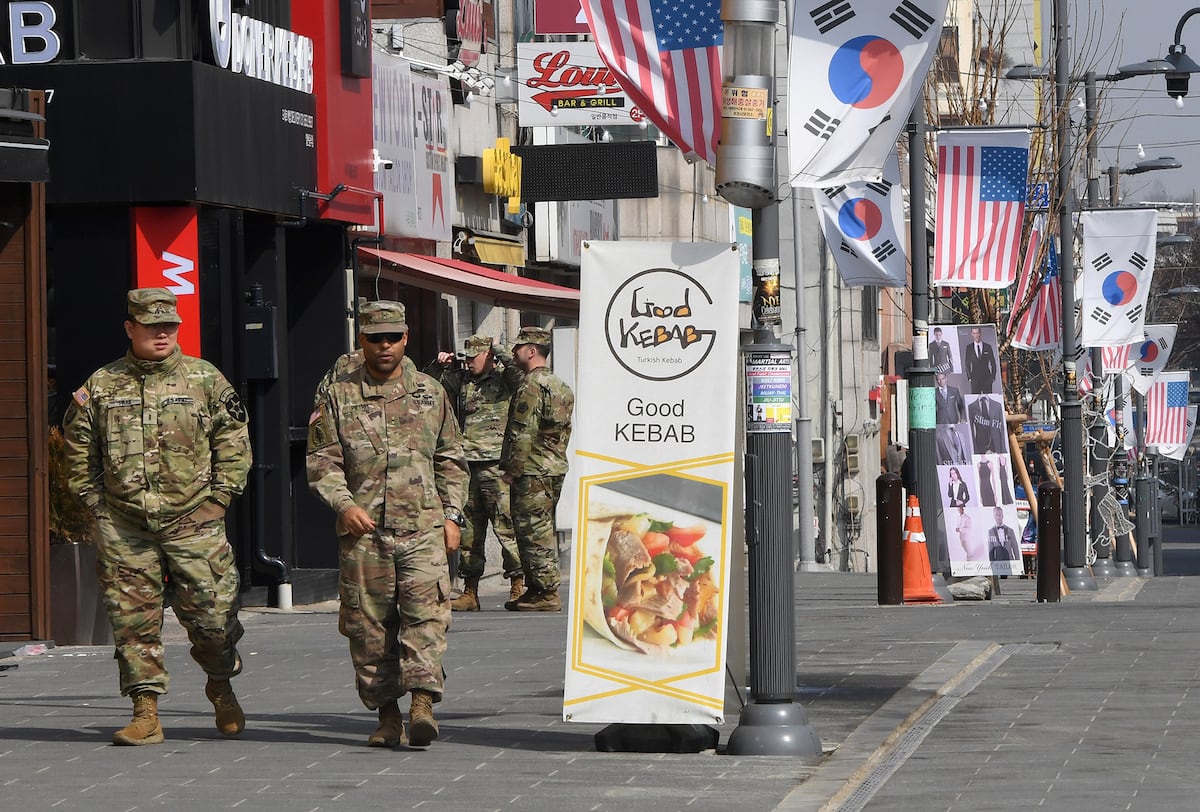
The Eighth Army in Korea is already accepting soldier transfers under a new “tour normalization” system that began Oct. 1. But not every installation in the country is ready yet to accept soldiers and their families for longer tours.
Speaking to reporters at the Association of the United States Army’s annual meeting on Monday, Maj. Gen. Hank Taylor, Eighth Army commander, said the unit had embarked on a phased implementation model, with the southern installations, including Camp Humphreys, adopting tour normalization before the northern ones.
Called 3-2-1, the newly implemented tour normalization model will see soldiers accompanied by their families serving a three-year tour in Korea and unaccompanied troops serving two years. One-year tours will be reserved for those granted an exception to policy, due to housing, medical, education or other needs, Army officials have said.
This will add a year to the previous standard of a two-year tour length for accompanied soldiers — a move that officials have said will add stability as the services aim to build military capabilities in the region.
“When you think about where I manage Korea, from all the way in the south to all the way to the [Demilitarized Zone], right to the [Joint Security Area], we did a lot of good preparation,” Taylor said. “We thought, as we put that request in, we have an implementation model … we’re focused right now on where we have an immediate capability to do that, which is our southern area, in our Seoul area and Camp Humphreys.”
It will take up to four years, Taylor said, for the smaller installations and outposts in the north to be ready to receive families.
“It’s really ensuring that we have all the resources available,” he said. “So as we tell families, we’re going to bring it, we know you’re here – we’ve got schools, we’ve got hospitals, we have that care.”
Air Force Col. William Parker, U.S. Forces Korea’s director of personnel, previously told Stars and Stripes that certain bases, like the Marine Corps’ Camp Mukuk and Kunsan Air Base, would remain closed to service members with families for the foreseeable future as the military builds up infrastructure and support systems.
“We’ve all been in turnover, you know, and when you leave, there’s always gaps, and so we’re really taking a lot of those gaps away,” Taylor said. “And then just think, people are becoming more knowledgeable about the mission and their equipment that they have. So that’s what we’re really trying to do, is increase readiness by reducing that instability.”
The Army re-established its 528th Military Intelligence Company in August in an effort to adapt to an “ever-changing battlefield,” officials said at the time. Taylor didn’t directly address questions about emerging challenges soldiers in South Korea were facing from threats, including increasingly capable North Korean rocket artillery.
“We continue to modernize in all those capabilities, and then it is truly having leaders that are trained, understanding the threat, having the early warning, and all those things,” Taylor said. “That’s how you protect yourself in those types of environments, is understanding and having the resources available to execute the mission.”
驻韩美军第八集团军已开始根据10月1日开始实施的新的“轮换常态化”制度接收士兵调动。但并非该国所有军事基地都已准备好接收士兵及其家属进行更长时间的轮换。
周一,第八集团军司令汉克·泰勒少将在美国陆军协会年会上对记者表示,该部队已开始分阶段实施,南部驻地(包括汉弗莱斯营)先于北部驻地实行轮换制。
新实施的“3-2-1”轮换常态化模式规定,士兵携家属在韩国服役三年,不携家属的士兵服役两年。陆军官员表示,一年期轮换将保留给因住房、医疗、教育或其他需要而获得政策豁免的人员。
这将使随行士兵的两年任期标准延长一年——官员们表示,此举将增加稳定性,因为各军种的目标是在该地区建立军事能力。
泰勒说:“想想我管辖的韩国区域,从南部一直到非军事区,再到共同警备区,我们做了大量的准备工作。我们提出请求时就考虑到了实施模式……我们现在的重点是那些我们有能力立即执行的地方,也就是我们的南部地区,首尔地区和汉弗莱斯营地。”
泰勒表示,北部较小的设施和前哨站需要长达四年的时间才能做好接收家庭的准备。
他说:“这确实是为了确保我们拥有所有可用的资源。所以,正如我们告诉家属的那样,我们会提供一切,我们知道你们在这里——我们有学校,我们有医院,我们有医疗服务。”
驻韩美军人事主管、空军上校威廉·帕克此前告诉《星条旗报》,由于军方需要建设基础设施和支持系统,某些基地,如海军陆战队武国营和群山空军基地,在可预见的未来仍将对有家属的军人关闭。
泰勒说:“我们都经历过人员更迭,你知道,人走了总会留下空缺,所以我们正在努力填补这些空缺。而且想想看,人们对任务和他们拥有的装备也越来越了解。所以,我们真正想做的就是通过减少这种不稳定性来提高战备水平。”
陆军官员当时表示,为了适应“不断变化的战场”,陆军于8月重建了第528军事情报连。泰勒没有直接回答有关驻韩美军士兵面临的新挑战的问题,包括日益强大的朝鲜火箭炮。
泰勒说:“我们不断提升所有这些能力,关键在于拥有训练有素的领导者,了解威胁,掌握预警信息等等。在这样的环境中,保护自己的方法就是了解情况并拥有执行任务所需的资源。”