Ukraine-made drones, navigation software primed for first exports乌克兰制造的无人机和导航软件已准备好首次出口
The Magura-style of unmanned surface vessels, among other technologies, could find buyers abroad.
MILAN — Companies in Ukraine’s government-backed defense technology cluster Brave1 have identified four weapon categories deemed fit for export to Western allies as part of the country’s gradual easing of its arms transfer ban.
Speaking at the International Defense Industry Forum in Kyiv earlier this month, Ukrainian President Volodymyr Zelenskyy explained that while much of this process is still being determined, it will entail a partial and regulated lift of restrictions limited to systems in surplus.
In an interview with the Ukrainian government-run United24 media, a Brave1 representative flagged naval drones, drone navigation software technologies, turrets, and unmanned ground vehicles as export-ready classes of weapons.
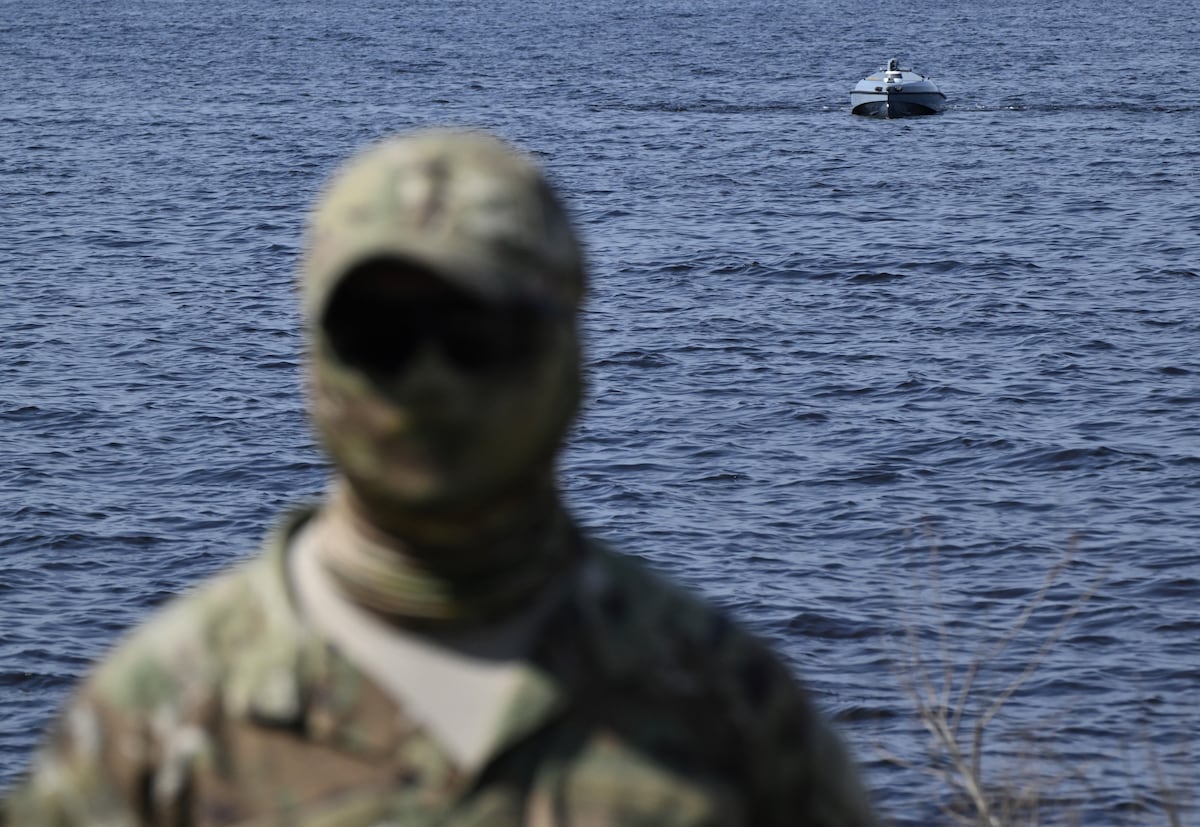
Specifically, the Magura-style of unmanned surface vessels are being primed for international markets.
“Their high export potential stems from simple economics: warships are financial liabilities – a fleet of unmanned naval drones is inherently low-cost and requires minimal maintenance, yet it can execute the same critical functions,” the Brave1 representative was quoted as saying.
The Magura V5 was on display at several trade shows over the last two years as part of the Ukrainian industry footprint at these events. One of its latest variants was also tested during NATO’s largest unmanned systems military exercise in Portugal last month.
Ukrainian officials hope the sale of excess equipment will allow Kyiv to obtain more money to invest back into its own production capabilities.
Another technology identified for potential export entails communication systems for drones, resilient in GPS-denied environments, manufactured locally by companies such as Swarmer and Norda Dynamics.
Multi-purpose unmanned robots also received Brave1’s stamp of foreign-market eligibility, with Ukraine offering 100 variants. Ground robots have served a multitude of roles throughout the war, from logistics to attack robots.
Zelenskyy has previously floated the broad idea that exports could be divided into three different cooperation frameworks: those bound for the United States, Europe, and elsewhere.
Elisabeth Gosselin-Malo was a Europe correspondent for Defense News. She covers a wide range of topics related to military procurement and international security, and specializes in reporting on the aviation sector. She is based in Milan, Italy.
米兰——乌克兰政府支持的国防技术集群 Brave1 中的公司已经确定了四类武器,认为它们适合出口到西方盟友,这是该国逐步放宽武器转让禁令的一部分。
本月初,乌克兰总统泽连斯基在基辅举行的国际国防工业论坛上发表讲话时解释说,虽然这一过程的大部分内容仍在确定中,但它将涉及对剩余系统进行部分和有组织的解除限制。
在接受乌克兰政府运营的United24媒体采访时,Brave1公司的一位代表指出,海军无人机、无人机导航软件技术、炮塔和无人地面车辆是可出口的武器类别。
具体来说,Magura 型无人水面舰艇正在为国际市场做准备。
Brave1 的一位代表表示:“它们巨大的出口潜力源于简单的经济学原理:军舰是财政负担——而无人海军无人机队本身成本低廉,维护需求也极低,但却能执行同样的关键功能。”
过去两年,Magura V5无人机在多个贸易展上亮相,代表了乌克兰工业在这些展会上的一席之地。上个月,其最新改进型之一还在北约于葡萄牙举行的最大规模无人系统军事演习中接受了测试。
乌克兰官员希望出售多余的设备能够让基辅获得更多资金,用于投资提升自身的生产能力。
另一项具有潜在出口潜力的技术是无人机通信系统,该系统在 GPS 信号受限的环境中具有弹性,由 Swarmer 和 Norda Dynamics 等公司在当地制造。
多用途无人机器人也获得了Brave1的海外市场准入认证,乌克兰提供了100种型号。地面机器人在整个战争期间发挥了多种作用,从后勤保障到攻击作战,不一而足。
泽连斯基此前曾提出过一个大致的想法,即出口可以分为三个不同的合作框架:出口到美国、欧洲和其他地区。
伊丽莎白·戈斯林-马洛曾任《防务新闻》欧洲通讯员。她的报道涵盖军事采购和国际安全等广泛领域,尤其擅长航空领域的报道。她常驻意大利米兰。