I Corps adapts to meet modern challenges in the Indo-Pacific第一军调整自身以应对印太地区的现代挑战。
Lt. Gen. Matthew McFarlane discusses how I Corps is evolving to strengthen readiness, sustainment and partnerships across the Indo-Pacific.
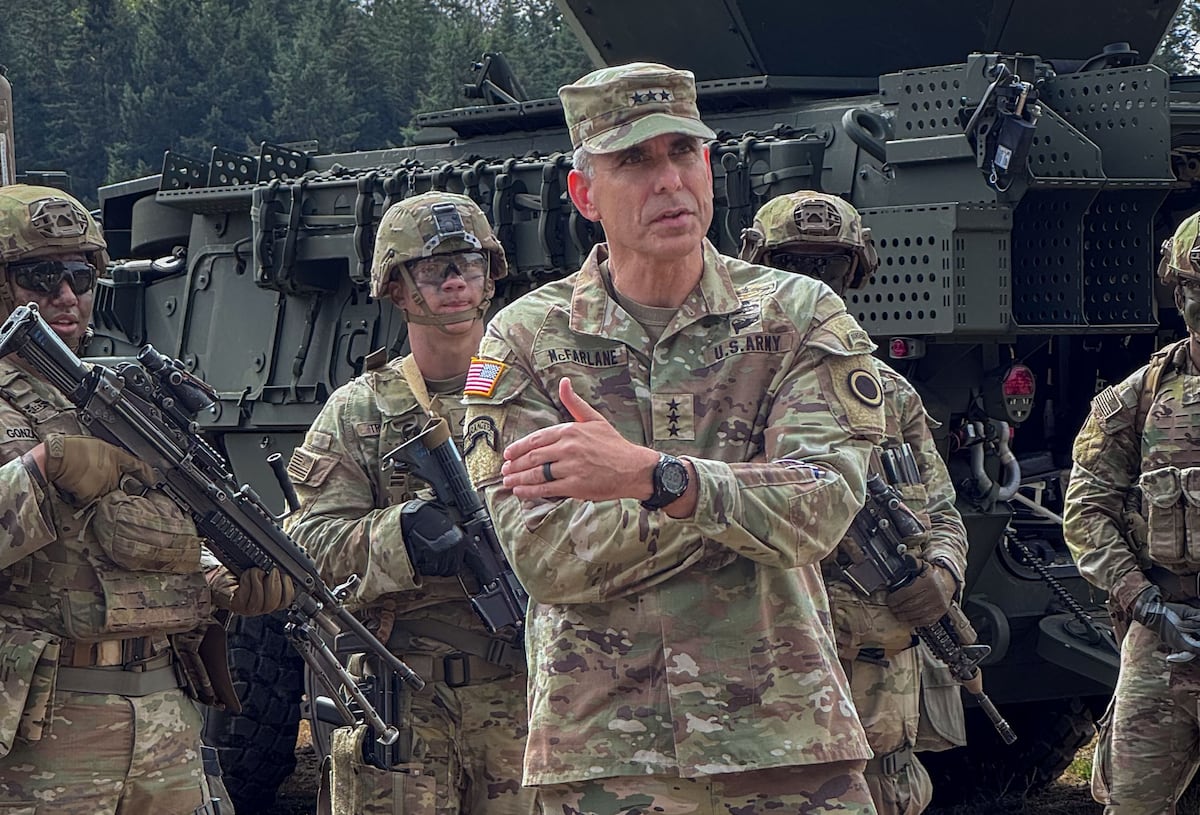
The U.S. Army’s I Corps is at a moment of strategic transition, shouldering the responsibility of shaping the service’s readiness across the vast, complex Indo-Pacific theater.
Overseeing that effort is Lt. Gen. Matthew McFarlane, under whose command the Corps, through continuous exercise and training, is rethinking itself as both a forward campaign-capable headquarters and a practical force provider for homeland defense.
The Corps has adopted innovation from the top to the bottom, working to modernize networks, integrate long-range precision fires and manage how unmanned systems in formations will transform the force.
Defense News sat down with McFarlane in a recent interview to discuss how the Corps is preparing for various phases of conflict and recap lessons from its expansive training campaign.
Portions of this interview have been edited for clarity.
McFarlane: I Corps is undergoing significant transformation, purposely evolving to meet complex challenges of the 21st-century battlefield.
This isn’t simply about adopting new technology. [It’s] fundamentally reshaping how we think, train and operate, building a more agile, resilient and lethal force capable of rapidly responding to a wide spectrum of threats and contingencies across the Indo-Pacific region.
This transformation is driven by clear understanding of the evolving strategic landscape and a commitment to maintaining our competitive edge.
Central to that is a focus on modernizing our capabilities in key areas like network integration, long-range precision fires and unmanned systems. We’re actively experimenting with emerging technologies and integrating them into our formations as we campaign forward in the Indo-Pacific to enhance our situational awareness, decision-making and overall combat effectiveness.
Simultaneously, we’re refining operational concepts to ensure we can effectively employ new capabilities in a joint, combined, all-domain environment. This isn’t a future aspiration. We’re actively integrating advancements in our current training, campaign operations, forward and operational plans.
[U.S. Pacific Command commander] Adm. Paparo recently emphasized a strong connection between the Indo-Pacific and homeland defense. As he spoke earlier in September, the homeland is the Pacific.
I Corps as the operational headquarters [is] very focused on enabling our divisions with command-and-control, fires and sustainment, key aspects of operations in the Pacific.
We’re conscious in ensuring we are rehearsing those activities that are part of that set theater. We’re working closely with Army Material Command and 8th Theater Sustainment Command as they establish Joint Theater Distribution Centers in Japan, Australia, Philippines, Guam and others in development.
U.S. soldiers fire an M142 HIMARS during Exercise Balikatan 24 at Rizal, Philippines, May 2, 2024. (Cpl. Kyle Chan/U.S. Army)
They enable us to operate forward, and we’re deliberate about exercising those processes to move supplies from those theater distribution centers to places where we’re exercising.
All of our exercises generate readiness at home station and forward in certain areas during Pathways. ... We apply those ready forces forward and establish what we call Joint Interior Lines to make sure we understand how we can sustain forward operations wherever we’re conducting the Pathways event. It is a continual focus.
We continue to refine and validate pre-positioned stocks and systems we need to get what’s in those stocks into soldiers’ hands so they can apply them in whatever manner for the Pathways event.
Transformation is a key line of effort for I Corps across all of its down-trace units. All divisions have innovation labs. The key is how we integrate the progress each division is making with less redundancy and an optimized learning from each other.
We’re conscious about integrating [innovation labs] and are being deliberate about sharing lessons with the 25th Infantry Division and 4th Infantry Division as we experiment with everything from unmanned aircraft systems and counter-UAS to next-generation command-and-control.
Through that, we are helping them exercise with new technology in the field. The Pacific is a key aspect of that.
3D printing is a big one, UAVs, spare parts, coding different AI aspects.
Just in this headquarters, we coded an ability to ingest subordinate situation reports to create a comprehensive roll-up, highlighting opportunities and risks and recording command updates to provide an [executive summary] that aligns the team. That helps me understand risks and opportunities.
At every echelon we’re doing it and getting better. The key is harnessing all that to make sure we’re efficient.
We’re optimizing what we’re doing with each of our partners based on where they are. Our partners have sovereign defense desires. We’re keen on addressing those as part of the Pathways events.
We have three focus areas: what we’re building in terms of multilateral training tasks with partners participating in that event; building our own readiness for our tactical units and operational tasks; and experimentation to give feedback on new technology.
Across the board, the Philippines are shifting from counter-insurgent to large-scale combat operation focus. They’re reorganizing their army to focus on homeland defense.
We’re helping them do that as they’re looking at some type of land component command, which is the operational level headquarters that we’re working on with the Japanese and the Koreans as well.
The Army's Precision Strike Missile launching for the first time outside of U.S. territory during Valiant Shield in Palau. (U.S. Army)
In Japan, we continue to do Yamasakura and other events that focus on the defense of Japan. We’ve been really deliberate about focusing on how we integrate networks based on where their military is, so we can communicate and share data. That’s the key aspect.
The integrated command-and-control systems is a focus for us right now as we look at the Indo-Pacific Multinational Network. The development of that system enables us to work with any of our partners, based on where they are, to have a common operational picture, common intelligence picture and common logistics picture.
[It’s] still under development and we’re working hard to iterate and provide feedback, but certainly a focus at echelon is to make sure we can get it and have a C2 network. That’s a mission partner environment ability we all need.
We tested it in a couple exercises ... and we’re continuing to refine it. The Indo-Pacific J-6 is the lead for this effort and we’re continuing to work with them as they develop it.
It’s clearly something that the Indo-Pacific commander has mentioned. Land-based, long-range fires is what he sees as the Army’s top contribution to joint forces in the Pacific.
As long-range fires evolve to get precision fires on the land and maritime domain, control of the land is a markedly more important factor.
Think of a strait where you have land-based fires on either side and then long-range fires as we reorganize and put HIMARS in the [division artillery], which we’re doing with 25th Infantry Division. It’s extending our operational reach.
We are continuing to integrate these capabilities into existing exercises and war games to adjust concepts for the fight and what we can provide the joint force.
We’re doing an exercise here in April — Courage Lethality — where we’ll link all of the Corps’ long-range fires assets, Multidomain Task Force assets, some joint force partner assets for sensor-to-shooter integration and validation across the region from Washington state to the first island chain.
The UAS, counter-UAS and cyber are the ones all are asking for assistance with, and we’re deliberate about helping.
Others are long-range fires. The Philippines just acquired the self-propelled 155mm ATMOS system. The Japanese just deployed two hypersonic battalions. The technology’s following.
Another one is just ensuring partners are integrated with us and that we’re helping them see what’s happening around them. [We] are conscious about building those types of capabilities for homeland defense and the protection aspect.
Everyone’s watching Ukraine and learning different lessons. Ukraine certainly informs what’s going to happen in the Pacific, but it doesn’t mean what’s happening in Ukraine is exactly what is going to happen in the Pacific. It’s a completely different theater, different environment, different threats.
So, we’re conscious in making sure we’re pulling the applicable lessons to share with partners and integrate training against those tasks during rehearsals.
If you don’t adapt, you aren’t going to survive. We’re helping our soldiers understand the reality of the modern battlefield through things, for example, like putting command posts underground.
We’re optimizing our electronic warfare range here at Joint Base Lewis-McChord so we can work through the contested electronic warfare environment. We’re bringing in swarms of UAVs to training events so soldiers understand you are constantly in contact, either from threat satellites or from threat air assets and sometimes low-cost UAVs.
We’re shedding some of the things we did over the last 20 years as we operated with [central command posts and forward operating bases], distributing ourselves across the battlefield in smaller nodes for command posts and encouraging our leaders and units to understand that mindset to operate in a distributed sense.
Jen Judson is an award-winning journalist covering land warfare for Defense News. She has also worked for Politico and Inside Defense. She holds a Master of Science degree in journalism from Boston University and a Bachelor of Arts degree from Kenyon College.
美国陆军第一军正处于战略转型期,肩负着在广袤复杂的印太战区塑造陆军战备状态的重任。
负责监督这项工作的是马修·麦克法兰中将,在他的指挥下,海军陆战队通过不断的演习和训练,正在重新思考自身,使其成为一个既能进行前沿作战又能为国土防御提供实际力量的司令部。
海军陆战队从上到下都推行了创新,致力于网络现代化、整合远程精确火力,并管理无人系统在编队中如何改变部队。
《防务新闻》最近对麦克法兰进行了采访,讨论了海军陆战队如何为冲突的各个阶段做准备,并回顾了其大规模训练活动的经验教训。
为了行文清晰,本次采访部分内容经过编辑。
麦克法兰:第一军正在经历重大变革,有目的地进行演变,以应对 21 世纪战场上的复杂挑战。
这不仅仅是采用新技术的问题,而是从根本上重塑我们的思维方式、训练方式和作战方式,打造一支更加灵活、更有韧性、更具杀伤力的部队,能够迅速应对印太地区各种威胁和突发事件。
这一转变源于我们对不断变化的战略格局的清晰理解以及我们对保持竞争优势的坚定承诺。
其中核心在于着力提升我们在网络集成、远程精确火力打击和无人系统等关键领域的能力。我们正在积极试验新兴技术,并将其融入到我们在印太地区的作战编队中,以增强我们的态势感知、决策能力和整体作战效能。
与此同时,我们正在完善作战理念,以确保能够在联合、一体化、全域环境下有效运用各项新能力。这并非遥不可及的愿景。我们正积极将这些先进技术融入到当前的训练、战役行动、前沿部署和作战计划中。
美国太平洋司令部司令帕帕罗海军上将近日强调了印太地区与国土防御之间的紧密联系。正如他9月初所说,国土就是太平洋。
第一军作为作战司令部,非常注重为我们的师提供指挥控制、火力支援和后勤保障,这些都是太平洋战区作战的关键方面。
我们非常注重演练那些构成既定场景的活动。我们正与陆军物资司令部和第八战区保障司令部密切合作,协助他们在日本、澳大利亚、菲律宾、关岛以及其他正在筹建的地区建立联合战区配送中心。
2024年5月2日,在菲律宾黎刹举行的“肩并肩24”联合军演中,美军士兵使用M142“海马斯”自行榴弹炮进行射击。(美国陆军下士凯尔·陈摄)
它们使我们能够向前推进,我们有意运用这些流程,将物资从战区配送中心运送到我们正在进行演习的地方。
在“路径”演习期间,我们所有的演习都旨在提升驻地和特定前沿区域的战备水平。……我们将这些战备部队部署到前沿,建立所谓的“联合内线”,以确保我们了解如何在“路径”演习的任何地点维持前沿作战。这是我们持续关注的重点。
我们将继续改进和验证预先部署的物资和系统,以便将这些物资送到士兵手中,让他们能够以任何方式将其应用于“通道”事件中。
转型是第一军团所有下属单位的一项关键工作。所有部门都设有创新实验室。关键在于如何整合各部门取得的进展,减少重复工作,并优化彼此间的学习。
我们非常重视整合[创新实验室],并且正在有意识地与第25步兵师和第4步兵师分享经验教训,因为我们正在试验从无人机系统和反无人机系统到下一代指挥控制等各种技术。
通过这种方式,我们正在帮助他们进行实地新技术演练。太平洋地区是其中的关键一环。
3D打印是一个很大的应用领域,无人机、备件、人工智能各个方面的编码等等。
仅在我们总部,我们就编写了一个程序,用于接收下属单位的情况报告,生成一份全面的汇总报告,突出机遇和风险,并记录指挥部的最新动态,从而提供一份能够协调团队工作的[执行摘要]。这有助于我了解风险和机遇。
我们在各个层级都在这样做,而且做得越来越好。关键在于如何充分利用所有这些资源,确保我们的效率。
我们正在根据每个合作伙伴的实际情况,优化与他们合作的方式。我们的合作伙伴都有主权防御方面的需求。我们非常希望在“路径”系列活动中解决这些问题。
我们有三个重点领域:与参与该活动的伙伴开展多边训练任务;提升我们自身战术部队和作战任务的战备能力;以及进行试验以反馈新技术。
菲律宾正在全面调整战略,从反叛乱行动转向大规模作战行动。他们正在重组军队,以专注于国土防御。
我们正在帮助他们实现这一目标,因为他们正在研究某种陆地作战指挥部,也就是我们正在与日本人和韩国人共同合作的作战级司令部。
在帕劳举行的“勇敢之盾”演习中,美国陆军的精确打击导弹首次在美国本土以外地区发射。(美国陆军)
在日本,我们继续举办山樱和其他以日本国防为主题的活动。我们一直非常注重根据日军部署地点整合网络,以便进行沟通和数据共享。这才是关键所在。
在我们审视印太多国网络时,一体化指挥控制系统是我们当前的工作重点。该系统的开发使我们能够与任何合作伙伴,无论其身处何地,都能共享共同的作战态势图、情报态势图和后勤态势图。
它仍在开发中,我们正在努力迭代并提供反馈,但梯队团队的重点无疑是确保我们能够实现它并拥有一个指挥控制网络。这是我们所有任务伙伴环境都需要的能力。
我们在几次演习中进行了测试……并且正在不断改进。印太地区歼-6战斗机是这项工作的牵头单位,我们将继续与他们合作,共同推进研发工作。
显然,印太司令曾提及此事。他认为,陆基远程火力是陆军对太平洋联合部队的最大贡献。
随着远程灭火技术发展到能够精确控制陆地和海洋领域的灭火行动,对陆地的控制变得更加重要。
想象一下,海峡两岸都有陆基火力,而随着我们重组并将HIMARS火箭炮系统部署到师属炮兵部队(我们正在第25步兵师进行这项工作),远程火力也将得到增强。这将扩大我们的作战范围。
我们正在继续将这些能力融入到现有的演习和战争游戏中,以调整作战理念以及我们能够为联合部队提供的资源。
我们将在四月份进行一项名为“勇气与杀伤力”的演习,届时我们将把海军陆战队的所有远程火力资产、多域特遣部队资产以及一些联合部队伙伴资产连接起来,以进行从华盛顿州到第一岛链整个区域的传感器到射手的集成和验证。
无人机系统、反无人机系统和网络安全是所有人都在寻求帮助的领域,而我们也决心提供帮助。
其他的则是远程火力。菲律宾刚刚采购了155毫米自行高射炮系统ATMOS。日本刚刚部署了两个高超音速营。这项技术正在不断发展。
另一项重点是确保合作伙伴与我们融合,并帮助他们了解周围发生的事情。[我们]非常重视构建国土防御和保护方面的这类能力。
所有人都在关注乌克兰局势,并从中汲取不同的经验教训。乌克兰局势无疑会影响太平洋地区的走向,但这并不意味着乌克兰正在发生的事情就一定会在太平洋地区重演。太平洋地区的情况截然不同,环境不同,面临的威胁也不同。
因此,我们有意识地确保提取适用的经验教训与合作伙伴分享,并在排练期间将培训与这些任务相结合。
如果不适应,就无法生存。例如,我们将指挥所设在地下,以此帮助士兵们了解现代战场的真实情况。
我们正在优化刘易斯-麦科德联合基地的电子战训练场,以便应对复杂的电子战环境。我们会在训练活动中引入大量无人机,让士兵们明白他们时刻处于敌方威胁之下,这些威胁可能来自卫星、空中力量,有时也可能来自低成本无人机。
我们正在摒弃过去 20 年里我们采用的[中央指挥所和前沿作战基地]作战方式,将我们自己分散到战场上更小的指挥所节点,并鼓励我们的领导人和部队理解这种分布式作战的思维方式。
珍·贾德森是一位屡获殊荣的记者,为《防务新闻》报道陆地战争。她也曾为《政治报》和《内幕防务》工作。她拥有波士顿大学新闻学硕士学位和凯尼恩学院文学学士学位。