Confessions Of A Submarine Hunting S-3 Viking Crewman During The Twilight Of The Cold War冷战黄昏时期,一名S-3“维京”号潜艇猎杀艇艇员的自白
How the shadowy art of anti-submarine aerial warfare works and what it was like putting it to use while barreling through the sky in an S-3 Viking.
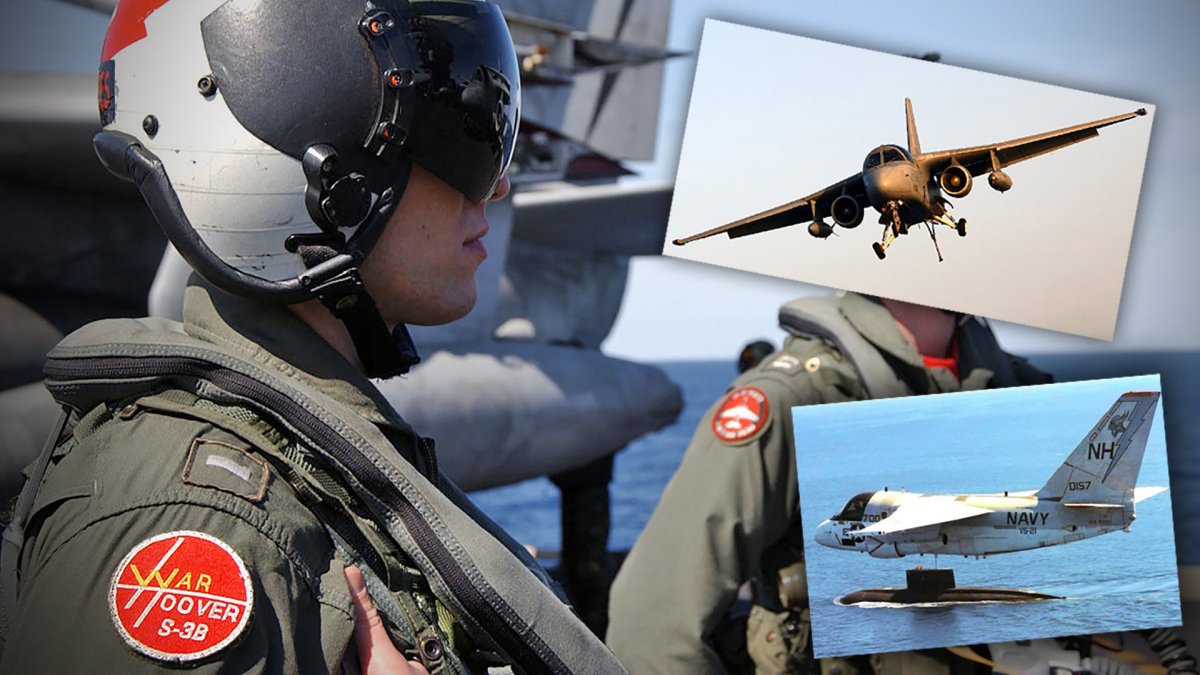
By Kevin Noonan and Tyler Rogoway
Updated Dec 30, 2020 4:05 PM EST
In the fascinating first installment in our exclusive multi-part series, Kevin Noonan recounted the unique path he took to learning how to hunt down Soviet submarines in an S-3 Viking during the final years of the Cold War. Now, in part two, Noonan tells us how the shadowy art of anti-submarine warfare is executed, why the S-3 Viking was so good at it, and takes us along on his first cruise, venturing into the Mediterranean aboard the USS Nimitz as tensions with the Soviet Union remained thick.
So strap into your ejection seat and fire-up the Viking’s sensor suite as we launch off the deck of the Nimitz to play an incredibly high-stakes game of cat and mouse above and below the waves.
The Many Missions Of The Marvelous Viking
The Grumman S-2 Tracker had served the USN admirably since 1954, but naval technology had changed significantly during that time and it just couldn’t keep up. The introduction of nuclear propulsion for submarines changed their combat capability and performance and transformed ASW acoustics. The S-2 was designed to track diesel submarines and her airframe just couldn’t adapt to the necessity of new technology.
The Navy was also deeply affected by the budget drain brought on by combat operations in Vietnam. Getting rid of excess expenditures was necessary and an entire class of ASW aircraft carriers, the Essex boats, which were home to the anti-submarine, or “VS,” squadrons flying the S-2, were seen as an unneeded fiscal burden. The USN decided to bring ASW (anti-submarine warfare) to the supercarriers, particularly the Nimitz class boats, the newest addition to the carrier fleet. So, the S-2s need for Avgas, requiring extra fuel storage separate from jet fuel, and its overall obsolescence forced the Navy’s hand.
Thus, in 1966, a call was sent out to the aviation industry to bring carrier-based ASW into the latter half of the 20th Century. Lockheed answered with the S-3A Viking. She would not only perform the roles expected of the Tracker, but excel at so many more during her lifetime.
A VS-37 S-2 Tracker breaks formation with her replacement, a VS-21 S-3A Viking, signifying the end of an era., USN
While the S-2 was the first U.S. naval aircraft designed from the drawing board to be a submarine hunter and killer in one fuselage, the S-3 was the first carrier-based jet designed to perform that mission with all its hunt and kill computerized. Univac joined Lockheed’s effort, providing the AN/AYK-10 General Purpose Digital Computer (GPDC) that coordinated input from all of the Viking’s sensors. Texas Instruments contributed the AN/APS-116 radar, the AN/ASQ-81 MAD (magnetic anomaly detector) system, and the AN/OR-89 FLIR (forward-looking infrared) systems that made the Viking state-of-the-art in non-acoustic detection of submarines. Finally, IBM also contributed to her non-acoustic detection prowess by creating the groundbreaking AN/ALR-47 ESM (electronic support measures) system.
What was so fascinating about all of these systems is how the GPDC, a computer produced in the late 1960s, could take input from them and create displays for all four of the Viking’s crew to perform the various roles assigned. Once the sensors had detected a specific threat, the computer could take input from aircraft avionics and move the airplane to intercept the target, automatically releasing its weapons. In other words, with input from all crew stations, the TACCO (Tactical Coordinator) could “fly” the plane from the backseat using fly-to-points (FTPs) and sensor/weapons select choices. As the aircraft symbol—or “bug” as we called it—captured the tasking symbology, the computer would send electrons to those particular parts of the aircraft and perform the assigned function. Pretty damn cool for an aircraft designed in the late ‘60s.
Of course, the S-3A was not limited to ASW. Her radar allowed her crew (and the rest of the battle group via secure Data Link 11), to create an accurate surface plot. We called these missions Surface Surveillance & Control (SSC). Her FLIR, if needed, both day and night, allowed for visual confirmation of the surface contacts at stand-off ranges. The “A” model did not carry the AGM-84 Harpoon missile so our weapons delivery was limited to a warship that didn’t pose a significant Anti-Air Warfare (AAW) threat. Of course, if the balloon went up and, say, a Soviet Kashin class destroyer or Kresta I class cruiser was posing a threat that other Air Wing or escort assets couldn’t attend to, then our bombs were as good as anyone else’s, and we were…expendable. Additionally, the S-3’s extremely sensitive ESM system was used by Air Wing strike missions to detect coastal air defense early warning radars and SAM/AAA (surface to air missile/anti-aircraft artillery) sites allowing the attack aircraft to thread their way through to a target.
The four stations in the S-3. The left rear is where the SENSO worked. , Youtube Screencap
Another critical mission that suited the Viking well was on-scene commander, primarily during SAR (search and rescue) missions. Her long loiter-time, enhanced by her ability to refuel while in flight, allowed her to stay overhead a sinking ship or downed aircraft for well over six hours if necessary. With her sonobuoys and smoke markers (if carried), a life raft or survivor’s position could be “marked.” There were several advantages of dropping a “long-life” sonobuoy (up to 8 hours of transmission time) near a person or craft in distress, it allowed the Viking crew to mark the position and transmit that symbol via Link 11 to the entire CVBG (carrier battle group) or other naval ships and aircraft involved in the rescue. The buoy could be tuned up by another maritime patrol aircraft (MPA), including those from foreign navies, allowing them to mark-on-top of the buoy if the S-3 had to return to the boat and another was not available. Finally, the buoy would be subjected to the same wave and current action the survivors had to endure, ensuring that their drift could be managed until actual rescue assets arrived.
The S-3 performed other missions, as well. Prior to advancements and proliferation of communications via satellite, the Viking could mount a communications pod on a wing hardpoint and relay fleet communications efficiently and accurately over the horizon (OTH). Also, the A model of the Viking was utilized for various logistics missions and VIP passenger transport, but to a far lesser extent than the SH-3 Sea King, her rotary-wing contemporary.
Although the S-3A had a weapons loadout similar to the S-2 Tracker, she had a capacity for growth not available to her radial-engine predecessor. With the submarine in mind, the Viking could carry a mixture of torpedoes, iron bombs, and rockets. By the time I started flying, she carried a standard loadout of up to four Mk 46 lightweight ASW torpedoes in the weapons bay (unlike the Tracker, we couldn’t carry torpedoes on our wing hardpoints). Also, in the weapons bay, we could carry bombs. However, the wing hardpoints were the primary weapon station for six 500-pound Mk 82 bombs or six Mk 20 Rockeye cluster bombs on a pair of Triple Ejector Racks (TER), two 1000-pound Mk 83 iron bombs, or 5-inch Zuni rocket pods.
S-3 unleashing rockets., USN
Torpedoes are the obvious weapon when going against the submarine. Less obvious, in a maritime world dominated by the nuclear submarine, is the need to attack one on the surface, something the Mk 46 was not permitted to do in order to protect any friendly surface ships in the drop area.
One of the most important and neglected missions conducted by NAVAIR was aerial mining. The S-3 was designed with mining in mind. She could carry all of the Quickstrike or Destructor varieties of the 500 lbs, 1000 lbs, or 2000 lbs Mk-80 series on the wing hardpoints or in the weapons bay. She could also carry the much larger Mk 55 and Mk 56 moored mines or the ASW Mk 60 CAPTOR mines underneath her wings. The USN approached the not-so-sexy art of mining halfheartedly and we tended to mirror that feeling by practicing this critical form of warfare with great inconsistency. Searching my memory, there is only one time that I participated in an aerial mining exercise.
S-3 carrying one of the big Mk 55 mines. , USN
Two significant mid-to-late Cold War Soviet threats to the aircraft carrier were the Soviet nuclear-powered Echo II class and the diesel-electric Juliett class of cruise missile-firing submarines (SSGN and SSG respectively). Both of these classes had to surface to launch. To meet this very real danger, Viking crews regularly practiced bomb delivery.
Finally, other things the Viking would carry were the always-indispensable external fuel tanks, one of which we always carried on the left and right-wing hardpoints when flying off the carrier. Also, when we flew from our home base to join the boat, one aircraft flew with a CNU-264/A blivet packed full of maintenance gear for our time at sea.
A VS-24 S-3 carrying the dreaded CNU-264/A blivet., USN
During the crew brief just prior to the squadron launching to go meet the boat, a notorious moan would issue from the mouth of that poor pilot who discovered he was scheduled to fly the “blivet bird.” I’ll never confess to knowing much about all “that pilot shit,” but it is quite obvious that flying with the blivet hanging off the right hardpoint was the proverbial “sore thumb” for regular aerodynamics, not to mention approaching the carrier for a trap.
Speaking of sore thumbs, I would imagine that the trim button on the control stick and the pilot’s thumb got one hell of a workout. The blivet could also be used for an emergency logistics flight to the beach anywhere in the world we currently sailed if the CVBG needed something that wouldn’t fit in our avionics tunnel and a COD (carrier onboard delivery) just wasn’t available.
Oh, and despite the hard-to-contain joy that issued from every aircrewman’s heart and soul when we briefed for the big fly-off from the boat going back to the beach, the ready room was filled with the requisite moan when that poor pilot once again discovered he was scheduled to fly the dreaded blivet bird.
How To Hunt A Submarine From The Sky
During the first 15 years of the Cold War, when the diesel submarine dominated the world’s oceans, several destroyers would work with air assets to exploit a Soviet boat’s greatest weakness if it came too close to a CVBG. Using their hull-mounted active sonar, the surface ships would make run after run over the top the target, especially if it appeared that it was coming to periscope depth. If it did get a chance to put its snorkel up, the destroyers would charge the submarine in a game of chicken, forcing the submarine to go deep. TBFs, AF Guardians, and S-2 Trackers would buzz an exposed periscope or, if contact was lost, work with passive buoys to regenerate contact.
The S-2, with newly developed active sonobuoys, would harass the Soviets with constant pinging. The goal was to keep the submarine down to the point of battery and/or air exhaustion, forcing him to surface. Sometimes, in rare cases, practice depth charges would be used to remind the wayward boat what it meant to “rule the seas.” During these concerted efforts, sometimes lasting for a day or two, the aircraft carrier and the remaining escorts would escape by putting miles between them and the Soviet threat. With the arrival of the nuclear submarine, the CVBG’s status as ruler of the sea wasn’t simply diminished, it was abdicated to this truly undersea warship.
The nuclear submarine can’t be forced to stay down until it exhausts its air and power. Its supply of those, technically, is unlimited. All its skipper has to do is effectively manipulate the oceanic environment and the effectiveness of those hunting him by either quietly slipping away or going balls-to-the-wall and outrun everything the CVBG could throw at him.
Allied Navies, after having experienced the USS Nautilus during one of its first exercises against a carrier and her escorts, realized that control of the sea had suddenly shifted. The first nuclear-powered submarine raced noisily under a carrier’s destroyer screen and made mincemeat of the carrier. She then began to sink the screen from within.
After having embarrassed the concept of US Navy ASW superiority, the Nautilus then added insult to injury by happily racing away beyond the reach of what remained of the battlegroup. Still utilizing World War II weapons, sensors and tactics fit for a slow, predictable diesel, senior naval leadership throughout NATO realized that this revolution in submarine propulsion required a revolution in every level of anti-submarine warfare. The sensors, the weapons, the tactics and the platforms delivering them all had to change.
YS-3A Viking prototype circa 1972., USN
From the first pencil mark on the Lockheed engineer’s drafting table, the S-3 Viking was created to hunt a nuclear-powered submarine. Its large nose housed the egg-shaped APS-116 radar antenna that could rotate at 300rpm allowing detection of a periscope at considerable distances, even in heavy seas. Its generous canopy provided the pilot and COTAC (Co-Tactical Coordinator) with a commanding view of the ocean below, greatly increasing the odds of seeing a feather on the surface. Its high-set and broad wings provided remarkable lift and aerodynamics required to maintain contact on an evasive subsurface target. Its tall tail ensured rock-solid stability and endurance at altitudes best suited for weapons release, while avoiding the occasional flying fish.
The S-3’s two remarkable, reliable, and extremely efficient engines could keep it aloft for MPA-like hours if necessary and ensure its safe return. It also had a relatively large fuselage disciplined by the designers to effectively contain the avionics, sensors, weapons, and crew needed to prevent a submarine from ruining an aircraft carrier’s day. And while most products produced for the military are designed for a current threat at the time an engineer sharpens their new pencil, the early 1970s Viking was built with room to grow in anticipation of the evolutionary progress of the Soviet submarine through the remainder of the 20th Century and into the 21st.
At the time, anti-submarine warfare for naval aviation was divided into search, localization/classification, track, and attack. I’ll assume this process is the same today. I haven’t encountered any in-depth narrative about how ASW is performed by a P-8 Poseidon , particularly the high/low altitude method, and I’m exceedingly happy that there is very little open-source information available.
The Viking’s ASW mission was of a tactical nature—keeping the carrier safe from the submarine’s cruise missiles and then torpedoes. Here’s how we did that in the team context of the CVBG:
Any number of scenarios can present themselves to a battlegroup, but it is rare that we weren’t aware of the general undersea picture around us because of intelligence sources, primarily from the Sound Surveillance System (SOSUS). However, contact on a SOSUS array didn’t mean the submarine was localized, much less being closely tracked in many areas of the open waters in the Atlantic and certainly along the coastal boundaries of that ocean. That is where MPAs, surface ships, and allied submarines came into play. Then, once a Soviet boat entered the Mediterranean, diligent tracking didn’t guarantee we would maintain constant contact. Thus, regenerating contact with battlegroup ships’ hull-mounted sonars and towed arrays (if they carried one) along with allied MPAs and the S-3s from the carrier, was an absolute priority.
S-3A circa 1987., USN
In the context of that need to regenerate contact, Allied air assets would lay large sonobuoy search patterns or the S-3s would lay relatively smaller search patterns if no other fixed-wing aircraft were available. If this was the case, then a second Viking might be sent out two to three hours later to maintain the current pattern by reseeding buoys that had malfunctioned or had come to the end of their life. The hope, of course, was that contact would be gained with the initial search pattern. Other strategies were to lay barriers of sonobuoys and position ASW ships along the path of the carrier as she approached and then penetrated the various choke points the Mediterranean offered.
More specifically, depending upon the expected target—nuclear or diesel submarine—we would begin the hunt by flooding the area with our radar and investigate all contacts. This provided us with a “big-picture” of what was out there and ensured we didn’t drop buoys on unsuspecting surface ships at night or in bad weather.
If a contact suddenly disappeared—known as a “radar sinker”—it would draw our attention all-the-more. This could be anything from a periscope, a passive detection antenna mast such as ESM, or a diesel boat’s snorkel as it attempted to recharge its batteries. It could also be a whale, schools of fish at the surface, trash, or even a sinking ship. If we are under EMCON (Emissions CONtrol—radio silence basically across much or all of the RF spectrum) within the battlegroup where none of the ships or aircraft are running their radars or radios, then we would launch and hold turning on our radar until we reached a certain distance from the carrier.
One of the greatest advantages that the Viking introduced to the CVBG was our digital computer and sensor systems. We could turn the radar on for a few sweeps and then go emissions silent. As the antenna made its one or two sweeps, the SENSO (Sensor Operator) would quickly mark all returns on his screen and these would become permanent digital symbols displayed each of the crew’s screens. In the S-2, the screens were analog and the radar operator had to mark his screen with a grease pencil or on a plot board, keeping in mind the aircraft’s track, position, and compass bearing.
In the S-3, the TACCO, who received all marked symbology placed on the screen by the SENSO, could then send that data via Link 11 to every receptive ship and aircraft in the CVBG. Meanwhile, the pilot would turn toward the targets of interest and “quietly” investigate. The S-2 operator, on the other hand, had to pass the data to the officer in the right front seat either verbally or on a plot board and have it communicated to the ASW commander via radio if not under EMCON and all the while relying on radios that might not always work as advertised.
Other EMCON scenarios might have the S-3 vectored to contacts of interest by the E-2 Hawkeye or a surface ship well distanced from the carrier that is acting as the controller of the mission. By its very nature, EMCON invites targets to start looking for the battlegroup. Thus, when an enemy submarine or supporting warship radiates in an attempt to find the CVBG, the ships and aircraft can get lines of bearing to the source of the enemy emitters.
For every type of contact generated from sources such as an ESM line of bearing or a datum, the S-3 Viking would lay specific sonobuoy patterns. As individual buoys hit the water and deployed their hydrophone, the SENSO would tune them up and begin to analyze what sounds the ocean was making around that particular sensor. One of the ideas behind a pattern of buoys was to space them in such a way where more than one buoy would gain contact. This helped to localize the position of the submarine to a specific area in the pattern. From there, we might wait to determine the direction of movement of the target as other buoys gained contact and the bearings from directional buoys, such as the AN/SSQ-53 DIFAR (Directional Frequency Analysis and Recording), changed with the passage of the submarine.
Once a course was established, we would run in and drop more buoys, at closer spacings, to refine our understanding of what the target was doing. The idea was to maintain a solid track that allowed us to catch any changes in course or depth. The other idea, in time of war, was to have enough tracking data refinement to drop a torpedo.
While we preferred to use passive buoys to achieve this refinement, it was always nice to have additional confirmation of the submarine’s presence. Active sonobuoys could be used, but that wasn’t the best choice against a nuclear submarine. Magnetic Anomaly Detection, or MAD, was an excellent choice that allowed us to remain passive in the prosecution of the submarine. It was (and is) a very short range sensor that detected disturbances in the Earth’s magnetic field made by a submarine’s own magnetic field. Usually, we’d have to fly very low against a submarine that was not very deep.
S-3 with the MAD deployed., USN
As opposed to the Orion, the Viking’s “stinger” MAD boom was retractable—at times it would get stuck in the extended position. Once we extended the MAD boom, I would have to “equalize” the ASQ-81 MAD head at the tip of the boom to help eliminate any field disturbance that came from our own aircraft. This is why most MAD booms are designed to be as far away from the aircraft as possible. Having a solid deflection of the MAD trace provided that warm-fuzzy feeling that confirmed we were doing a solid job of tracking the submarine.
Of course, submarines have several means at their disposal to counter or weaken the non-acoustic detection ability of MAD such as degaussing equipment within the hull or going through the process of deperming, or reducing its own field prior to deployment. The longer the submarine is deployed, however, reduces the effect of deperming. The Soviet use of titanium alloys on the hulls of some of its submarines was also effective at reducing the overall magnetic signature.
The S-3 regularly worked alone to search, detect, localize and track a submarine. We wanted to quickly find and keep a potential enemy as far away from the carrier as possible. However, gaining contact on a submarine and maintaining it was a far more successful endeavor when we worked as a team with all the ASW-capable assets of the battlegroup.
Mark on top! An S-3 Viking and A-6 Intruder from the USS John F. Kennedy (CV-67) fly over a Soviet Foxtrot class diesel submarine. , USN
One of the very best platforms to work with was a frigate or destroyer trailing its AN/SQR-19 towed array sonar. The sensitivity of that type of passive sonar and the professionalism of the Sonar Techs aboard those ships was humbling. Helicopters with dipping sonars were another team combination that encouraged a submarine to break off its plans. As a threat moved closer to the carrier, or we obtained contact in close, the carrier’s complement of SH-3 Sea Kings with the AN/AQS-13 dipping sonar would join in. If two helos were available, then even a nuclear-powered submarine would have difficulty getting to the carrier or getting away.
The Soviet naval philosophy of submarine warfare rarely called for a submarine to attack a carrier on its own. From its birth, the subordinate Soviet Navy understood the concept of joint operations since it was primarily utilized to support the Soviet Army during World War II. While Admiral Sergey Gorshkov grew the Cold War Navy into a dangerous blue water fleet, he translated the lessons of mutual support he had learned from the Black Sea campaign against the Germans into tactics that incorporated all air, surface, and subsurface naval assets. The Viking was flexible enough to engage most of this effort in one way or another.
If a cruise missile-firing submarine was relying on a Surface Action Group (SAG) of ships for targeting data for example, the S-3, while hunting the submarine, could also target and identify the accompanying group of surface combatants. The ability of one aircraft to carry a mixture of weapons such as torpedoes in the weapons bay and bombs or other ordnance on the wing hardpoints, invited the possibility of attacking both surface and subsurface targets. However, I would not have wanted to be in that airplane considering the excellent air defenses on all Soviet warships.
Of course, you soon learn the concept of expendability when they explain the big picture to you about how all aircraft and their crews are expendable during wartime when an aircraft carrier’s survivability is at stake. Preferably, once a combined fleet strike has completed an attack against a SAG, we could also provide post-strike standoff bomb damage assessment (BDA) utilizing our FLIR. If necessary, we could then use our weapons to finish off a heavily damaged enemy vessel.
The underbelly of the Viking is perforated with sonobuoy launcher holes., USN
The historical record is not clear about how many Soviet submarines actually came within firing distance of carrier battlegroups during the expanse of the Cold War. I’ve personally only seen two periscope photos that claim to be taken from our enemy. And when one considers the nature and pride of Russia, I would think that the Internet would be flooded with many, many more if the genuinely professional and brave Soviet submarine commanders had experienced repeated success.
We did our very best to contend with the complexities of ASW every time our wheels went into their wells on missions to keep the submarine away from our aircraft carriers. Unfortunately, if one were honest and able to evaluate all the data from 1946 to 1991, it would be clear that the ratio of green flares launched by a submarine going after a flat top to the number of non -reactionary, simulated torpedo or other ASW weapons’ drops was distressingly high.
Much like professional athletes who train for the big game, military units train for war. But one of the unique things about serving aboard a warship or a deployed unit in the United States Navy is that the enemy you are planning to fight kindly offers his services to help you prepare for that war. An aircraft carrier battlegroup’s deployment to the North Atlantic or the Mediterranean ensured a Soviet naval response and presence allowing both sides to potentially discover and learn how the other would act in time of war.
On Dec. 30, 1986, after a break for Christmas, the USS Nimitz entered the Western Atlantic with her bow pointed east toward the Strait of Gibraltar and entrance into the Mediterranean Sea. The squadrons of Carrier Air Group 8 (CAG-8, more commonly referred to as Carrier Air Wing Eight) which had been with the namesake of the Nimitz class of supercarrier since 1977, were already aboard having joined the carrier during the early days of December for the standard pre-deployment work-ups. The Nimitz flight deck and hangar bay was overflowing with a full complement of F-14 Tomcats from VF-84 Jolly Rogers and VF-41 Black Aces , A-7 Corsair II’s from VA-82 Marauders and VA-86 Sidewinders, A-6 Intruders from VA-35 Black Panthers , EA-6B Prowlers from VAQ-138 Yellow Jackets , E-2 Hawkeyes from VAW-124 Bear Aces , SH-3 Sea Kings from HS-9 Sea Griffins , and S-3A Vikings from VS-24 Scouts .
USS Nimitz with CAG-8 in early 1980s highlighting incredible aircraft diversity. Note the high visibility paint schemes., USN
We made our way quickly across the Atlantic. I don’t recall ever “stopping” to do flight ops before we entered the Med. Having transited the Strait at night, the CVBG grew in strength by one warship. A destroyer of the Soviet Navy took station off the Nimitz ’ port side.
Someone mentioned it in our ready room and I grabbed my camera for one of the painfully rare photos I took while I was in the Navy. There she was, a Kashin class destroyer with her two (of four) SS-N-2C Styx stern-facing missile launchers catching my eye. If the Cold War went hot in the next six months, she would turn and run away from us at a remarkable 35 knots and launch all four of these weapons, each of which carried a 1,000-pound high-explosive warhead.
My first Soviet. The Nimitz picks up her tattle-tail destroyer, a Kashin class in the Western Med in January 1987. , Personal Photo
The Soviets planned and trained for this scenario, something they called the “Battle of the First Salvo.” Hopefully, our Sea Sparrow launchers and 20mm CIWS (close-in weapon system) mounts would greet all four of her missiles before they arrived while our own genuine escorts sent the fleeing Kashin to the bottom.
As this 20-year old kid stood there pondering the Soviet warship’s presence beneath a Western Mediterranean winter sky, the reality I had only read about suddenly became quite real.
Before my 21st birthday, I would receive two stronger doses of that reality. The first came quickly. We had been attempting to relocate a Soviet Charlie II nuclear guided missile submarine (SSGN) that had been sent down from the Red Banner Northern Fleet and entered the Med to hunt the carrier we would eventually relieve, the USS John F. Kennedy , and now us. While I had been flying since we passed by Gibraltar, this would be my first actual ASW mission. Did I hear that right? My first sub-hunting mission in the Mediterranean Sea would be to find a genuine Soviet submarine!
I was scared S.H.I.T.L.E.S.S.
We launched and headed to the southern edge of the Tyrrhenian Sea (one of the many seas within the Med) to relieve a P-3 Orion flying out of Sigonella, Sicily that had been monitoring and re-seeding a large search pattern of sonobuoys laid by previous P-3s. The pattern was designed as a flanking barrier to protect the Nimitz’s movement east and southeast toward the central Med just south of Sicily. Our mission was to monitor and re-seed the southern end of the pattern to replace dying buoys. Contact with the Soviet submarine had been lost a day or so before, at least by aviation and surface ASW hunters. We needed to regain it so we could keep the carrier from getting within the 40-mile range of the Charlie’s eight SS-N-9 Siren anti-ship cruise missiles.
For four hours, we overflew each buoy in the pattern to update our plot and its geolocation to pass on Link 11 data link to the CVBG, the ASW Operations Center (ASWOC) at Sigonella, and the incoming P-3 that would relieve us. I tuned up sections of the pattern and I watched and listened. We reseeded specific buoys whose batteries died while we were out there.
I watched. I listened.
It was time to return to base. As we got vectors to the ship from the E-2, we climbed up to a decent cruising altitude and pointed our nose home. I continued to scan my tuned-up buoys, switching between acoustics and radar as I searched for the battle group to give the pilot an exact location of the boat. I switched back to acoustics and scanned.
There… there ! Was it? It looked like a submarine. It wasn’t quite the exact signature I expected from a Charlie . I doubted. What should I do? Tell the TACCO? We’re almost out of fuel. The ASMOD (intel unit that coordinates ASW operations) aboard the carrier said the relief P-3 was having problems and wasn’t going to launch on time. My mind racing, I kept thinking to myself: “Was it the Charlie ? It looked like a submarine. I don’t want to make the wrong call. I can’t make a mistake during my first real-world ASW flight on an actual Soviet submarine. Is it a submarine? It looks like it but it only was a whisper, a very short contact.”
I was terrified and the self-doubt was overwhelming. And then the guilt set in. My gut was screaming at me: “You know it is her!” But the doubt…the fear…
Charlie II SSGN., USN
We trapped aboard and the Nimitz resumed her transit eastward, just before she turned southeast to pass between Sicily and Tunisia. I unloaded my ATR (AN/ASH-27 Analog Tape Recorder glass reel that records all of our acoustic and other data for an entire mission) and carried it down one deck beneath the flight deck to the ASMOD. I handed it the Nimitz ’s ship’s company AWs (aircrewmen) who analyzed all the tapes that we used to record our ASW flights. I was a very green AW and these guys knew it. I hesitated, then told them that I may have seen something on buoy such and such. “We’ll check it out.” They knew from my body language that I was worried.
In the ready room, I tried to relax. Everyone noticed a sudden tremor underneath our feet as the carrier increased speed. It felt the same as when we crossed the Atlantic. I looked up from my chair and noticed that some AWs from the ASMOD were in the back of the ready room talking to my Chief. I sheepishly headed toward them. They had a large sheet of carbon-based paper in hand. On it, I noticed the same signature characteristics I had seen in the aircraft. My stomach sank and the blood rushed away from my face.
“You were right, it was the Charlie. Just a couple of minutes of contact!” They left and I waited to be dragged by my flightsuit collar at the strong hand of my Chief behind the curtain that separated the ready room from our tiny squadron operations office.
VS-22’s ready room aboard USS Harry S. Truman (CVN-75) circa 2003. , USN
Although he rarely displayed it, I’d already seen his temper and was certain I would incur his wrath. I wasn’t really afraid of him, I just didn’t want to disappoint him because he was such a good leader.
Crickets. Not a word from him. Not a word from my Division Officer. Not a word from my OPS boss. Not a word from the Skipper. The only response to my failure was the 100,000-ton aircraft carrier and her escorts making much more speed through the Strait of Sicily than originally intended.
What really should have happened was that I had my ass reamed by all of the above. In fact, it would have been best if I had been dragged by my flightsuit collar out of the ready room, down the passageway to see CAG and the CO of the Nimitz . I think I might have been an even better sailor, an even better AW, and an even better human being had that happened. Instead, my self-doubt and second-guessing would continue and, in a few months, put me in a very similar position where I would finally get a clue as to just how much responsibility a single, kid-AW in a multi-million dollar aircraft had in the protection of well over 5,000 priceless lives and four and a half acres of a multi-billion dollar piece of sovereign United States territory.
There was one very important takeaway from this experience: My gut was right and I would learn quickly that I had a sixth sense for finding submarines acoustically.
Horror On The Deck Above
The second dose of reality came tragically and violently on the night of January 25th as I watched from the warm safety of ready room four. The single EA-3B Whale from VQ-2, which had joined us as we entered the Med, was having major difficulty getting aboard. After missing the arresting wires five times, the Commander of the Air Group (CAG) ordered her to divert to Crete. However, she would need to refuel in order to do so.
During her attempt to take on gas, she damaged the buddy store attached to the A-7 that was acting as tanker that night. Out of options, the CAG and the CO of the Nimitz decided against having the crew bailout and into the frigid waters the carrier was sailing through. Instead, she would take the barricade.
After an inordinately long time rigging the barricade, the pilot and crew of six approached the carrier. It was clear, listening to the communications between the CAG Landing Signal Officer (LSO) and the navigator of the intel-gathering aircraft, that most all of her fuel had been burned waiting for the barricade. She was high, too high. The LSO screamed “Cut! CUT! CUT!” admonishing the pilot to cut power to the engines as the Whale crossed the fantail. Sadly, she just floated there.
Her nosewheel struck the top of the barricade and the EA-3B hit the angle deck just above my ready room. I will never forget the sound as she scraped down the deck and off the angle, the fuselage splitting just forward of the wings.
PLAT sequence of the loss of Ranger 12 aboard USS Nimitz, the EA-3B from VQ-2., portlyautey.com
There was absolute silence in the ready room as all eyes were on the PLAT (Pilot Landing Aid Television) screen. The Nimitz ’ engines crashed back and we came to a stop with the aircraft’s aft fuselage and tail now jutting skyward off our port side. The plane guard helo hovered over it, her searchlight illuminating the wreckage and our hope that helmets would appear. We also listened as the helo pilot requested permission for his Rescue Swimmer to go into the water and enter the aircraft. “NO!” was the answer. After what seemed like an eternity, hope turned to horror as the tail slipped beneath the waves.
I had never seen men die.
On Jan. 27, 1987, Terry Waite, an envoy for the Church of England trying to obtain the release of hostages held in Lebanon, became a hostage of those he was attempting to negotiate with. Soon after, and in Sixth Fleet fashion, we were ordered to respond to this latest of eternal Middle East crises making our way to the Eastern Med. As we moved across the Mediterranean Sea, I began to hear of the place we were headed: BENO station.
Like “Yankee Station,” where our aircraft carriers sailed and launched airstrikes against Vietnam, it was a place where the carriers would loiter off the ruined coast and countryside of Lebanon where civil war, which had been raging since I was in the 4th grade, continued. If necessary, it was the plot of sea from which we would launch strikes. Unlike, Yankee Station, it wasn’t an official USN name.
BENO stood for: BE NO liberty, BE NO time off, BE NO fun, BE NO end.
As we made our way there, our priorities shifted from fighting the Cold War to fighting the “War on Terror,” a conflict many don’t realize we were engaged in long before it arrived on our own shores on that fateful September day in 2001. In light of the common tactic used by terrorists in this region—namely hijacking airplanes—CAG-8 was tasked to train for a specific tactic designed to ensure the hijackers went where we wanted them to and VS-24 and I got to be a part of it!
During the briefing, we were told only that our S-3 would act as the hijacked airliner and we were instructed to squawk a simulated international IFF code reflecting our hijacked state when we arrived over the portion of the Eastern Mediterranean Sea we were training in. It would be during the second half of a four-hour flight. During the first half we would conduct an SSC mission.
S-3 launching off the waist catapult., USN
We launched for what for me would be one of my most amazing flights. The first two hours were spent making a surface plot of the water surrounding the carrier, checking some of the shipping and performing a mission of mercy that I’ll describe below. Then, at the appropriate time, we squawked our code, and soon, a gaggle of F-14s from both VF-84 and VF-41 were directed to intercept us by the E-2 (everyone in the Air Wing wanted in on this important training).
I dropped the FLIR and rotated it as they approached and, for the first time in my life, I got to see these breathtaking beauties occupying the same airspace I was in! One Tomcat gracefully took station on each of our wings. Another two held station on opposite wings but off and behind their wingmen. Two more flew well aft of us. I could not believe that I was here at this moment in time!
Unknown to my crew, our COTAC, Lieutenant D.R., had dressed the part having pulled a wash towel from the Officers Mess that perfectly resembled the headdress worn in that area. He took off his helmet, donned the cloth and from his helmet bag produced an Uzi water pistol! With Uzi in one hand, he held up a sign he had pre-written in a bold hand and plastered it against his right canopy glass so the Tomcat pilot and RIO—now tucked very closely off our right wingtip— could clearly read it. I don’t recall what D.R. had written, but it was obviously something snarky and it garnered a response from the F-14 on our UHF radio:
“Damn! You guys don’t have to take this thing so seriously.”
All four of us were laughing. Per the scenario, we then dropped our landing gear as if we were on final approach to a regional airfield in a country that supported terrorists. The Tomcats moved away, but stayed just off our wings. My eyes were then drawn back to my FLIR screen as eight pinpoints of heat came up on our six very fast. They would quickly materialize into eight A-7s that passed quickly beneath us and the water, almost “thumping” us. And then…they all released their (practice) bombs! Right down the simulated runway we were supposed to be landing on!
The E-2 called an end to the exercise and gave everyone vectors back to the boat.
God! To be a part of such things!
A High Stakes Intervention High In The Sky
Now, let me relate what happened at the front end of this flight, something that will stay with me until I die. I already said I got air sick during my first flight in an S-3 at VS-41. Well, the truth is, I had been throwing up on every flight since then. Thankfully, it wasn’t debilitating at this point and I could do my job; but it was so persistent that I decided to approach my Chief W. about it (who already knew—you built a reputation, particularly as a new crew member and the officers in the aircraft would let the Chief know).
AWC expressed his concern saying that it could be a career-ender. I was a little overwhelmed by that statement and asked about the possibility of switching to P-3s (he had flown in P-3s prior to coming to the Viking), which I assumed would be a more stable platform. He proceeded to inform me that like the S-3, an Orion spent a lot of time at low altitude dropping buoys, among other things. This was a problem because the location of the Sensor 1 and Sensor 2 stations in the P-3 was right on top of the wing which meant that any turbulence the aircraft flew through would be transmitted from the wing to the two aircrew who were in a tunnel with no windows, their seats facing the left side of the aircraft. He made an additional, critical point: “Add to all of this, the smell of burning carbon-based paper that will permeate your station as you search, for hours and hours…” The P-3C Update III, with plasma screens that replaced paper grams, had just achieved IOC—Initial Operating Capability—the previous year.
My mind was reeling as I was instantly transported back to the acrid smell in the trainer at NAS Willow Grove. At least in the Viking, I did have a small window, a limited view out the COTAC’s windscreen, and no burning paper. Were I to transition (back) to the P-3, I’d be puking multiple times each flight. I simply had no options. I had come so far. I had to stay in the S-3.
Apparently, my pilot for that unique flight, Lieutenant Russ Bartlett, had been following my story. During my time at VS-24 I had so many outstanding pilots. But I will always hold Russ as my favorite and the very best. He was that rare person that showed zero arrogance in his ambition for career and life. I had never encountered such a well-rounded officer. He showed absolutely no stress and always smiled. He was genuinely friendly with everyone and, as I would discover, was an incredibly compassionate human being (believe it or not, he was a U.S. Naval Academy grad!). The Viking was a second skin for him. He had no problem being a “bus driver” and he was extremely well versed in ASW tactics. He always invested everything into the moment.
The view out of the S-3 from the cockpit was absolutely amazing., USN
After we got airborne and began working the SSC part of the mission, going from altitude to get a radar plot, down to checking out specific ships, my stomach began to come unglued. My TACCO asked if I was alright and Russ expressed concern. We finished rigging another ship and Russ decided we would climb out, head to the area for the second part of our mission as the hijacked airliner and wait for the E-2 to commence the exercise. On the way, Lieutenant Bartlett would do something that changed my life.
My stomach had calmed down since I’d emptied its contents. We safed our ejection seats and Lieuantant R. D. climbed out of the COTAC’s seat and traded places with me. I climbed into the COTAC seat (the first time I’d ever flown up front), strapped in and was immediately awed by the incredible view my pilots and COTACs had.
We rearmed the ejection seats and then Russ told me he was going to fly a series of maneuvers. He took us through turns and then we did an aileron roll. My stomach became uncomfortable but nothing like it was while sitting in back. He then took us through a loop.
“Now, you fly the airplane.”
WTF! ME? I had never flown an airplane before. With caution and some reluctance, I put my hand around the stick. Russ then talked me through turns (he kept a light touch on his control stick and did the throttle work). Then, an aileron roll ( that amazed me and scared the hell out of me). Then, he took me through a loop. All the while, he kept a running commentary forcing my mind to focus on what I was doing and not listening to my stomach.
Once finished with this final maneuver, he explained some things: “In the back, your inner ear is tumbling as the airplane maneuvers. However, because you are enclosed back there with sparse reference to the aircraft’s movement and you are monitoring your screens, your eyes tell your brain a perceived truth that you’re not moving. That conflict between eyes and inner ear causes you to get sick. Being up front allows you to have clear movement references. Even better, being in control occupies your brain. Unless you become a pilot or an NFO [Naval Flight Officer], you’re not going to get up front here on a regular basis. So, when the airplane starts maneuvering or it’s a bumpy flight, take more time to look at the COTAC’s artificial horizon [most of the time you could see it if the COTAC’s flight gear didn’t get in the way]. More importantly, start telling your brain what is happening and that it’s okay.”
After all the maneuvering and discussion, I realized something…I didn’t feel any nausea! I wanted to stay up there for the rest of my life, but it was time for the second part of our mission. Once again, we safed our seats and as I climbed out, I turned and stood for a moment looking out of the front windscreen…such an incredible, beautiful view! I returned to my seat and we heard the E-2 calling, telling us to squawk the hijack IFF code.
A very maneuverable aircraft causing much discomfort for those in the back seats. A VS-29 S-3 in the vertical., USN
Lieutenant Bartlett saved me that day. After that flight—no less than seven years of additional flying—I never threw up again. Over the next two years, we would fly together many times and his mastery of the aircraft and the air would once again save me, our crew and, our airplane from near-disaster.
Russ would stay with VS-24 for our next Med cruise aboard the USS Theodore Roosevelt and he would be selected “1989 US Navy S-3 Pilot of the Year.” His humble ambition opened amazing doors for him, allowing him to slide into his next skin: The F/A-18 Hornet. As a fighter pilot, he would come back home to CAG-8 and fly 33 combat missions from the Roosevelt ’s deck with VFA-15 during Operation Desert Storm. In 1999, he would command his own Hornet squadron and then, in 2002, reach the pinnacle of his career by being selected as the Blue Angel’s boss for the 2003-2004 airshow season. A genuinely brilliant life for a genuinely great soul and I had the honor of flying with him!
We stayed for what seemed an eternity on BENO station. Sadly, our presence did nothing to liberate Terry Waite or the other hostages (Waite would remain a prisoner until 1991). As the Mediterranean winter transitioned into spring, I gained flight hours, experience and, to some degree, confidence in myself as a Viking SENSO. However, the battle group was about to enter into a major Sixth Fleet/NATO exercise known as Dragon Hammer ’87, and I would face another opportunity to be hammered by yet another dragon that would force me to get a clue as to just how much responsibility a single, kid-AW in a multi-million dollar aircraft had in determining whether we would kill an enemy or a friend.
During the intel brief, we were informed we would be searching for an Orange Force (enemy) submarine of the Italian Sauro class. All U.S. nuclear submarines (nucs) were operating as Blue Force (friendly) and were in designated “safe” boxes to ensure there would be no “Blue on Blue” engagements, something that was common in exercises and, tragically, far too common during wartime. The intel officer warned us, however, that one of the U.S. boats was close to the expected position of the enemy Sauro . I thought to myself: “Diesel vs. nuc? No problem!”
Upon launching from the Nimitz ’ deck, we were immediately vectored to a datum of a suspected enemy submarine “snorkeling” about 150 miles along the carrier’s PIM (Path of Intended Movement). The pilot pushed the throttles “to the stops,” as they say, and I prepared my system for classifying the contact.
We arrived on top and the submarine was still there…still at periscope depth (PD)…and according to the front-seaters, only a periscope was visible. This was odd. It was broad daylight. The boat wasn’t moving. It wasn’t snorkeling. Just before we marked on top the TACCO popped a buoy out and just after we passed over the periscope, he dropped another. The pilot, in a startled voice, said “I can see it clearly! She’s just hovering there with her periscope out of the water!”
One of the two NFOs chimed in: ”So what you’re saying, then, is it isn’t a POSSUB?” I’m sure the pilot turned to whoever said it and raised his middle finger. Meanwhile, he was setting up for another pass down the right side of the aircraft so the COTAC could get a look-see and hopefully classify the boat. After all, our NFOs were far more ASW-minded than our bus-driving pilots.
“Yeah, it’s a submarine alright.”
Dammit! Well, we AWs trained regularly in visual recognition of submarines. I asked the pilot to bring it down the left side of the aircraft in hopes of getting a very short, limited glance at it. “Let the recce-expert see it, I’ll make the call!” I said in my head. He obliged.
I reported to the TACCO that I wasn’t seeing or hearing anything distinctive from this contact that I could use to make a classification with. That was good news. The odds were clearly against it being one of the friendly U.S. nuclear boats. He warned me we were almost there and I pasted my face against my tiny, tiny window….and it flashed by.
Dear God! It had a sail with sailplanes !
All U.S. nuclear-powered submarines had a sail with sailplanes.
It had a periscope with a camouflaged tube !
US nuclear submarines had periscopes with camouflaged tubes.
I wiped the gathering beads of sweat from my forehead just as Alpha-Xray asked again: “Scout 702, classify the contact. Is it an enemy or friend?!” The TACCO looked at me. The COTAC twisted his body around to look back at me.
“I…ummm…I…she has sailplanes and a camouflaged periscope! Is it a friendly? U.S. boats have those things!”
Sauro class submarine. This is basically the perspective of what I saw, except she was at periscope depth, distorted by the water and my tiny window., Italian Navy
We climbed a little bit and I watched as my system began to process the buoys we had dropped. I had been anticipating the noises of a diesel submarine just as we approached, but with no snorkel up, I really didn’t know what I would find. The TACCO established radio contact with the ASW commander for the battle group, “Alpha-Xray,” and informed him what we had come upon. His immediate question: “Enemy or friendly submarine?”
The first trickle of sweat rolled down my spine.
The crew asked me to answer Alpha-Xray’s question. My system was still processing the first transmissions from the two sonobuoys. I willed a submarine signature to start showing itself on my display. Nothing was showing. Since he had such a clear view of the submarine, just below the surface, I asked the pilot to describe what he saw—better to deflect responsibility for a moment and buy time while I quietly begged the system to reveal its secrets.
“Yes, sir, but was it large? Did it have the hull of a U.S. nuc or a short hull expected of a diesel?”
There was a collective sigh of frustration from my three officers. We began to discuss it. The COTAC rummaged through his helmet bag and pulled out a copy of An Illustrated Guide to Modern Sub Hunters and flipped through the pages. He started shaking his head: “The Sauro has sail planes!” I couldn’t believe what I was hearing. Worse, as the supposed expert on recce of submarines and warships, I should have already known that and should have prepared much better for this mission—this wartime mission. Even though he now had an S-3 Viking making passes over his periscope, the submarine commander still did not move, adding more pain to my attempt at solving this equation.
“What do we do?” the pilot asked the TACCO. And then it happened. Over the ASW commander’s net came a voice different from the one we had been hearing from:
“This is COMSIXTHFLEET, I need you gentlemen to make a decision. You are there. Is it an enemy submarine or not.”
As we returned to the carrier to enter the overhead stack for recovery, not a word was spoken inside the cockpit except those verbalizations necessary for safe navigation of the aircraft. The t-shirt underneath my flightsuit was soaked (and I have to confess, the air conditioner in the Viking is the best damn AC unit I have ever experienced). I had a lot of time to think and I came to a full realization just how much responsibility I had sitting in that seat. Yes, my crew, my ship, my battlegroup, and even our fleet commander relied on the decisions I made about whether or not a submarine was friend or foe. Far more important and overwhelming, however, was that my decision could kill an entire crew of a U.S. Navy or Allied submarine. My decision: 50…80…120 lives. I was just a 21-year old kid, and in that seat, I was completely alone.
S-3 about to trap., USN
We were told in debriefing that the Sauro we had attacked had already been sunk by the U.S. nuc that was not too far away. The Italian submarine skipper was just waiting out the required time before he could regenerate into another enemy submarine and continue the exercise. Why he had retracted his snorkel prior to our arrival was a mystery. Perhaps his batteries had a full charge? However, when COMSIXTHFLEET voice was heard on our radio, he had raised it again and resumed charging his batteries. My helmet was filled with the sound and my display with the visual representation of his diesel engines. And why Alpha-Xray or COMSIXTHFLEET wasn’t aware of that fact just confirmed that even in an exercise the fog of war was very much present. Our attack, though carried out with an emotional mix of anger and triumph, was ultimately inconsequential, not to mention opportunistic in a shooting-fish-in-a-barrel sort of way.
Dragon Hammer continued until May 15, 1987. I flew a few more missions, but the person manning the cockpit was a different Anti-submarine Warfare operator. And then, on the morning of May 18, history would once again mark the time. I walked into ready room four in pressed dungarees and my VS-24 ball cap preparing to do a turnover with the ASDO (Assistant Squadron Duty Officer) watch with my fellow AW who had been standing it the night before. I had just come from CVIC (carrier intelligence center), having picked up the squadron’s morning message traffic. It was my job to compile them and, based on time and security classification, sort them and then place them on the “message boards” to be read by the skipper, the XO, and all the officers.
The off-going ASDO looked over my shoulder and said, “The XO and CO have already come through. They are in a briefing with the battlegroup commander.” That was unusual. He reached for a message I was about to place on the “secret” board and said, “That one!” I read the subject line:
Subj.: USS Stark attacked by missiles in Gulf
For a day or so there was the usual Navy scuttlebutt going around that we would transit the Suez Canal and head into the Persian Gulf to launch strikes against whoever did this. Thankfully, despite losing twenty-nine in the initial attack, the incredible crew of the Oliver Hazard Perry class frigate fought to save their seemingly fragile warship and the Stark was able to limp to Bahrain. We stayed in the Med and two days later anchored in Augusta Bay just off the east coast of Sicily to commence our turnover with the USS Kitty Hawk (CV-63). As has been done since the birth of the Sixth Fleet in 1950, weapons, supplies, equipment and sometimes aircraft were transferred from the carrier ending her tour to the one replacing her. And just like that, my first Med cruise came to its end.
Nimitz Battle Group resupplying in the Med in 1987. , USN
We weighed anchor and headed west toward Gibraltar. Unfortunately, I really didn’t grasp the historical significance of what would happen as we passed through the Strait into the Atlantic, something the USS Nimitz had done at least ten times since 1976. Instead of maintaining a course west toward Norfolk, Virginia, her homeport since she was commissioned a warship of the United States Navy on May 3, 1975, we turned south and set sail for her new home on the west coast.
The Nimitz would never again return to the Med as an aircraft carrier under the flag of the Atlantic Fleet.
Our passage south would take us across the equator to a port call in the exotic Brazilian port of Rio. We would then sail around the southern tip of South America through the infamous Cape Horn and head toward Bremerton, Washington, where Nimitz would call home, sailing under the flag of the Pacific Fleet.
Although the crew was excited to depart the Med, we didn’t have the classic case of “channel fever,” that dangerous ailment that infects a crew heading home. We still had a full month to go at sea.
As we made our way to the equator crossing, we did not do any flying. For me, Nimitz ’s bow became a place of rest and relaxation as I marveled at the different views the late afternoon sky and sunsets provided.
A crossing of the equator on any American warship is a rite of passage, an important tradition. Even as early as the 1980s, naval traditions were slipping through the fingers of sailors and were not being replaced with anything substantive. Being woken up by screaming voices and hands pounding stand-up lockers sent me back to that first morning at Great Lakes. My once faithful SENSO comrades had donned the clothes one would expect to find on pirates and herded us to the hangar bay to join a significant majority of the carrier’s crew. There, we were reminded that all humans were born a Wog (short for “Pollywog,” a tadpole or a sailor who has not yet crossed the line) and nothing was of a lower lifeform than a Wog.
I won’t go into the particulars of the tradition here, but the remainder of the morning and early afternoon was spent experiencing advanced techniques in humiliation. My favorite was the competition between two Wogs to see which could blow the putrid water out of the padeyes that littered the carrier deck (these are where the aircraft tie-down chains are fastened to keep a plane from moving). Of course, one Wog is ordered to put their face just above the padeye while the other Wog is ordered to do the same on the opposite side. You can figure out the rest (yeah, my face was covered!). Also, having to squirm through a tunnel filled with the compiled garbage and wasted food of 5,800 sailors over the past few days was simply one of those bucket list moments!
Shellback initiation aboard a US Navy ship circa 1982., USN
A final favorite was having my face forced into the belly of the “royal baby” which was thick with catapult grease. It wasn’t the grease that disturbed me, it was the fact that the Navy’s PFT (physical fitness training) program certainly wasn’t working.
After enough entertainment was had by all of King Neptune’s court, we were all baptized and converted into the Order of the Shellback. It was a fantastic, needed experience that binds sailors together, reminding them just how unique and important their lives are with the Navy family. The ceremony also provides the perfect opportunity for the flight deck and the hangar bay to get a thorough scrub down which becomes a major exercise in the movement of aircraft.
We continued on a south-by-southwesterly heading and pulled into Rio. As had been the practice of the Nimitz ’ Captain in the Med, we would only have three days to enjoy this port. One of the things that strikes you when you arrive at the waterfront of any major seaport where the U.S. Navy visits is the obnoxious greeting you receive from the loud presence of McDonalds’ Golden Arches. In the face of all of the rich history and magnificent cuisine, the line of American sailors roping out the door of the American fast food joint is a genuine cultural tragedy. (I had a Big Mac, medium fry, and a large Dr. Pepper).
A Sikorsky SH-3H Sea King helicopter from the U.S. Navy helicopter anti-submarine squadron HS-9 Sea Griffins of Carrier Air Wing Eight (CVW-8), assigned to the USS Nimitz and a Sikorsky/Agusta SH-3 Sea King helicopter from the Brazilian Navy squadron HS-1 lower AQS-13 dipping sonar during Exercise Topex 1-87, an anti-submarine warfare exercise in which four inter-mixed U.S. and Brazilian helicopter flight crews participated., USN
Sadly, our brief stay in Rio wasn’t a good one. A couple of my squadron mates (not AWs) were arrested on what I recall were questionable charges. We ended up having to leave them there—a complicated story that goes beyond the legal issue; we had some difficult senior officers throughout the Nimitz that showed far too much self-interest than leadership. As we pulled out of Rio, our angry carrier CO berated VS-24 over the 1MC, or 1 Main Circuit, the ship’s public address system…and shortly after almost lost his job— and potentially some lives—as we nearly collided with an oil tanker. Fun times were had by all!
Flight ops were once again suspended for the duration as we now raced south to the bottom of the world. The aircraft that couldn’t be stored in the hangar bay were tied down and sealed off against the elements. We all anticipated that our carrier would be tossed about by the weather and seas Cape Horn is notorious for. We were surprised by a relatively clear, cold morning sky as the Nimitz ’ Navigator invited everyone to see the very southern tip of South America off our starboard side.
We made our way quickly up the west coast of the Americas, not stopping to visit Chile or anywhere else. As we approached San Diego, our 10 Vikings were readied and 10 AWs were picked for the fly-off and cross-country flight back to Florida. I was very happy to be number 10. It was, in reality, very unfair to fellow AWs who had been in the squadron longer than I. But the Navy does things by rank.
We flew, first to NAS North Island and stayed overnight. It was a remarkable “full-circle” for me to walk back into the Trainer Building and say hello to all my instructors. All 10 of the flight crews were exhausted from our seven months at sea and slept the night away. Early the following morning, our 10 aircraft launched out of San Diego and flew across the incredibly beautiful expanse of the United States—well, what I could see of it out my tiny window, anyway.
S-3s in formation., USN
We refueled at Tinker AFB in Oklahoma and arrived at NAS Cecil Field in Florida in the early evening, having crossed through all of the countries’ time zones.
It was good to be on solidly dry land.
A first cruise is difficult for any sailor regardless of age, rank, or job title. For me, it was a loss of innocence and forced entry into the responsibility of being an adult. I wasn’t ready. I wasn’t prepared. I was actually angry with my brother for not telling me about what I would encounter. He wrote and told stories that were filled with the excitement of flying in the S-3 aboard the carrier. However, he was far better prepared for the world of the sailor than I.
My experience as a loner, growing up, prepared me to sit alone in my SENSO seat and become the best AW I could be. My desire for solitude failed me in an environment that feeds on teamwork and inter-reliance to make it through arduous times of being aboard ship. I quickly found out that any free time sailors had became time to find all the weak points of their fellow sailors and exploit them with various forms of harassment. If you showed any emotion, the feeding frenzy ensued. It was a brutal experience for a kid like me… and it was the greatest thing that could have ever happened to me.
I had to grow-the-hell-up.
I wish, among so many other things I failed to do, that I had had someone measure the thickness of my skin in December of 1986. I’m certain, had they done a second measurement in July of 1987, it would have been found to be considerably thicker.
A Theoretical S-3 Viking Mission From Start To Finish
Allow me to take you on a ride in the S-3A. It’ll be a morning hop from the deck of Nimitz that is scheduled to last 2 hours.
When I woke up at 0500, on my way to take a shower, I checked the flight schedule which is posted on our berthing bulkhead. The OPS guys were usually up until the wee hours waiting for the Air Wing to figure out what was going to happen the following day. So, we usually hit the rack before the schedule was done. My launch time is 0700, so I’ll grab some breakfast in the main galley one deck below the hangar bay and be in the ready room for the briefing at 0615. It’ll be the second launch of the day.
Two birds are launching with the other collection of Air Wing aircraft. Both of us will be doing SSC missions, one ahead of the Nimitz’ s PIM and our aircraft, Scout 710 will be going north of the carrier. “Good mornings” are passed among the two crews, and we sit in the comfortable chairs as the ready room TV comes to life with the meteorological brief. The pilots and NFOs (Naval Flight Officers) make notes. The CAG intel officer then briefs today’s strike mission that the fighter and attack guys are going on. Although there will be no ASW brief from the ASMOD, the CAG intel guy gets our attention when he informs us that we will be looking for a North Korean freighter that entered the Med from the Suez Canal a week ago and is suspected of trying to deliver arms somewhere along the North African coast. A picture of it is shown. Then our own Squadron Duty Officer (SDO) briefs us on aircraft numbers, aircraft mission status, frequencies, codes and things for the pilots and NFOs to do their pilot and NFO shit with.
Finally, my pilot turns to us and we begin our crew brief discussing the mission and then emergency procedures. I listen intently as he covers “Single Engine Failure off the Cat” with the COTAC and they go through the procedure together, actually acting it out as if they were in the cockpit. He then picks a random emergency procedure from Part V or “Section Five” of our NATOPS manual, usually something related to ejection or emergency egress from the aircraft. It is always something we long-ago committed to brain and muscle memory. He calls out “Man-Seat Separation Failure.” As we verbalize it together, I close my eyes and act it out in my chair:
Harness release handle – squeeze/pull
Occupant – rotate forward
Seat – forcibly push away
D-ring – manually pull
The TACCO and I then head out of the Ready Room and go forward down the long passageway on the O-3 level to the ASMOD to pick up the TTC (Tape Transport Cartridge) and ATR (Analog Tape Recorder). I check in with the AWs to see if there are any submarines of interest out there. They tell us that a Soviet Foxtrot class diesel boat left its anchorage off Tunisia four days ago and for us to be on the lookout for it. My TACCO heads to CVIC to get the 35mm intel camera and I head to the VS-24 Paraloft to suit up for the flight.
I enter the paraloft, which is a few doors down from our ready room. My flight gear, along with the individual gear of every other AW, pilot and NFO in the squadron, is hanging from one of the pegs along the bulkhead. I pull on all my flight gear and make my way out to the flight deck.
A Navy pilot gears up for a flight in the paraloft. , USN
As I reach the flight deck, I put my helmet on since the HS-9 plane guard Sea King is launching. Aircraft 710 is on elevator #1 and I only have a short walk to take from the protection of the carrier’s island superstructure.
As I move forward, my head begins a constant swivel looking for turning propellers, speeding MD-3 flight deck tractors or ‘huffer’ carts, purple shirts hauling fuel hoses, and aircraft either under tow or taxiing. After passing two A-7s and an F-14, I find 710 with the APU (auxiliary power unit) already started. I greet the flight deck crew with a smile and climb up into the bird, checking to see the head-knockers (ejection seat arming levers) on the TACCO and SENSO’s ejection seats are down (safe) and put my helmet bag and ATR on my ejection seat.
I then drop back out of the crew hatch and begin a quick external preflight, checking avionics bays for secured boxes, the Liquid Oxygen (LOX) bay for any signs of frost or ice on the 10 liter LOX ‘bottle’ (which looks more like a green basketball than a bottle), landing gear tires for undue wear, the engine fan blades for damage and consistency, the tailhook for damage, and the presence of a “remove before flight” pin. Finally, I check the 60 sonobuoy chutes for buoy placement, secureness, and the load we want to carry.
Kevin pre-flighting the S-3 Viking., Personal Photo
During the entire inspection, I keep an eye out for hydraulic and fuel leaks or puddles. Frequently, with such a relatively large aircraft, the tail of the Viking is hanging over the deck or elevator edge precluding any preflight. It is then that we truly rely on the professional attention to detail of the squadron plane captain (brown shirt) , maintenance techs and mechs (green shirts), and final checkers (white shirts with a checkerboard spray-painted on it) to check that portion of the aircraft before they park it in that position and after we begin to taxi to the catapult.
Climbing back into the aircraft, I move into the avionics tunnel to load my ATR and check all the avionics boxes ensuring they are mounted correctly. After checking the circuit breaker panels, I perform my most important preflight: inspection of my ejection seat.
By the time I sit down, the TACCO is just settling in and the pilot is starting #1 engine. The hatch is closed and #2 engine is started. The TACCO then turns power on to the GPDC and starts the loading sequence from the TTC. If we have any problems with the load, and there is time before the launch starts, the pilot will shutdown the #2 engine to allow the troubleshooting techs to determine the source of the problem.
As the computer loads, I’m checking my own boxes and screens at my station to ensure I have a system that is completely ready. I sit and listen intently to the talk in the cockpit, particularly between the two front seaters. They have an informed view of what is going on outside the aircraft and any safety issues, such as the very real possibility of an aircraft crashing on deck or one catching fire, that will be relayed by them directing what actions, if any, we in the back should take. They also will begin the checklists that will require us to arm our ejection seats as soon as the plane captain gets permission to remove the chains binding us to the flight deck.
An S-3 crew prepared for launch. , USN
As we taxi, I’m going through my various sensor systems ensuring they are working correctly. Meanwhile, the COTAC or pilot is giving us a running commentary of where we are on the flight deck (particularly at night and/or in bad weather) providing us with situational awareness.
You learn to listen to the tone of the officers’ voices to have that additional understanding of what is happening. This is so critical because an aircraft carrier deck, despite its layer of non-skid, is a very slippery place where airplanes regularly slide along, sometimes beyond what the yellow shirt directing the aircraft intends. Add a stormy night when you are trying to get to a catapult on a moving deck and it can be downright terrifying.
On one such terrible night, a sliding aircraft and the fear heard in the voices of the front seaters caused a SENSO in another squadron to self-eject, thinking the aircraft was going over the deck edge into the ocean. Thankfully, he survived and the aircraft stayed on the deck.
The always amazing yellow shirts direct us from our parking spot to the waist catapults. I hated launching from Cat 4 since our left main-mount tire rubbed the deck edge scupper and out my tiny window was nothing but ocean. I loved launching from Cat 4 because it was the shortest track of the four catapults on a modern carrier deck. Thus, it provided the most powerful cat shot, particularly if you had a heavy airplane. As we turn sharply by elevator 4, I see that we are being readied to go to Cat 4 (dammit and yay!).
View from the cockpit as the S-3 prepares to taxi aboard the boat. , USN
We are positioned behind the raised Jet Blast Deflector (JBD) of cat 3 where an E-2 is just going to full power—it just had to wait for us and the other S-3 to pass before it unfolded its wings. The pilot calls for the stowing of the INCOS trays (our control interfaces in the back) as the Hawkeye quickly disappears from view. Cat 3’s JBD is retracted back into the flight deck, giving us a clear path to cat 4. We’re next.
We taxi forward, the pilot unfolds the wings and we are hooked up to the catapult shuttle. I deselect ‘hot mic’ on my intercom system control panel ensuring that the engine sound at full power will not bleed over the intercom system, dangerously interfering with cockpit communication. If I see or smell something wrong, I’ll simply shift my foot to the foot pedal actuator on the floor and let them know. I glance around at the right-side circuit breaker panel, look at the TACCO and his station to make sure he looks hooked up and ready to go. I give him a thumbs up and look over my station one last time.
The airplane goes to full power and I assume the position , ensuring my entire body is in the proper ‘ejection envelope.’ If something goes terribly wrong, I will not have time to think about where my arms, legs, or head is. Should one of the front seaters pull their ejection handles, my seat’s rocket motor will have me clear of the aircraft in 4/10ths of a second, separated from my seat in 7/10ths of a second and I’ll be underneath a full canopy in 3.7 seconds regardless of whether or not my neck is broken.
The pilot then does his full ‘wipeout’ of the controls and calls out particular instruments that the COTAC confirms are good for a proper launch. The engines are screaming and airplane is bucking against the holdback fitting and the COTAC looks back to see two thumbs up from the both of us in the back.
Boom! We are racing down the track and with a jolt we are airborne!
The aircraft banks quickly to the left performing the requisite clearing turn to ensure we don’t collide with someone launching from the bow catapults—there isn’t anyone but we do it every time regardless or the Air Boss will make sure the pilot knows he failed to do so in his usual, loving and condescending manner on UHF for all to hear. Wings go back level, the gear are up, and everyone relaxes a bit.
Launching and trapping are always the most dangerous moments in naval aviation. So, what just happened there, from the moment we manned the aircraft to this point we are climbing out away from the ship, not a single radio transmission is made by anyone on the carrier or in an airplane during a day VFR launch, unless there is an emergency. Not a word! I am still humbled by this tremendous fact.
If we aren’t under EMCON (emissions control—basically radio frequency silence) conditions, I ask the COTAC to put power to the radar and I get down to work. As we climb to altitude and check in with the E-2 for tasking or vectoring, I begin my search in a relatively small scale on my radar screen. My desire is to develop an immediate picture of what radar contacts we have around the carrier. I also want to try and catch any airborne targets to warn the pilot of the presence of another aircraft. Although I really couldn’t determine altitude, the APS-116 radar did a really good job detecting aircraft.
As contact was made, I ‘hooked’ it with my trackball and created a radar symbol on everybody’s display. If, say, there was a large collection of fishing vessels in one locale, I’d mark one contact and inform the TACCO of the number of boats so as not to clutter our displays.
The E-2 does have tasking for us. Real-time intel suspects that the North Korean freighter might be in a shipping lane 140 miles to our north. We level off at a good cruising altitude and I extend the range of my radar display and begin to mark contacts. Since it will take a while to get there the inevitable cockpit talk begins and fattened helmet bags are relieved of their contents. I might have some candy bars I share with the other three, they might have crackers or a couple of cans of Coke or Pepsi. The discussions are always informative and fun. My enlisted-ness was left on the flight deck but there was always the standing rule: what’s talked about in the cockpit, stays in the cockpit. Of course, if one of the senior officers (Lieutenant Commander or above) was in the cockpit with us, it might be a quiet flight. However, if you’re flying with the Ops or Maintenance Department officer or the XO or CO, they tended to loosen their tongue and we had tabloid access to the latest Air Wing, carrier, and battlegroup gossip.
Being the sole enlisted guy in the aircraft had its unexpected benefits!
Normally, when doing an SSC mission, we would make a radar plot and then drop down to investigate as many of ships as time and tasking allowed. If of interest, the COTAC would take a picture of the ship. On this flight, we just plotted the ship returns and made our way to the area that the North Korean ship might be. As we get closer to the site, the TACCO sets up a search box and I mark every radar contact. We have plenty of fuel, so we drop down and begin a systematic search.
We aren’t going to spend any time with each ship, just check to see if it resembles the intel pic the COTAC has in hand. If there are multiple ships in the area, I alternate between radar and FLIR to visually rule out ships that are clearly not similar. If we think there is one, we go over and take a closer look. Also, I am constantly updating my radar contacts. By doing so, the GPDC (mission computer) takes my multiple entries and estimates the speed and direction of movement the contact is making, displaying it on everyone’s scope. The good thing about cargo ships is that they rarely alter course or change speed since their owners want them to go from point A to point B as quickly and fuel efficiently as possible.
Warships are another matter. If we gain contact on one and determine visually that it is a warship, it automatically gets our full attention. We report these immediately and give them extra care, especially if they belong to an unfriendly nation. After another hour, none of the contacts develop into the North Korean boat. Clearly, we won’t be making it back to the carrier for our scheduled recovery, but when you’re flying in the S-3, that isn’t a problem.
We hear the E-2 calling, but not on our UHF frequency. “Scout 710, Bear Ace on guard.” We climb up to altitude due to poor radio reception with the Hawkeye and try to get them on UHF.
“Bear Ace, Scout 710 on UHF.”
“Scout 710, read you. Ident and say fuel.” The COTAC determines the fuel state and radios it to the E-2.
“Roger that, 710. Go UHF secure.” We comply.
“Scout 710, read you loud and clear. New tasking. Possible subsurface contact bearing 176 from you, 102 miles. Detected by Briar Patch. Briar Patch heading in that direction from the south, ETA 1.5 hours. Mother and escorts have gone EMCON and are moving further south. Be advised, Intel states no expected Soviet submarine in this area. Your signal is buster.”
The E-2 is telling us that one of our escorts, call sign Briar Patch, had an ESM (electronic support measures, basically RF emissions) hit north of its position from an emitter usually only seen from a Soviet nuclear submarine. We passed over Briar Patch, a Knox class frigate on our way up here. So, the origin of this ESM hit is between us and our escort. We didn’t get the hit for our own ESM systems since we were down low checking surface ship names. We are to head there at fastest, practical speed. As always, the pilot is keeping a running tally on our fuel load.
“Bear Ace, Scout. Roger that. Advise Mom to have another Viking ready if we do obtain contact. We estimate only 1 hour on station due to fuel expended and Mom’s move away from us.” The E-2 acknowledged. Thank God for the ever-present angel that the Hawkeye always was for Vikings everywhere.
The TACCO instructs me to turn off the radar as the pilot pushes the throttles forward and we climb out to take up the prescribed heading. “I don’t want him to know we are up here if he hasn’t already figured it out. We’ll wait until we are in the suspected area before we radar flood.” I “Roger that, Sir” and turn the APS-116 off.
I get my acoustic system ready and tune-up one of the 31 frequencies available to us to get the system processing. I also check additional frequencies to see if anything is being transmitted on them since there is shipping in the area and the coast of Crete is relatively close. Unfortunately, the frequency range allotted for sonobuoys transmission just so happens to be used by dispatching companies, fire and police departments, and doctor’s messaging beepers…at least in the United States, anyway. Any sort of RF transmissions could interfere with my reception from the sonobuoys. It’s not expected, but I always want to be ready.
“ESM hit from a Snoop Tray!” the COTAC excitedly calls out. At the same time, the TACCO says a Link 11 ESM contact is displayed giving a relatively good fix on where the possible submarine might be transmitting. It’s looking more and more like an actual submarine since the transmissions are only single sweeps. She is clearly trying to find the battlegroup with her mast-extended Snoop Tray radar. I ask the TACCO if I can radiate to try and gain contact on the exposed masts. He hesitates, then says “No. We have a fix, let’s go in and drop a pattern and try and maintain some measure of surprise.”
We begin to descend to a good altitude to drop sonobuoys. The TACCO has been talking with the frigate, convincing the ship’s TAO to convince the ship’s skipper to stop their highspeed run toward the contact and deploy their SQR-19 towed sonar array since we are going to be on top of the fix in a few minutes. Alpha-Xray comes up on our frequency and informs us that the S-3 they had planned to send to relive us, due to our diminishing fuel, is ‘mission-down,’ probably meaning they don’t have a good system. Another Viking won’t be able to get here for another two hours. They have decided to send an A-6 tanker out to refuel us. Additionally, NAS Sigonella is going to launch its alert P-3 and a Royal Navy Nimrod operating out of Cyprus has changed course and is headed this way. Clearly, Sixth Fleet has been caught off guard by this contact.
The TACCO sets up a pre-planned pattern of sonobuoys and sends a Fly-To-Point (FTP) to the pilot’s limited screen—he can only see symbology, such as this FTP or a radar contact, we don’t want him distracted by an actual radar or FLIR display. “I’m not going to drop a BT buoy right away. That temp probe will make too much noise.”After a few more minutes the TACCO calls “60 seconds for first drop. Keep an eye out for a feather.” I hear a pop as the SSQ-53 DIFAR buoy is ejected from our aircraft and the TACCO calls “RF2 away.”
I instantly tune up RF2 and begin to listen. You can actually hear the buoy’s hydrophone descend to its depth. Even as it descends to its preset depth, the buoy begins to transmit the sounds the ocean is making. I look hard for that classic signature associated with a variety of Soviet submarines that have a Snoop Tray radar. Nothing. “After we lay this initial pattern, we’ll climb out and hook up with the tanker,” the pilot tells the TACCO. As if on cue: “Scout 710, Bear Ace. Raygun 502 bears 196 at 27, angles 15, left-hand pattern.” Raygun was the callsign for an A-6E tanker from VA-35 Black Panthers
“RF 10 away. Depth for this one is 200 feet. I’m going to alternate as we go along.” Since we didn’t drop a BT buoy to evaluate the temperature of the water down to a depth of 1000 feet, we don’t know where the ‘layer’ is. Buoys placed at 90 feet and then 200 feet attempts to get a hydrophone above and below a possible layer in hopes of gaining contact. We laid the remaining buoys and I tuned each one up, waiting for the information to populate. It was a 12-buoy pattern so I could watch all of them at the same time. In the S-3, we could display 16 buoys at one time. The S-2 Tracker, on the other hand, could only watch four at a time. And just as the pilot said, we began to climb out to meet the tanker.
NATOPS only required an oxygen mask to be worn by the crew during a controlled ejection. It left the option to the crew to wear one during launch, recovery and inflight refueling with the exception of tanking above 10,000 feet or refueling from a KC-135 or KC-10. The Intruder slowly grew in front of us, its drogue already hovering in the sky behind it. “IFR checklist complete,” the COTAC called over the intercom. My oxygen mask was on and my visor was down. I glanced one more time out the front windscreen and advanced my display on the MPD. On my upper screen, I began to see something on RF22, one of the last buoys dropped and set at 200 feet. I quickly brought that buoy up on my MPD.
“Contact RF22, subsurface contact, very weak. Possibly a Victor class SSN. No other buoy contact at this time.” As I’m saying this, the pilot eases our refueling probe into the tanker’s drogue with just a hint of vertical movement.
Contact RF22! Subsurface contact. SENSO station MPD (lower screen) and Auxiliary Readout Unit (upper screen)., Lockheed Martin
“Alpha-Xray, Scout 710 has subsurface contact on RF22, possible Victor class SSN.”
The buoy was placed on Link-11 as soon as it was dropped, so the battlegroup will know where in the world it is. “Damnit! We aren’t getting gas.”
‘Raygun, Scout, are you seeing any fuel transfer?’
Our attention is now divided between this surprising contact and the fact that we might not be able to take on gas. The pilot backs us out and away from the drogue. He might not have hit it hard enough to get it to transfer fuel. He increases the throttle and hits it pretty solidly.
“Scout 710, Alpha-Xray. Briar patch has contact.” We only have two UHF radios so we are only talking to the A-6 and the ASW commander. Wish we could talk with the Knox class frigate directly to find out what they are classifying it as. Their towed array is far more sensitive than my DIFAR buoys.
“Losing contact on RF22, Sir. Gaining very weak contact on RF30.” The last buoy in the pattern, also set at 200 feet. The submarine is moving south, toward the carrier. We have got to get some gas so we can lay more buoys!
“710, still no transfer. We got a good package check from an F-14 just before we headed your way.”
“Roger that, Raygun. Break. Bear Ace, 710, we have to bingo to the boat right now.”
KA-6D about to refuel and S-3., USN
Damnit! We won’t be able to go down and track this guy. Thankfully, the tail ship has contact.
“Alpha-Xray, 710. Interrogative, P-3 or Nimrod?”
“Scout 710, Alpha-Xray. Standby.”
The E-2 vectors us and the tanker to the carrier while the TACCO gets the ETA on the P-3 and Nimrod. The former is an hour out, the latter about an hour and a half. The frigate will hopefully maintain contact. We don’t have enough fuel to go back down and drop a proper tracking pattern. And there is something peculiar about this Victor . I should have contact on several buoys at one time. I continue to watch it fade in and quickly fade out on RF30.
“Alpha-Xray, Scout 710. Lost contact RF30.”
“Roger that, 710. Briar Patch has intermittent contact.”
We returned to the ship with vectors from the E-2 since the carrier went to EMCON to keep the submarine from finding her. This includes no TACAN emission. We had enough fuel to come in for a CASE I recovery, meaning no radio communications with the carrier since it was still visual flight rules conditions. Of course, the boat would have had us do a Carrier Controlled Approach had the weather been bad or had we been making a night recovery . Because everybody’s faster than us, the A-6 had already recovered and we broke at the bow. The pilot did call the ball on the radio and gave our very low fuel state. The pilot caught the “3-wire” and the LSOs gave him a grade of “OK.”
Back aboard safely. A VS-32 S-3 is directed out of the arresting gear aboard USS Theodore Roosevelt (CVN-71)., USN
I quickly pulled the ATR out of the recorder and made my way to the ASMOD. The TACCO and COTAC beat me there by a few minutes. All of us are still in our flight gear, all three of our helmets resting on the watch officer’s desk. During the debrief, we reviewed the tape. We also found out the reason why the Victor was so quiet. She was a Victor III.
S o, this is how a complete mission from the carrier might go. This was all just a story I made up to show some of the detail of a typical flight…and a ‘typical’ flight might just have turned out like this in the 1980s when you’re flying off an aircraft carrier in the Med, the Indian Ocean, the Persian Gulf, or the Western Pacific. Actually, some of the particulars did happen to me, such as not being able to refuel in flight when we had already called ‘bingo fuel.’ Thankfully, we weren’t operating in a Blue Water Ops situation and we made an emergency landing at Roosevelt Roads, Puerto Rico with both of our ‘fuel low’ lights glowing ominously. Also, I have never tracked a Victor III or any other boats of the Victor class. Regardless, it’s a good end-to-end look at how life in the S-3 could unfold on any given day while deployed.
In The Enlisted We Trust
One of the genuinely amazing things about the U.S. Navy is how they train and then rely on enlisted personnel to perform critical missions that can hold the lives of many fellow sailors and objects of great monetary value in the balance. The S-3 was not alone in having an aircraft whose primary mission, at the time, relied on the training and professional performance of an enlisted Naval Aircrewman. The maritime patrol community relied on three AWs to contribute to the historical success of the P-3 Orion.
Additionally, I will never be able to say enough about the helo community where the AWs in the back of the SH-3 Sea King, the SH-2 Seasprite, and the SH-60B Seahawk not only performed similar tasks as their fixed-wing brethren, but routinely risked their lives as SAR swimmers by leaving their aircraft “so others may live.” In my view, these guys defined the concept of hero each and every day the rotors turned overhead.
Part III of our Confessions Of An Ancient Viking Submarine Hunter series will take us back out to sea on Kevin’s second cruise. Now a far more experienced and hardened SESNO, we get more exciting tales from above and on the high seas. We also hear about a harrowing crash that Kevin was involved in, we dive into the new capabilities the upgraded S-3B brought to the fleet, what life was like in an S-3 squadron while deployed aboard the carrier, and more of the ins and outs of how to successfully keep Soviet submarines at bay. You can find Part III here.
Contact the editor: Tyler@thedrive.com
Comments couldn’t be loaded. Please refresh the page.
作者:凯文·努南和泰勒·罗戈韦
更新于美国东部时间2020年12月30日下午4:05。
在我们独家系列报道的第一部分中,凯文·努南讲述了他在冷战末期驾驶S-3“维京”反潜巡逻机猎杀苏联潜艇的独特经历。现在,在第二部分中,努南将向我们揭示反潜作战这门神秘的艺术是如何进行的,S-3“维京”为何如此擅长反潜作战,并带我们踏上他的首次巡航之旅——在美苏关系依然紧张的时期,他随“尼米兹”号航空母舰驶入地中海。
所以,系好弹射座椅,启动维京号的传感器套件,我们将从尼米兹号的甲板上起飞,在波涛之上和波涛之下展开一场惊心动魄的猫鼠游戏。
神奇维京人的诸多任务
自1954年以来,格鲁曼S-2“追踪者”无人机在美国海军服役期间表现出色,但在此期间海军技术发生了翻天覆地的变化,它已无法跟上时代的步伐。核动力潜艇的引入改变了它们的作战能力和性能,也革新了反潜声学技术。S-2的设计初衷是追踪柴电潜艇,其机身无法适应新技术的需求。
越南战争带来的预算赤字也对海军造成了沉重打击。削减开支势在必行,而整整一类反潜航母——埃塞克斯级——被视为不必要的财政负担。这些航母搭载着装备S-2反潜机的反潜中队(VS)。美国海军决定将反潜作战引入超级航母,特别是最新加入航母舰队的尼米兹级航母。因此,S-2反潜机需要航空汽油,这就需要额外的燃料储存空间(与喷气燃料分开),而且其整体性能也已过时,迫使海军不得不做出这一决定。
因此,1966年,航空业接到号召,要求将舰载反潜作战带入20世纪后半叶。洛克希德公司以S-3A“维京”反潜机响应了这一号召。它不仅能够胜任“追踪者”反潜机的预期任务,而且在其服役期间,在更多方面都表现出色。
一架VS-37中队的S-2“追踪者”飞机与接替它的VS-21中队的S-3A“维京”飞机脱离编队,标志着一个时代的结束。(美国海军)
S-2是美国第一架从设计之初就旨在将反潜作战功能集成于一体的海军飞机,而S-3则是第一架以舰载机形式执行反潜任务,且所有反潜操作均实现计算机化的飞机。尤尼瓦克公司参与了洛克希德·马丁公司的研发工作,提供了AN/AYK-10通用数字计算机(GPDC),用于协调“维京”反潜机所有传感器的输入数据。德州仪器公司贡献了AN/APS-116雷达、AN/ASQ-81磁异常探测器(MAD)系统以及AN/OR-89前视红外(FLIR)系统,使“维京”反潜机在非声学反潜探测方面达到了当时的领先水平。最后,IBM公司也为“维京”的非声学反潜探测能力做出了贡献,开发了具有突破性的AN/ALR-47电子支援措施(ESM)系统。
所有这些系统最令人着迷的地方在于,20世纪60年代末期生产的GPDC计算机能够接收来自这些系统的输入,并为“维京”号的四名机组人员生成显示界面,以便他们执行各自分配的任务。一旦传感器探测到特定威胁,计算机就能接收来自飞机航电系统的输入,并控制飞机拦截目标,同时自动投放武器。换句话说,战术协调员(TACCO)可以利用所有机组人员工作站的输入,通过飞行点(FTP)和传感器/武器选择,从后座“操控”飞机。当飞机上的符号——或者我们当时称之为“虫子”的那个——捕捉到任务符号时,计算机就会向飞机的特定部件发送电子信号,执行分配的功能。对于一架设计于60年代末期的飞机来说,这真是酷毙了。
当然,S-3A 的功能不仅限于反潜作战。它的雷达使机组人员(以及通过安全数据链 11 连接的其他战斗群成员)能够精确地绘制水面目标图。我们称这些任务为水面监视与控制(SSC)。必要时,它的前视红外系统(FLIR)可以昼夜进行,从而在远距离对水面目标进行目视确认。“A”型没有携带 AGM-84 鱼叉导弹,因此我们的武器投放仅限于那些不会构成重大防空威胁的军舰。当然,如果情况紧急,例如遇到苏联的卡申级驱逐舰或克列斯塔 I 级巡洋舰,而其他舰载机联队或护航舰艇又无法应对,那么我们的炸弹就和其他人的没什么区别了,而我们……也就成了炮灰。此外,S-3 极其灵敏的 ESM 系统被航空联队用于打击任务,以探测海岸防空预警雷达和 SAM/AAA(地对空导弹/防空炮)阵地,使攻击机能够穿过这些防御阵地到达目标。
S-3 上的四个站台。左后方是 SENSO 工作的地方。(YouTube 截图)
维京反潜巡逻机的另一项关键任务是现场指挥,尤其是在搜救任务中。其超长的滞空时间,加上空中加油能力,使其能够在必要时在下沉的船只或坠毁的飞机上空停留超过六个小时。凭借声呐浮标和烟雾标记(如果携带),可以标记救生筏或幸存者的位置。在遇险人员或船只附近投放“长寿命”声呐浮标(传输时间长达8小时)有诸多优势:维京机组人员可以标记位置,并通过Link 11数据链将该信号传输给整个航母战斗群或其他参与救援的舰艇和飞机。其他海上巡逻机(包括外国海军的巡逻机)可以对浮标进行校准,以便在S-3反潜巡逻机返回船上且没有其他巡逻机可用时,在浮标上方进行标记。最后,该浮标将承受幸存者所经历的同样的波浪和水流作用,以确保在真正的救援力量到达之前,可以控制他们的漂移。
S-3 还执行过其他任务。在卫星通信技术发展和普及之前,维京直升机可以在机翼挂架上安装通信吊舱,高效、准确地进行超视距(OTH)舰队通信中继。此外,维京 A 型直升机也用于各种后勤任务和 VIP 乘客运输,但其用途远不及同时代的旋翼直升机 SH-3 海王。
尽管S-3A的武器挂载与S-2“追踪者”类似,但它拥有其星型发动机前辈所不具备的扩展能力。考虑到潜艇作战的需求,“维京”可以携带多种武器,包括鱼雷、铁炸弹和火箭弹。在我开始驾驶这架飞机时,它的标准武器挂载是在武器舱内最多携带四枚Mk 46轻型反潜鱼雷(与“追踪者”不同,我们无法在机翼挂架上挂载鱼雷)。此外,武器舱内还可以挂载炸弹。然而,机翼挂架才是主要的武器挂点,可以挂载六枚500磅的Mk 82炸弹或六枚Mk 20“石眼”集束炸弹(安装在两组三联弹射挂架上)、两枚1000磅的Mk 83铁炸弹,或者5英寸“祖尼”火箭弹巢。
S-3导弹发射火箭,美国海军
鱼雷是攻击潜艇的首选武器。然而,在核潜艇主导的海战世界中,攻击水面潜艇的必要性却鲜为人知。为了保护投放区内的友军水面舰艇,Mk 46 被禁止进行此类攻击。
美国海军航空系统司令部(NAVAIR)执行的最重要却又最常被忽视的任务之一是空中布雷。S-3 的设计初衷就是为了执行布雷任务。它可以在机翼挂点或武器舱内携带所有型号的 Mk-80 系列“速击”(Quickstrike)或“毁灭者”(Destructor)水雷,包括 500 磅、1000 磅和 2000 磅三种规格。此外,它还可以在机翼下方挂载更大的 Mk 55 和 Mk 56 系泊水雷,或反潜 Mk 60“捕获者”(CAPTOR)水雷。美国海军对这项并不那么吸引人的布雷技术态度敷衍,而我们在演练这种关键作战方式时也往往缺乏连贯性,这同样反映了海军的这种态度。回想起来,我只参加过一次空中布雷演习。
S-3 运输机携带一枚大型 Mk 55 型水雷。(美国海军)
冷战中后期,苏联对航空母舰的两大主要威胁分别是核动力“回声II”级潜艇和柴电动力“朱丽叶”级巡航导弹潜艇(分别简称SSGN和SSG)。这两种潜艇都需要浮出水面才能发射导弹。为了应对这一切实存在的威胁,“维京”号航母的船员定期进行投弹演练。
最后,维京飞机还会携带一些必不可少的外部燃料箱,每次从航母起飞时,我们总会在左右机翼的挂架上各挂一个。此外,当我们从基地飞往航母时,还有一架飞机携带一个装满海上维护设备的CNU-264/A型浮筒。
一架搭载着令人闻风丧胆的CNU-264/A型炸弹的VS-24 S-3型飞机,美国海军
在飞行中队起飞前往航母前的机组简报会上,总会有一位可怜的飞行员发出哀嚎,因为他发现自己被安排驾驶那架“挂载炸弹的飞机”。我不敢说自己对“飞行员那一套”了解多少,但很明显,右侧挂架上挂着炸弹飞行,对于常规空气动力学来说简直是“灾难”,更别提接近航母准备落单了。
说到拇指酸痛,我猜想操纵杆上的配平按钮和飞行员的拇指肯定都承受了巨大的压力。如果航母战斗群需要一些无法装入我们航母航道且无法进行舰载交付(COD)的物资,那么这个小型运输机还可以用于紧急后勤运输,将物资运送到我们目前航行范围内的任何海滩。
哦,尽管在从船上返回海滩的起飞简报会上,每个机组人员都难掩心中的喜悦,但当那位可怜的飞行员再次发现自己被安排驾驶那架可怕的“布利维特鸟”时,准备室里充满了必要的抱怨声。
如何从空中猎杀潜艇
在冷战最初的15年里,柴电潜艇主宰着世界各大洋,多艘驱逐舰会与空中力量协同作战,利用苏联潜艇的最大弱点——如果其过于靠近航母战斗群(CVBG)——进行攻击。水面舰艇会利用舰体上的主动声呐,对目标进行反复的俯冲探测,尤其是在目标似乎接近潜望镜深度时。如果潜艇有机会伸出通气管,驱逐舰会发起“胆小鬼游戏”,迫使潜艇下潜。鱼雷轰炸机(TBF)、“守护者”(AF Guardian)和S-2“追踪者”(S-2 Tracker)会低空掠过暴露的潜望镜,或者在失去联系后,利用被动浮标重新建立联系。
S-2潜艇配备了新研制的主动声呐浮标,会不断地向苏联潜艇发出声呐信号进行骚扰。其目的是将潜艇拖到电池或空气耗尽的极限,迫使其浮出水面。有时,在极少数情况下,还会使用深水炸弹进行实战演练,以提醒这艘不听话的潜艇“称霸海洋”的真正含义。在这些持续一两天的协同作战中,航空母舰及其护航舰艇会通过与苏联威胁拉开数英里的距离而脱身。随着核潜艇的到来,航母战斗群的海上霸主地位不仅被削弱,而且完全被这艘真正的水下战舰所取代。
核潜艇不可能被迫下潜到耗尽氧气和动力为止。从技术上讲,它的氧气和动力供应是无限的。艇长只需有效地利用海洋环境和追捕者的效率,要么悄无声息地溜走,要么全力以赴,甩掉所有航母战斗群的追击。
盟军海军在亲身经历了“鹦鹉螺”号核潜艇在与航母及其护航舰艇的首次演习中展现出的强大实力后,意识到制海权已然易手。这艘首艘核动力潜艇轰鸣着潜入航母的驱逐舰护航区下方,将航母撕成碎片。随后,它又开始从内部瓦解护航舰艇。
在彻底粉碎了美国海军反潜优势的概念之后,“鹦鹉螺”号潜艇更是雪上加霜,轻松逃离了残存战斗群的追击范围。北约各级海军高层领导意识到,潜艇推进系统的革命性变革需要反潜作战各个层面的变革。他们仍然沿用着二战时期为缓慢而可预测的柴油动力潜艇设计的武器、传感器和战术。传感器、武器、战术以及运载平台都必须做出改变。
YS-3A“维京”原型机,约摄于1972年,美国海军
从洛克希德工程师在绘图桌上画出第一笔草图开始,S-3“维京”反潜机便被设计成一款猎杀核动力潜艇的利器。它硕大的机头内装有蛋形APS-116雷达天线,该天线可以每分钟300转的速度旋转,即使在波涛汹涌的海面上,也能在相当远的距离探测到潜望镜。宽敞的座舱盖为飞行员和协同战术协调员(COTAC)提供了俯瞰下方海面的绝佳视野,大大提高了发现水面目标的几率。高位宽大的机翼提供了卓越的升力和空气动力学性能,使其能够持续锁定难以捉摸的水下目标。高耸的尾翼确保了飞机在最适合投放武器的高空拥有坚如磐石的稳定性和续航能力,同时还能避开偶尔飞来的鱼群。
S-3的两台卓越、可靠且极其高效的发动机,必要时可使其在空中停留数小时之久,并保证安全返航。其相对较大的机身也经过精心设计,有效容纳了必要的航空电子设备、传感器、武器和人员,以防止潜艇破坏航空母舰的作战行动。虽然大多数军用产品都是根据工程师设计时所面临的威胁而开发的,但20世纪70年代初的“维京”潜艇在设计之初就预留了足够的扩展空间,以应对苏联潜艇在20世纪剩余时间和21世纪的不断发展。
当时,海军航空兵的反潜作战分为搜索、定位/识别、跟踪和攻击四个阶段。我假设如今的流程仍然相同。我还没有找到任何关于P-8“海神”反潜巡逻机如何执行反潜作战的详细资料,特别是关于高低空作战方法的,因此我非常庆幸目前公开资料很少。
“维京”号的反潜任务具有战术性质——保护航母免受潜艇巡航导弹和鱼雷的攻击。以下是我们在航母战斗群团队中如何完成这项任务的:
战斗群可能面临各种各样的情况,但由于情报来源(主要是声呐监视系统 (SOSUS)),我们很少会对周围的水下态势一无所知。然而,在 SOSUS 阵列上发现目标并不意味着潜艇已被定位,更遑论在大西洋的许多开阔水域,尤其是在沿海地区,对其进行密切跟踪。这时,海上巡逻机、水面舰艇和盟军潜艇就发挥作用了。一旦苏联潜艇进入地中海,即使进行严密跟踪也无法保证我们始终保持联系。因此,与战斗群舰艇的舰体声呐和拖曳式声呐阵列(如果舰艇配备)以及盟军海上巡逻机和航母上的 S-3 反潜巡逻机重新建立联系,是当务之急。
S-3A,约1987年,美国海军
为了恢复联系,盟军空中力量会布设大范围的声呐浮标搜索区域;如果没有其他固定翼飞机可用,S-3反潜巡逻机则会布设相对较小的搜索区域。在这种情况下,两到三个小时后,可能会派出第二架“维京”反潜巡逻机,通过重新布设故障或已失效的浮标来维持当前的搜索区域。当然,盟军的最终目标是利用最初的搜索区域重新取得联系。其他策略还包括布设声呐浮标屏障,并在航母接近和穿越地中海各咽喉要道时,沿航道部署反潜舰艇。
更具体地说,根据预期目标——核潜艇或柴电潜艇——我们会先用雷达对该区域进行密集搜索,并对所有目标进行调查。这让我们能够掌握该区域的整体情况,并确保我们不会因为夜间或恶劣天气而误伤毫无防备的水面舰艇。
如果目标突然消失——即所谓的“雷达隐身物”——会更加引起我们的注意。这可能是潜望镜、被动探测天线桅杆(例如电子支援措施天线)或柴油动力艇的通气管(正在给电池充电)。也可能是鲸鱼、水面鱼群、垃圾,甚至是正在下沉的船只。如果我们处于电磁管制(EMCON,即在大部分或全部射频频谱范围内保持无线电静默)状态,且战斗群内所有舰船和飞机均未开启雷达或无线电,那么我们会起飞并保持开启雷达的状态,直到与航母保持一定距离。
维京雷达为CVBG带来的最大优势之一是其数字化计算机和传感器系统。我们可以开启雷达进行几次扫描,然后将其关闭。当天线完成一两次扫描时,传感器操作员(SENSO)会迅速在屏幕上标记所有回波,这些标记会变成永久性的数字符号,显示在每位机组人员的屏幕上。而在S-2雷达上,屏幕是模拟的,雷达操作员必须用油性笔或在绘图板上标记,同时还要记住飞机的航迹、位置和罗盘方位。
在S-3系统中,战术空中管制员(TACCO)接收了SENSO在屏幕上显示的所有标记符号,然后可以通过Link 11数据链将数据发送给航母战斗群(CVBG)中所有接收目标的舰艇和飞机。与此同时,飞行员会转向感兴趣的目标并“悄悄”进行侦察。而S-2操作员则必须将数据口头或通过标绘板传递给右前座的军官,并在未处于电磁管制(EMCON)状态下通过无线电将其传达给反潜作战(ASW)指挥官,并且始终依赖于可能并非总是如宣传的那样可靠的无线电设备。
其他电磁管制场景可能包括由E-2“鹰眼”预警机或远离航母(作为任务指挥方)的水面舰艇引导S-3攻击目标。电磁管制本身会诱使目标开始搜索航母战斗群。因此,当敌方潜艇或支援舰艇发射电磁辐射试图发现航母战斗群时,舰艇和飞机就能获得敌方辐射源的方位信息。
对于来自诸如电子支援措施(ESM)方位线或基准面等各种探测源的每种探测信号,S-3“维京”潜艇都会布设特定的声呐浮标阵列。当单个浮标落入水中并展开水听器时,SENSO系统会对其进行调谐,并开始分析特定传感器周围海洋发出的声音。浮标阵列的设计理念之一是使其间距合理,以便多个浮标都能接收到探测信号。这有助于将潜艇的位置精确定位到阵列中的特定区域。之后,我们可以等待其他浮标接收到探测信号,并利用定向浮标(例如AN/SSQ-53 DIFAR(定向频率分析与记录))提供的方位信息随潜艇移动而变化,从而确定目标的移动方向。
一旦确定了航向,我们就会靠近并投放更多间距更小的浮标,以更精确地了解目标的动向。这样做的目的是保持稳定的跟踪,以便捕捉到目标航向或深度的任何变化。在战时,另一个目的是获得足够精确的跟踪数据,从而能够投放鱼雷。
虽然我们更倾向于使用被动式声呐浮标来实现精确定位,但能有额外的证据确认潜艇的存在总是好的。主动式声呐浮标也可以使用,但对付核潜艇并非最佳选择。磁异常探测(MAD)是一个绝佳的选择,它使我们能够在追踪潜艇的过程中保持被动。它是一种(现在仍然是)超短程传感器,可以探测由潜艇自身磁场引起的地球磁场扰动。通常情况下,我们需要低空飞行来探测深度不深的潜艇。
美国海军S-3反潜巡逻机已部署MAD系统。
与猎户座无人机不同,维京无人机的“毒刺”式磁异常探测器(MAD)臂是可伸缩的——有时它会卡在伸出的位置。一旦MAD臂伸出,我就必须对臂尖的ASQ-81 MAD探测器头进行“平衡”,以消除来自我们飞机的任何磁场干扰。这就是为什么大多数MAD臂的设计都尽可能远离飞机的原因。MAD信号出现明显的偏转,让我们感到安心,确信我们正在有效地追踪潜艇。
当然,潜艇有多种手段可以对抗或削弱磁异常探测系统(MAD)的非声学探测能力,例如在艇体内部安装消磁设备,或者进行去磁处理,即在部署前降低自身磁场强度。然而,潜艇部署时间越长,去磁处理的效果就越差。苏联在其部分潜艇艇体上使用钛合金也有效地降低了整体磁特征。
S-3 反潜机通常单独执行搜索、探测、定位和跟踪潜艇的任务。我们希望尽快发现潜在敌人,并使其尽可能远离航母。然而,与战斗群中所有反潜作战力量协同作战时,与潜艇建立联系并保持联系的效果要好得多。
顶部标记!一架来自“约翰·F·肯尼迪”号航空母舰(CV-67)的S-3“维京”反潜巡逻机和一架A-6“入侵者”攻击机飞越一艘苏联“狐步”级柴电潜艇。
最理想的作战平台之一是配备AN/SQR-19拖曳阵列声呐的护卫舰或驱逐舰。这种被动声呐的灵敏度以及舰上声呐技术人员的专业水平令人叹服。配备吊放式声呐的直升机是另一种足以迫使潜艇放弃作战计划的组合。当威胁逼近航母或我们近距离接触目标时,航母上配备AN/AQS-13吊放式声呐的SH-3海王直升机就会加入作战。如果有两架直升机可用,即使是核动力潜艇也很难接近或逃脱航母。
苏联海军的潜艇战理念很少要求潜艇单独攻击航母。苏联海军自成立之初就理解联合作战的概念,因为它在二战期间主要用于支援苏联陆军。谢尔盖·戈尔什科夫海军上将将冷战时期的苏联海军发展成为一支强大的远洋舰队,他将从黑海战役中汲取的协同作战经验转化为整合所有空中、水面和水下力量的战术。“维京”级潜艇足够灵活,能够以各种方式参与到这场联合作战中。
例如,如果一艘巡航导弹潜艇依靠水面作战群(SAG)舰艇提供目标数据,那么S-3反潜巡逻机在搜寻潜艇的同时,也能识别并锁定这支水面作战舰艇编队。一架飞机能够携带多种武器,例如在武器舱内携带鱼雷,在机翼挂架上挂载炸弹或其他弹药,这使得它能够同时攻击水面和水下目标。然而,考虑到苏联所有军舰都拥有卓越的防空能力,我并不想乘坐那架飞机。
当然,当他们向你解释战时所有飞机及其机组人员在航母生存受到威胁时都是可牺牲的,你很快就会理解“消耗品”的概念。理想情况下,一旦联合舰队打击完成对敌方舰艇的攻击,我们还可以利用前视红外成像仪(FLIR)进行打击后防区外炸弹损伤评估(BDA)。如有必要,我们还可以使用武器彻底摧毁严重受损的敌舰。
“维京”号潜艇的底部布满了声呐浮标发射孔。(美国海军)
冷战期间究竟有多少艘苏联潜艇进入过航母战斗群的射程范围,历史记录并不清晰。我个人只见过两张据称是敌方潜艇拍摄的潜望镜照片。考虑到俄罗斯的民族特性和民族自豪感,如果那些真正专业且勇敢的苏联潜艇指挥官们屡次取得胜利,我想互联网上应该会充斥着更多类似的照片。
每次执行阻止潜艇靠近航母的任务时,我们都竭尽全力应对反潜作战的复杂性。然而,如果能够诚实地评估1946年至1991年的所有数据,就会发现,潜艇攻击航母时发射的绿色信号弹数量与非反应性模拟鱼雷或其他反潜武器投放数量的比例高得惊人。
就像职业运动员为大赛做准备一样,军队也为战争做准备。但在美国海军的军舰或部署部队服役的独特之处在于,你即将面对的敌人会“好心”地帮助你做好战争准备。例如,航母战斗群部署到北大西洋或地中海,就能确保苏联海军做出反应并保持存在,这使得双方都有机会了解对方在战争中的行动方式。
1986年12月30日,圣诞节假期结束后,尼米兹号航空母舰驶入西大西洋,舰艏朝东,朝着直布罗陀海峡和地中海入口方向前进。自1977年起便服役于这艘尼米兹级超级航母的第8舰载航空大队(CAG-8,通常被称为第8舰载航空联队)的各中队已于12月初登舰,进行例行部署前训练。尼米兹号航母的飞行甲板和机库里挤满了来自 VF-84“海盗旗”中队和 VF-41“黑桃A”中队的 F-14“雄猫”战斗机、来自 VA-82“掠夺者”中队和 VA-86“响尾蛇”中队的 A-7“海盗II”攻击机、来自 VA-35“黑豹”中队的 A-6“入侵者”攻击机、来自 VAQ-138“黄蜂”中队的 EA-6B“徘徊者”电子战飞机、来自 VAW-124“熊王”中队的 E-2“鹰眼”预警机、来自 HS-9“海狮”中队的 SH-3“海王”直升机以及来自 VS-24“侦察兵”中队的 S-3A“维京”反潜巡逻机。
20世纪80年代初,尼米兹号航空母舰与第8航空联队(CAG-8)合影,展现了其令人惊叹的飞机种类。请注意醒目的涂装方案。(美国海军)
我们迅速横渡了大西洋。我记得在进入地中海之前,我们从未“停下来”进行过飞行作业。夜间穿越海峡后,航母战斗群的实力增加了一艘军舰。一艘苏联海军驱逐舰在“尼米兹”号航母的左舷就位。
有人在我们的舰艇休息室里提到了这件事,我赶紧拿出相机,拍下了我在海军服役期间难得一见的照片。照片里是一艘卡辛级驱逐舰,舰尾四座SS-N-2C“冥河”导弹发射器中的两座格外引人注目。如果冷战在接下来的六个月内升级为热战,她会以惊人的35节航速转向远离我们,并发射全部四枚导弹,每枚导弹都携带一枚1000磅重的高爆弹头。
我的第一张苏联照片。1987年1月,尼米兹号在西地中海捕获了它的“告密者”——一艘卡辛级驱逐舰。(个人照片)
苏联人为此进行了计划和训练,他们称之为“第一轮齐射之战”。希望我们的“海麻雀”导弹发射器和20毫米近防炮能在她发射的四枚导弹到达之前将其拦截,同时我们真正的护航舰艇能将逃窜的“卡申”号击沉。
当这个 20 岁的年轻人站在那里,思考着西地中海冬日天空下苏联军舰的出现时,我之前只在书本上读到过的现实突然变得非常真实。
在我21岁生日之前,我将两次更深刻地体会到这种现实。第一次来得很快。我们当时正在试图转移一艘苏联“查理二号”核动力导弹潜艇(SSGN),这艘潜艇是从北方红旗舰队派来的,进入地中海是为了猎杀我们最终要接替的航母——“约翰·F·肯尼迪”号,而现在,它的目标正是我们。虽然自从我们飞越直布罗陀以来,我就一直在飞行,但这却是我第一次真正执行反潜任务。我没听错吧?我在地中海的第一次反潜任务竟然是寻找一艘货真价实的苏联潜艇!
我当时吓得魂飞魄散。
我们起飞前往第勒尼安海(地中海众多海域之一)南缘,接替一架从西西里岛锡戈内拉起飞的P-3“猎户座”反潜巡逻机。这架巡逻机此前一直在监测并重新布设由其他P-3巡逻机布设的大型声呐浮标搜索区域。该区域旨在形成一道侧翼屏障,保护“尼米兹”号航母向东南方向驶往西西里岛以南的地中海中部。我们的任务是监测并重新布设该区域南端的浮标,以替换失效的浮标。大约一天前,我们与苏联潜艇失去了联系,至少航空和水面反潜机无法追踪到它。我们需要重新建立联系,以阻止“查理”号航母的八枚SS-N-9“塞壬”反舰巡航导弹进入其40英里射程之内。
四个小时里,我们逐一飞越航线上的每个浮标,更新航图及其地理位置,以便通过Link 11数据链将信息传递给CVBG、位于锡戈内拉的反潜作战中心(ASWOC)以及即将接替我们的P-3巡逻机。我调整了航线的各个部分,并密切观察和监听。我们还重新投放了电池耗尽的特定浮标。
我观看了,我聆听了。
该返航了。我们从E-2预警机那里得到返航指示后,爬升到合适的巡航高度,然后调转机头。我继续扫描已调校好的浮标,在声学和雷达之间切换,搜索战斗群,以便为飞行员提供舰艇的精确位置。之后我又切换回声学模式继续扫描。
那里……那里!是吗?看起来像潜艇。但又不像我预想中的“查理”级潜艇那样。我心存疑虑。我该怎么办?通知战术协调中心(TACCO)吗?我们的燃料快用完了。航母上的反潜作战协调小组(ASMOD)说,接替的P-3反潜巡逻机出了问题,无法按时起飞。我脑子飞速运转,不停地想着:“是‘查理’级潜艇吗?看起来像潜艇。我不想判断失误。这是我第一次在真正的苏联潜艇上执行实战反潜任务,我不能犯错。真的是潜艇吗?看起来像,但信号很弱,接触时间很短。”
我当时吓坏了,自我怀疑几乎要把我淹没。然后,内疚感涌上心头。我的直觉在呐喊:“你知道就是她!” 但怀疑……恐惧……
查理二号核潜艇,美国海军
我们被困在船上,“尼米兹”号继续向东航行,就在她转向东南,准备从西西里岛和突尼斯之间穿过之前。我卸下我的ATR(AN/ASH-27模拟磁带录音机,玻璃盘,用于记录我们整个任务的所有声学和其他数据),把它搬到飞行甲板下方一层甲板的ASMOD(反潜作战设备维护中心)。我把它交给“尼米兹”号上的空勤人员,他们负责分析我们用来记录反潜飞行的所有磁带。我当时是个新手,他们也知道这一点。我犹豫了一下,然后告诉他们我可能在某个浮标附近看到了什么。“我们会去看看。”他们从我的肢体语言中看出我很担心。
在准备室里,我试图放松下来。航母加速时,所有人都注意到脚下突然一阵震动。感觉和我们横渡大西洋时一模一样。我从椅子上抬起头,看到几个来自航空作战司令部(ASMOD)的航空兵正在准备室后方和我的长官交谈。我不好意思地朝他们走去。他们手里拿着一张很大的复写纸。我在上面发现了和我之前在飞机上看到的一模一样的特征。我顿时感到一阵心悸,脸颊也瞬间涨红。
“你说得对,是查理号。只接触了几分钟!”他们离开了,我等着被我的上司用他那只强壮的手揪着飞行服的领子拖到隔开准备室和我们小型中队作战办公室的帘子后面。
2003年左右,美国海军“哈里·S·杜鲁门”号航空母舰(CVN-75)上的VS-22中队作战准备室。
虽然他很少表露脾气,但我早已见识过他的脾气,也确信自己会惹怒他。我倒不是真的怕他,只是不想让他失望,因为他是一位非常优秀的领导者。
一片寂静。他一句话也没说。我的部门主管一句话也没说。我的作战主管一句话也没说。舰长一句话也没说。对我的失误,唯一的反应就是那艘十万吨级的航空母舰和她的护航舰艇以远超原计划的速度驶过西西里海峡。
我真正应该受到的,应该是被上面那些人狠狠训斥一顿。事实上,如果我被揪着飞行服领子从准备室拖出来,沿着走廊去见尼米兹号航母的舰长和联队指挥官,那就最好了。我想,如果真那样,我或许会成为一名更优秀的飞行员、一名更优秀的空勤人员,甚至是一个更好的人。然而,我的自我怀疑和反复思量却持续不断,几个月后,我再次陷入类似的境地,终于明白,一个驾驶着价值数百万美元飞机的毛头小子空勤人员,肩负着保护五千多条宝贵生命和四英亩半价值数十亿美元的美国主权领土的重任,究竟有多么重大的责任。
这次经历让我明白了一个非常重要的道理:我的直觉是对的,我很快就会发现,我有一种通过声学方法发现潜艇的第六感。
甲板上的恐怖
1月25日晚,我身处温暖安全的四号战备室,亲眼目睹了残酷的现实,第二次残酷的打击如潮水般袭来。VQ-2中队的EA-3B“鲸鱼”电子战飞机,在我们进入地中海时加入了我们,但它在起降时遇到了严重的困难。在五次未能成功扣动阻拦索后,航空大队指挥官下令它改道飞往克里特岛。然而,它需要先进行空中加油才能完成转场。
在试图加油的过程中,她损坏了当晚担任加油机的A-7攻击机上的备用油箱。由于别无选择,航空联队长和“尼米兹”号航母舰长决定不让机组人员跳伞逃生,以免落入航母航行的冰冷海域。取而代之的是,她将占据航道屏障。
在花了异常长的时间架设障碍物后,飞行员和六名机组人员终于接近了航母。从舰载机联队着舰信号官(LSO)和情报收集飞机的导航员之间的通讯中可以清楚地听到,这架飞机在等待障碍物时几乎耗尽了所有燃料。它飞得太高了。着舰信号官大喊“切!切!切!”,命令飞行员在“鲸鱼”号飞越舰尾时切断发动机动力。可惜的是,它只是漂浮在那里。
她的前轮撞上了路障顶部,EA-3B 撞到了我机库正上方的斜角甲板上。我永远不会忘记她刮擦甲板、冲出斜角甲板时的声音,机身在机翼前方断裂。
PLAT 记录了“游骑兵12号”在“尼米兹”号航空母舰上损失的事件,这架EA-3B电子战飞机隶属于VQ-2中队。(portlyautey.com)
准备室里一片寂静,所有人的目光都集中在飞行员着陆辅助电视屏幕上。尼米兹号的引擎轰然倒塌,飞机停了下来,机身尾部和机尾从我们左舷高高翘起。护航直升机盘旋在残骸上方,探照灯照亮了残骸,也照亮了我们心中那份期盼——救援人员会不会出现。我们听到直升机飞行员请求救援游泳员下水进入飞机残骸。“不行!”回答是。仿佛过了漫长的等待,希望瞬间化为恐惧,机尾沉入了水底。
我以前从未见过男人死亡。
1987年1月27日,英国国教特使特里·韦特试图营救被扣押在黎巴嫩的人质,结果却反被他试图谈判的对象挟为人质。不久之后,按照第六舰队的惯例,我们接到命令,前往东地中海应对这场旷日持久的中东危机。当我们横渡地中海时,我开始听说我们的目的地:贝诺站。
就像“扬基基地”一样,我们的航空母舰曾从那里出海并对越南发动空袭,这里也是航母在黎巴嫩满目疮痍的海岸和乡村附近徘徊的地方。黎巴嫩内战从我四年级起就一直持续至今。如有必要,这里就是我们发动空袭的海域。但与“扬基基地”不同的是,它并非美国海军的正式名称。
BENO 代表:没有自由,没有休息,没有乐趣,没有尽头。
随着我们前往那里,我们的工作重点从冷战转向了“反恐战争”。很多人可能没有意识到,早在2001年9月那个命运攸关的日子到来之前,我们就已经卷入了这场冲突。鉴于该地区恐怖分子常用的战术——劫持飞机——CAG-8奉命训练一种特定的战术,以确保劫机者按照我们的意愿行事。VS-24中队和我都有幸参与其中!
在简报会上,我们只被告知我们的S-3飞机将扮演被劫持的客机,并被指示在抵达我们训练的东地中海海域上空时,发出模拟的国际敌我识别代码,以表明我们被劫持的状态。这将在四个小时飞行的后半程进行。前半程我们将执行一次单边控制(SSC)任务。
S-3从腰部弹射器发射升空。(美国海军)
我们起飞了,这对我来说将是一次难忘的飞行。前两个小时,我们绘制了航母周围水域的水面图,检查了一些船只,并执行了一项救援任务,我将在下文中详细描述。然后,在适当的时候,我们发出了呼叫代码,很快,来自VF-84和VF-41中队的一群F-14战斗机在E-2预警机的指挥下前来拦截我们(航空联队的每个人都想参与这次重要的训练)。
我放下前视红外热像仪,在它们靠近时旋转镜头,生平第一次,我得以亲眼目睹这些令人叹为观止的战机占据着我所在的同一片空域!一架雄猫战机优雅地分别占据了我们两侧机翼的位置。另外两架则分别占据了对侧机翼的位置,但位于僚机的后方。还有两架战机在我们后方较远的地方飞行。我简直不敢相信自己此刻正身处此地!
我的机组人员并不知道,我们的战术空中管制员(COTAC),DR中尉,已经穿戴整齐。他从军官餐厅里拿出一条毛巾,形状酷似该区域佩戴的头饰。他摘下头盔,戴上毛巾,然后从头盔包里掏出一把乌兹水枪!他一手拿着水枪,一手举起事先用粗体字写好的牌子,贴在右侧座舱盖玻璃上,这样“雄猫”战斗机的飞行员和雷达拦截官——此时他们正紧贴着我们右翼翼尖——就能清楚地看到牌子上的内容。我不记得DR写了什么,但显然是些讽刺挖苦的话,我们的超高频无线电里传来了F-14的回应:
“哎呀!你们没必要把这事看得这么重吧。”
我们四个人都笑了。按照演习流程,我们放下起落架,就像正在某个支持恐怖分子的国家的支线机场进行最后进近一样。雄猫战机飞离了我们,但始终保持在我们机翼附近。我的目光随即被吸引到前视红外屏幕上,只见我们六架飞机上迅速出现了八个热点。这些热点很快凝聚成八架A-7攻击机,从我们下方和水面快速掠过,几乎要“撞”到我们。然后……它们全都投下了(练习)炸弹!就投在我们原本应该降落的模拟跑道上!
E-2 号飞机宣布演习结束,并指示所有人返回船上。
天哪!能参与其中真是太棒了!
高风险干预行动
现在,让我来讲述一下这次飞行开始前发生的事情,这件事我会铭记终生。我之前说过,在VS-41中队第一次乘坐S-3飞机飞行时,我就晕机了。事实上,从那以后,我每次飞行都会呕吐。谢天谢地,当时情况还不算太严重,我还能继续工作;但呕吐实在太频繁了,所以我决定跟我的长官W说说这件事(他其实早就知道了——你一旦有了名声,尤其是作为一名新机组成员,飞机上的军官们都会告诉长官)。
AWC表达了他的担忧,说这可能会断送他的职业生涯。我对此感到有些不知所措,便询问他是否有可能改飞P-3(在加入维京之前他曾驾驶过P-3),我以为P-3会更稳定。他接着告诉我,和S-3一样,猎户座也经常低空飞行,投放浮标等等。这造成了一个问题,因为P-3的1号和2号传感器站位于机翼正上方,这意味着飞机飞行时遇到的任何湍流都会从机翼传递到两名机组人员身上,而他们身处一个没有窗户的隧道中,座位朝向飞机左侧。他还补充了一个关键点:“此外,在你搜寻的几个小时里,燃烧的碳基纸张的气味会弥漫在你的搜索站里……” P-3C Update III 型飞机用等离子屏幕取代了纸质屏幕,在前一年刚刚实现了初始作战能力 (IOC)。
我的思绪一片混乱,瞬间又回到了威洛格罗夫海军航空站教练机里那刺鼻的气味。至少在维京飞机上,我还有一扇小窗户,透过COTAC的挡风玻璃能看到一些东西,而且没有烧焦的纸张。如果我(重新)驾驶P-3,每次飞行我都会吐好几次。我别无选择。我已经走了这么远。我必须留在S-3。
显然,那次特殊飞行任务的飞行员,拉斯·巴特利特中尉,一直关注着我的故事。我在VS-24中队服役期间,遇到过许多杰出的飞行员。但我始终认为拉斯是我最喜欢的,也是最优秀的。他是一位难得的人物,在事业和人生道路上,他丝毫没有傲慢自大。我从未见过如此全面发展的军官。他从不显露压力,总是面带微笑。他对每个人都真诚友善,而且,正如我后来发现的那样,他是一位极其富有同情心的人(信不信由你,他可是美国海军学院的毕业生!)。维京战机对他来说就像第二层皮肤。他能胜任“巴士司机”的角色,并且精通反潜战术。他总是全身心地投入到当下。
从S-3驾驶舱望出去的景色真是美极了。——美国海军
升空后,我们开始执行任务中的SSC部分,从高空获取雷达图像,到下降检查特定目标,我的胃开始翻江倒海。我的战术指挥官问我是否还好,拉斯也表示关心。我们完成了另一架飞机的装备,拉斯决定我们爬升,前往被劫持客机的行动区域,准备执行任务的第二部分,并等待E-2预警机开始演习。就在途中,巴特利特中尉做了一件改变我一生的事。
吐完之后,我的胃已经平静下来了。我们扣动了弹射座椅的扳机,RD中尉从作战空中管制员(COTAC)的座位上爬出来,和我交换了位置。我爬进COTAC的座位(这是我第一次坐前排),系好安全带,立刻就被飞行员和COTAC们所看到的壮丽景色震撼了。
我们重新扣动了弹射座椅的扳机,然后拉斯告诉我他要进行一系列特技飞行。他带我们做了几个转弯,然后我们做了一个副翼滚转。我的胃开始不舒服,但比坐在后座时的感觉好多了。之后,他又带我们做了一个环形飞行。
“现在,你来开飞机。”
我去!我?我以前从来没开过飞机。我小心翼翼地,带着些许犹豫,把手放在了操纵杆上。然后,拉斯开始指导我转弯(他轻柔地操控着操纵杆,控制着油门)。接着,他带我做了一个副翼滚转(这让我既惊叹又害怕)。然后,他又带我做了一个环形飞行。整个过程中,他不停地讲解,强迫我集中注意力,不去理会我的胃。
完成最后的机动动作后,他解释了一些事情:“在后座,飞机机动时你的内耳会跟着震动。然而,由于你被封闭在后座,对飞机的运动缺乏清晰的感知,而且你还要盯着屏幕,你的眼睛会向大脑传递一个错误的认知,让你感觉不到飞机在移动。这种眼睛和内耳之间的冲突会导致晕机。坐在前座可以让你清晰地感知飞机的运动。更重要的是,掌控飞机还能让你的大脑专注于飞行本身。除非你成为飞行员或海军飞行军官(NFO),否则你不会经常有机会坐到前座。所以,当飞机开始机动或者飞行颠簸时,要多花些时间观察COTAC的人工地平仪(大多数情况下,只要COTAC的飞行装置不挡住视线,你就能看到它)。更重要的是,要开始告诉你的大脑发生了什么,并且一切都正常。”
经过一番周折和讨论,我突然意识到……我竟然没有感到任何恶心!我真想永远待在那儿,但任务的第二部分也到了。我们再次稳住座位,我爬出机舱,转身站了一会儿,望着前挡风玻璃外的景色……真是美得令人难以置信!我回到座位上,听到E-2呼叫,告诉我们发出劫机敌我识别代码。
这架飞机机动性极强,给后排乘客带来了极大的不适。图为一架垂直飞行的VS-29 S-3型飞机,美国海军。
那天是巴特利特中尉救了我。从那次飞行之后——接下来的七年飞行中——我再也没有呕吐过。在接下来的两年里,我们多次一起飞行,他对飞机和空域的精湛掌控一次又一次地将我、我们的机组人员以及我们的飞机从险境中拯救出来。
拉斯将随VS-24中队参加我们下一次在“罗斯福”号航空母舰上的地中海巡航,并荣获“1989年美国海军年度S-3飞行员”称号。他谦逊的抱负为他打开了无数扇门,让他得以驾驶F/A-18“大黄蜂”战斗机。作为一名战斗机飞行员,他回到美国海军航空联队第8航空大队,在“沙漠风暴”行动期间,他与VFA-15中队一起从“罗斯福”号的甲板上执行了33次战斗任务。1999年,他指挥了自己的“大黄蜂”中队,并在2002年达到了职业生涯的巅峰——被选为“蓝天使”飞行表演队2003-2004航季的指挥官。他的一生精彩绝伦,灵魂伟大,而我有幸与他并肩作战!
我们在贝诺站待了仿佛永无止境的时间。遗憾的是,我们的出现对解救特里·韦特和其他人质毫无作用(韦特直到1991年才获释)。随着地中海的冬季逐渐过渡到春季,我的飞行时间、经验以及作为一名维京SENSO飞行员的自信都得到了一定程度的提升。然而,战斗群即将参加一项名为“龙锤87”的大型第六舰队/北约联合演习,我将再次面临被另一条“巨龙”重击的机会,这将迫使我明白,一个驾驶着价值数百万美元飞机的稚嫩飞行员,究竟要承担多大的责任,才能决定我们击落的是敌人还是朋友。
在情报简报会上,我们被告知要搜索一艘意大利绍罗级(Sauro)的敌方橙色部队潜艇。所有美国核潜艇都作为友方蓝色部队(Blue Force)行动,并停泊在指定的“安全”区域内,以确保不会发生“蓝对蓝”的交战——这种交战在演习中很常见,但在战时却屡见不鲜,令人痛心。然而,情报官警告我们,有一艘美国潜艇已经接近敌方绍罗级潜艇的预期位置。我心想:“内燃机潜艇对核潜艇?没问题!”
从尼米兹号航母甲板起飞后,我们立即被引导至一个疑似敌方潜艇的探测点,该潜艇正沿航母预定航道(PIM)约150英里处进行“潜航”。飞行员将油门推到极限,正如他们所说,而我则准备好对目标进行分类。
我们到达水面时,潜艇还在那里……仍然在潜望镜深度(PD)……据前座人员说,只能看到潜望镜。这很奇怪。当时是光天化日之下。潜艇没有移动。它也没有浮潜。就在我们到达水面标记之前,战术指挥员(TACCO)放出了一个浮标,在我们经过潜望镜上方后,他又放出了一个。飞行员惊呼道:“我看得清清楚楚!它就悬停在那里,潜望镜露出水面!”
其中一位海军飞行观察员插话道:“所以你的意思是,它不是一艘小型潜艇?” 我敢肯定,飞行员当时肯定朝说话的人竖起了中指。与此同时,他正准备再次从飞机右侧扫射,以便空中交通管制员能够观察并确定这艘船的性质。毕竟,我们的海军飞行观察员比我们那些只会开公交车的飞行员更有反潜意识。
“没错,它确实是一艘潜艇。”
该死!我们这些预警机飞行员经常接受潜艇目视识别训练。我让飞行员把飞机左侧拉下来,希望能瞥见它一眼。“让侦察专家看,我来做决定!”我心里想着。他照做了。
我向战术联络官报告说,我没有看到或听到任何可以用来进行分类的独特信息。这是个好消息。很明显,它不太可能是友军的美国核潜艇。他警告我说我们快到了,我把脸贴在小小的舷窗上……然后它就一闪而过。
我的天哪!它居然有滑翔机!
所有美国核动力潜艇都配备了带有滑翔机的指挥塔。
它有一个带有伪装管的潜望镜!
美国核潜艇的潜望镜管身经过伪装。
我擦了擦额头上渗出的汗珠,这时Alpha-Xray再次问道:“侦察兵702,判定目标身份。是敌方还是友方?!”战术空中控制员(TACCO)看了我一眼。副战术空中控制员(COTAC)也转过身来看我。
“我……嗯……我……她有滑翔机和伪装潜望镜!是友军吗?美国船只也有这些东西!”
萨乌罗级潜艇。这基本上就是我看到的景象,只不过当时潜艇处于潜望镜深度,画面因水面和我的小窗户而有所扭曲。意大利海军
我们爬升了一段距离,我看着我的系统开始处理我们投放的浮标。我原本以为靠近时会听到柴油潜艇的噪音,但由于没有伸出通气管,我真的不知道会发现什么。战术空中管制员与战斗群“阿尔法-X光”的反潜指挥官建立了无线电联系,并向他通报了我们的发现。他立即问道:“是敌方潜艇还是友方潜艇?”
第一缕汗珠顺着我的脊背滑落。
船员让我回答阿尔法X光的问题。我的系统还在处理来自两个声呐浮标的第一批信号。我默默地希望屏幕上能显示出潜艇的信号。但什么也没显示。由于他能如此清晰地看到水面下的潜艇,我便请飞行员描述他所看到的——这样可以暂时推卸责任,争取时间,让我可以悄悄地祈求系统揭示它的秘密。
“是的,先生,但是它很大吗?它的船体像美国核潜艇那样庞大,还是像柴油潜艇那样短小?”
我的三名军官齐声叹了口气,表达他们的沮丧。我们开始讨论起来。战术空中作战指挥官(COTAC)翻遍了他的头盔包,掏出一本《现代反潜机图解指南》,快速浏览了一遍。他开始摇头:“萨乌罗级潜艇有滑翔机!”我简直不敢相信自己的耳朵。更糟糕的是,作为所谓的潜艇和军舰侦察专家,我本应该早就知道这一点,并且应该为这次任务——这次战时任务——做好更充分的准备。尽管现在一架S-3“维京”侦察机正从他的潜望镜上方掠过,潜艇指挥官仍然纹丝不动,这让我更加难以破解这个难题。
“我们该怎么办?”飞行员问战术空中指挥中心。就在这时,反潜作战指挥官的无线电通讯频道传来一个与我们之前听到的声音不同的声音:
“这里是第六舰队司令部,各位先生,我需要你们做出决定。你们就在那里。那究竟是不是敌方潜艇?”
当我们返回航母,准备进入顶部烟囱进行回收时,驾驶舱内一片寂静,只有确保飞机安全飞行所必需的口头指令。我飞行服下的T恤衫湿透了(不得不承认,维京号上的空调是我体验过的最好的空调)。我有大把时间思考,也彻底意识到坐在那个座位上我肩负着多么重大的责任。没错,我的机组人员、我的舰艇、我的战斗群,甚至我们的舰队指挥官都依赖于我对潜艇敌我判断的决策。然而,更重要、更令人感到压力巨大的是,我的决定可能会夺走一艘美国海军或盟军潜艇上所有艇员的生命。我的决定:50……80……120条生命。我当时只是个21岁的毛头小子,坐在那个座位上,我孤身一人。
S-3即将设陷阱。,美国海军
我们在任务汇报中得知,我们攻击的那艘萨乌罗级潜艇已经被不远处的美国核动力潜艇击沉。意大利潜艇艇长只是在等待时间,以便重新“改造”成另一艘敌方潜艇继续演习。他为何在我们到达之前就收回了通气管,这令人费解。或许他的电池已经充满电?然而,当我们的无线电里传来第六舰队司令部的声音时,他又重新打开了通气管,继续给电池充电。我的头盔里充满了发动机的轰鸣声,屏幕上也显示着柴油发动机运转的画面。而阿尔法X光系统或第六舰队司令部竟然对此毫不知情,这恰恰证实了即使在演习中,战争迷雾也无处不在。我们的攻击虽然带着愤怒和胜利的复杂情绪,但最终却毫无意义,更谈不上是瓮中捉鳖式的投机取巧。
“龙锤”行动一直持续到1987年5月15日。我又执行了几次任务,但驾驶舱里的是另一位反潜作战操作员。然后,在5月18日的早晨,历史再次铭记了这一刻。我穿着熨烫笔挺的工装裤,戴着VS-24中队的棒球帽,走进四号准备室,准备和前一天晚上值班的同事——我的同事——进行ASDO(助理中队值班官)的交接。我刚从CVIC(航母情报中心)回来,接收了中队的晨间信息。我的任务是整理这些信息,根据时间和保密级别进行分类,然后贴到“信息板”上,供舰长、副舰长和所有军官阅读。
即将离任的助理参谋长看了看我的肩膀,说道:“副指挥官和指挥官已经过来了。他们正在和战斗群指挥官开会。”这很不寻常。他伸手去拿我正要贴在“秘密”告示板上的一张纸条,说道:“就是这张!”我读了读邮件的标题:
主题:斯塔克号驱逐舰在海湾遭到导弹袭击
一两天内,海军内部流传着一些老生常谈的传言,说我们将穿过苏伊士运河,进入波斯湾,对发动袭击者进行打击。谢天谢地,尽管在最初的袭击中损失了29人,但奥利弗·哈泽德·佩里级护卫舰上英勇的官兵们奋力抵抗,最终保住了这艘看似脆弱的战舰,斯塔克号得以勉强驶往巴林。我们在地中海停留了两天,两天后在西西里岛东海岸附近的奥古斯塔湾抛锚,开始与“小鹰”号航空母舰(CV-63)进行交接。自1950年第六舰队成立以来,武器、补给、装备,有时甚至是飞机,都会从即将结束服役的航母转移到接替它的航母上,这是惯例。就这样,我的第一次地中海巡航结束了。
1987年,尼米兹号航母战斗群在地中海进行补给。(美国海军)
我们起锚向西驶往直布罗陀。可惜的是,我当时并没有真正意识到,当我们穿过海峡进入大西洋时,将会发生什么——自1976年以来,“尼米兹”号航空母舰至少已经这样做了十次。我们没有继续向西驶往弗吉尼亚州诺福克——自1975年5月3日加入美国海军服役以来,她的母港一直是那里——而是转向南方,驶向她在西海岸的新家。
尼米兹号再也没有以大西洋舰队的名义作为航空母舰重返地中海。
我们的南下航程将带我们穿越赤道,抵达充满异域风情的巴西港口城市里约热内卢。之后,我们将绕过南美洲南端,穿过臭名昭著的合恩角,前往华盛顿州的布雷默顿,尼米兹将在那里以太平洋舰队的旗帜为母港。
虽然船员们都兴奋地准备离开地中海,但我们并没有出现典型的“海峡热”——那种会在返航途中感染船员的危险疾病。我们还有整整一个月的时间在海上航行。
在前往赤道的途中,我们没有进行任何飞行。对我而言,尼米兹号的船首成了休憩放松的场所,我得以欣赏傍晚天空和日落时分呈现出的各种美景。
乘坐任何一艘美国军舰跨越赤道都是一种成人礼,一项重要的传统。早在20世纪80年代,海军的传统就已从水兵手中悄然流逝,却没有被任何实质性的东西所取代。被尖叫声和敲击立式储物柜的手声吵醒,我仿佛又回到了在“五大湖”号航母上的第一个清晨。我曾经忠实的SENSO战友们穿上了海盗般的装束,把我们赶到机库,与航母上的绝大多数船员汇合。在那里,我们被提醒,所有人类生来都是“Wog”(“Pollywog”的缩写,既指蝌蚪,也指尚未跨越赤道的水兵),而没有比“Wog”更低等的生命形态。
我不打算在这里赘述这项传统的具体细节,但那天上午剩下的时间和下午早些时候,我体验了各种高级的羞辱手段。我最喜欢的是两个水兵之间的比赛,看谁能把航母甲板上散落的系留环(飞机系留链用来固定飞机的)里的腐臭水吹出来。当然,其中一个水兵被命令把脸贴在系留环上方,另一个水兵则被命令在另一侧做同样的动作。剩下的你们自己想象吧(没错,我的脸被遮住了!)。另外,还得挤过一条隧道,里面堆满了过去几天5800名水兵的垃圾和剩饭剩菜,这绝对是我人生清单上的一项体验!
大约1982年,美国海军一艘舰艇上举行了新兵入伍仪式。
最后一项让我印象深刻的体验是,我的脸被强行按进涂满弹射器油脂的“皇家婴儿”的肚子里。让我感到不适的不是油脂本身,而是海军的体能训练计划显然毫无成效。
在海王星的宫廷成员们尽情享受娱乐之后,我们所有人都接受了洗礼,正式成为“海龟骑士团”的一员。这是一次意义非凡且至关重要的经历,它将水兵们紧密联系在一起,让他们意识到自己在海军大家庭中的生活是多么独特和重要。仪式也为飞行甲板和机库提供了一个绝佳的彻底清洁机会,这对于飞机的移动来说也是一次重要的演练。
我们继续向西南偏南方向航行,最终抵达里约热内卢。按照尼米兹号在地中海的舰长惯例,我们只有三天时间来享受这个港口。当你抵达任何一个美国海军驻扎的主要海港的码头时,最引人注目的莫过于麦当劳那醒目的金色拱门招牌。面对这里丰富的历史底蕴和令人垂涎的美食,美国水兵们排着长队涌向这家美式快餐店,实在是一场文化悲剧。(我点了一个巨无霸、一份中薯条和一杯大杯胡椒博士汽水。)
隶属于美国海军第八舰载航空联队(CVW-8)“尼米兹”号航空母舰的HS-9“海狮”反潜直升机中队的一架西科斯基SH-3H“海王”直升机,以及隶属于巴西海军HS-1中队的一架西科斯基/阿古斯塔SH-3“海王”直升机,正在执行“托佩克斯1-87”反潜作战演习,该演习共有四支美巴混合编队参与。
可惜的是,我们在里约的短暂逗留并不愉快。我的几个中队战友(不是航空兵)被捕了,我记得罪名很可疑。我们最终不得不把他们留在那里——这其中缘由复杂,远不止法律问题那么简单;“尼米兹”号航母上一些高级军官非常难缠,他们只顾自身利益,缺乏领导力。当我们离开里约时,我们那位脾气暴躁的航母舰长通过舰上的公共广播系统——1MC(主电路)——对VS-24中队进行了严厉的训斥……不久之后,由于我们差点与一艘油轮相撞,他差点丢了工作,甚至可能危及一些生命。真是“精彩”的一天!
飞行作业再次暂停,我们随即向南疾驰,直奔世界尽头。无法停放在机库的飞机都被固定住,并密封起来以抵御恶劣天气。我们都预料到,我们的航母会受到合恩角臭名昭著的恶劣天气和巨浪的冲击。然而,令我们惊喜的是,清晨的天空相对晴朗,只是有些寒冷。“尼米兹”号的导航员邀请大家欣赏我们右舷外南美洲的最南端。
我们沿着美洲西海岸一路北上,没有停留访问智利或其他任何地方。接近圣地亚哥时,我们的10架维京飞机准备就绪,10名航空兵被挑选出来执行飞行任务,然后进行横跨美国大陆的飞行返回佛罗里达。我很高兴自己是第10号。实际上,这对那些比我资历更深的战友来说很不公平。但海军就是按军衔来安排任务的。
我们先飞往北岛海军航空站,并在那里过夜。回到教练机库,和所有教官打招呼,对我来说感觉就像完成了一个“轮回”。十个飞行机组都因为在海上待了七个月而筋疲力尽,一觉睡到天亮。第二天清晨,我们的十架飞机从圣地亚哥起飞,飞越了美得令人窒息的美国——至少从我那小小的舷窗望出去,我看到的景色是如此。
S-3反潜巡逻机编队飞行。美国海军
我们在俄克拉荷马州的廷克空军基地加油,傍晚时分抵达佛罗里达州的塞西尔海军航空站,横跨了所有国家的时区。
能站在干燥的陆地上真是太好了。
对于任何水兵来说,无论年龄、军衔或职务,第一次出海都是一段艰难的时期。对我而言,这意味着失去纯真,被迫承担起成年人的责任。我毫无准备,完全没有心理准备。我甚至生哥哥的气,因为他没有告诉我将会遇到什么。他写过、讲过很多关于在航母上驾驶S-3侦察机飞行的精彩故事。然而,他显然比我更了解水兵的世界。
我从小就喜欢独处,这段经历让我学会了独自坐在SENSO座位上,努力成为一名优秀的AW(航空兵)。然而,在那种需要团队合作和相互依靠才能度过艰苦岁月的舰艇环境中,我渴望的独处却成了奢望。我很快发现,水手们所有的空闲时间都用来寻找同伴的弱点,并用各种方式骚扰他们。如果你流露出任何情绪,就会遭到围攻。对于像我这样的孩子来说,那是一段残酷的经历……但也是发生在我身上最宝贵的经历。
我不得不迅速长大。
在许多我未能做到的事情中,我希望有人能在1986年12月测量一下我的皮肤厚度。我确信,如果他们在1987年7月进行第二次测量,结果会发现我的皮肤厚度要厚得多。
从头到尾的S-3维京任务理论演练
让我带您乘坐S-3A飞机体验一番。这将是一次从尼米兹号航母甲板出发的晨间飞行,预计持续2小时。
早上五点醒来,我正准备去洗澡,顺便看了看贴在我们舱壁上的航班时刻表。作战支援人员通常要熬到凌晨,等着航空联队确定第二天的飞行计划。所以,我们一般在计划制定完成之前就睡了。我的起飞时间是七点,所以我会在机库下一层的主厨房吃点早餐,然后六点十五分到准备室参加简报。这将是当天的第二次起飞。
两架飞机正与其他舰载机一起起飞。我们两架飞机都将执行侦察支援任务,一架在尼米兹号航母的PIM(敌我导弹)前方,我们的侦察机710将飞往航母北部。两组机组人员互相道早安,我们舒适地坐在座椅上,准备室的电视开始播放气象简报。飞行员和海军飞行军官们做着笔记。随后,舰载机联队情报官简要介绍了今天战斗机和攻击机执行的打击任务。虽然反潜作战司令部(ASMOD)没有进行反潜作战简报,但舰载机联队情报官的一番话引起了我们的注意:我们将搜寻一艘一周前从苏伊士运河进入地中海的朝鲜货轮,该货轮涉嫌试图向北非沿岸运送武器。屏幕上显示了该货轮的照片。然后我们自己的中队值班军官(SDO)向我们简要介绍了飞机编号、飞机任务状态、频率、代码以及飞行员和NFO需要处理的事情。
最后,我的飞行员转向我们,我们开始机组简报,讨论任务和紧急程序。他与作战指挥员一起讲解“单发失效脱离控制程序”,我全神贯注地听着,他们一起演练,仿佛置身驾驶舱一般。然后,他从北约飞行操作程序手册第五部分或“第五节”中随机选择一项紧急程序,通常是与弹射或紧急撤离飞机相关的。这些都是我们早已烂熟于心、肌肉记忆中的内容。他喊出“人座分离失效”。我们一起念出这句话时,我闭上眼睛,在椅子上模仿着操作:
安全带释放手柄——挤压/拉动
乘员 - 向前旋转
座椅——用力推开
D形环——手动拉动
战术联络官和我随后离开准备室,沿着O-3层的长通道前往ASMOD,领取磁带传输盒(TTC)和模拟磁带录音机(ATR)。我向空中值班员询问是否有值得关注的潜艇。他们告诉我们,一艘苏联“狐步”级柴电潜艇四天前离开了突尼斯附近的锚地,让我们密切注意。我的战术联络官前往CVIC领取35毫米情报摄像机,而我则前往VS-24伞降舱穿戴飞行装备。
我走进伞降装备室,它就在我们准备室的几扇门外。我的飞行装备,以及中队里其他所有空勤人员、飞行员和导航员的个人装备,都挂在隔板上的一个挂钩上。我穿戴好所有飞行装备,走向飞行甲板。
一名海军飞行员在伞降训练台上为飞行做准备。
抵达飞行甲板后,我戴上头盔,因为HS-9护卫机“海王”正在起飞。710号飞机在1号升降机上,从航母舰岛上层建筑的掩护下,我只需走一小段路就能到达。
我继续向前走,脑袋不停地转动,寻找旋转的螺旋桨、疾驰的MD-3飞行甲板牵引车或“加油车”、穿着紫色制服拖着燃油软管的机组人员,以及被拖曳或滑行的飞机。经过两架A-7和一架F-14后,我找到了710号飞机,它的辅助动力装置(APU)已经启动。我微笑着向驾驶舱机组人员问好,然后爬上飞机,检查TACCO和SENSO的弹射座椅上的弹射座椅启动杆是否已放下(处于安全状态),并将我的头盔包和ATR(自动战术无线电)放在弹射座椅上。
然后我跳回机组舱门,开始快速的外部飞行前检查,检查航电舱内所有设备是否固定牢固,液氧舱内10升液氧瓶(看起来更像个绿色篮球而不是瓶子)是否有结霜或结冰的迹象,起落架轮胎磨损情况,发动机风扇叶片是否损坏且排列整齐,尾钩是否损坏,以及是否存在“飞行前移除”的销钉。最后,我检查了60个声呐浮标降落伞的位置、牢固程度以及我们计划携带的载荷。
凯文在S-3“维京”反潜巡逻机飞行前检查。(个人照片)
在整个检查过程中,我都会密切注意液压油和燃油的泄漏或积水。由于维京战机体型相对较大,其尾翼经常会悬在甲板或升降舵边缘之外,导致无法进行飞行前检查。这时,我们就必须依靠中队机长(穿棕色衬衫)、维修技师和机械师(穿绿色衬衫)以及最终检查员(身穿喷涂有方格图案的白色衬衫)的专业细致,在飞机停放到该位置之前,以及在我们开始滑行至弹射器之后,对飞机尾翼进行检查。
爬回飞机后,我进入航电隧道,装载我的ATR飞机,并检查所有航电箱,确保它们安装正确。检查完断路器面板后,我进行最重要的飞行前检查:弹射座椅检查。
我坐下时,战术空中管制系统(TACCO)刚刚完成调试,飞行员正在启动1号发动机。舱门关闭后,2号发动机也启动了。随后,TACCO接通地面推进器(GPDC)的电源,并开始从战术空中管制系统(TTC)启动装载程序。如果装载过程中出现任何问题,且在发射开始前还有时间,飞行员会关闭2号发动机,以便故障排除技术人员确定问题所在。
电脑启动时,我在自己的工作站检查各项设置和屏幕,确保系统完全准备就绪。我坐在驾驶舱里,全神贯注地聆听着对话,尤其是前排两位飞行员的谈话。他们对飞机外部的情况了如指掌,也了解任何安全隐患,例如飞机坠毁或起火等极有可能发生的情况。他们会将这些信息传达给我们,并指导我们后排人员采取必要的行动。他们还会开始执行检查清单,一旦机长获准解开将我们与驾驶舱连接的链条,我们就要立即启动弹射座椅。
一支S-3机组人员准备发射。(美国海军)
滑行过程中,我逐一检查各种传感器系统,确保它们正常工作。同时,空中交通管制员或飞行员会实时向我们讲解我们在驾驶舱内的位置(尤其是在夜间和/或恶劣天气下),让我们了解周围环境。
你要学会倾听军官们的语气,才能更深入地了解正在发生的事情。这一点至关重要,因为航母甲板即便铺有防滑层,仍然非常湿滑,飞机经常会在上面滑行,有时甚至超出指挥飞机的黄衫军官的预期。如果在暴风雨之夜,你还要试图登上移动的甲板上的弹射器,那简直是噩梦。
在一个可怕的夜晚,一架飞机滑行,前座乘客的惊恐呼喊声让另一中队的一名安全员误以为飞机即将坠入大海,于是选择弹射逃生。所幸他幸存了下来,飞机也留在了甲板上。
那些总是那么令人敬佩的黄衫飞行员引导我们从停机位前往腰部弹射器。我讨厌从4号弹射器弹射,因为我们左侧主发动机的轮胎会蹭到甲板边缘的排水孔,而透过我那小小的舷窗,只能看到茫茫大海。但我喜欢从4号弹射器弹射,因为它是现代航母甲板上四台弹射器中最短的。因此,它能提供最强劲的弹射力,尤其对于重型飞机而言。当我们在4号升降舵旁急转弯时,我看到我们正准备前往4号弹射器(真是又气又恼!)。
从驾驶舱看到的画面,S-3 准备滑行到艇上。(美国海军)
我们位于3号机舱升起的喷气流偏转器(JBD)后方,一架E-2预警机正准备全速前进——它必须等我们和另一架S-3预警机通过后才能展开机翼。鹰眼预警机迅速消失在视野中,飞行员示意收起INCOS托盘(我们在后舱的控制界面)。3号机舱的喷气流偏转器收回驾驶舱,为我们前往4号机舱腾出了一条畅通无阻的通道。下一个就是我们了。
我们滑行向前,飞行员展开机翼,我们与弹射器连接。我关闭对讲系统控制面板上的“麦克风开启”选项,确保发动机全功率运转时的声音不会通过对讲系统泄露,从而危险地干扰驾驶舱通讯。如果我发现或闻到任何异常,只需将脚移到地板上的脚踏板上,示意他们。我环顾右侧的断路器面板,看了看战术空中控制员和他的工作台,确保他一切就绪。我向他竖起大拇指,最后检查了一下我的工作台。
飞机全速运转,我摆好弹射姿势,确保全身处于正确的弹射范围内。如果发生严重意外,我根本来不及思考我的胳膊、腿和头在哪里。如果前排乘客拉动弹射手柄,我座椅上的火箭发动机会在0.4秒内将我弹射出飞机,0.7秒内将我与座椅分离,3.7秒内我就会完全进入座舱盖下,无论我的脖子是否骨折。
飞行员随后彻底检查了所有操纵杆,并报出了各个仪表读数,COTAC确认一切正常,可以顺利起飞。发动机轰鸣,飞机剧烈颠簸,COTAC回头看到我们俩在后座竖起了大拇指。
轰!我们沿着赛道飞驰,猛地一震,腾空而起!
飞机迅速向左倾斜,进行必要的避让转弯,以确保我们不会与从机头弹射器弹射的人相撞——虽然实际上并没有人,但我们每次都会这样做,否则机长就会用他那惯常的、既慈爱又居高临下的语气,通过超高频无线电让所有人都听到,确保飞行员知道他没有遵守规定。机翼恢复水平,起落架收起,大家都稍微放松了一些。
起飞和降落始终是海军航空中最危险的时刻。刚才发生的一切,从我们登机到现在爬升离开舰艇,在白天目视飞行规则(VFR)起飞过程中,除非发生紧急情况,否则航母上或飞机上的任何人没有发出任何无线电信号。一个字都没有!我至今仍为此感到敬畏。
如果飞机不在电磁管制(EMCON,即无线电频率静默)状态下,我会请求空中交通管制员(COTAC)启动雷达,然后开始工作。飞机爬升到一定高度后,我会与E-2预警机确认任务或引导,并在雷达屏幕上进行小范围搜索。我的目标是尽快掌握航母周围雷达目标的状况。同时,我也想尽可能发现空中目标,以便提醒飞行员有其他飞机出现。虽然我无法准确判断目标高度,但APS-116雷达的探测性能非常出色。
建立联系后,我用轨迹球“标记”目标,并在所有人的显示屏上生成一个雷达符号。例如,如果某个区域聚集了大量渔船,我会标记一个目标,并将船只数量告知战术空中交通管制中心(TACCO),以免显示屏过于拥挤。
E-2预警机确实有任务交给我们。实时情报显示,那艘朝鲜货轮可能在我们以北140英里的航道上。我们调整到合适的巡航高度,我扩大雷达显示范围,开始标记目标。由于到达目标还需要一段时间,驾驶舱里不可避免地开始闲聊,鼓鼓囊囊的头盔袋里的东西也被一一掏了出来。我可能会带些巧克力棒和其他三人分享,他们可能会带些饼干,或者几罐可乐或百事可乐。这些讨论总是既有信息量又很有趣。虽然我在驾驶舱里暂时放下了士官的身份,但始终有一条不成文的规定:驾驶舱里说的话,就留在驾驶舱里。当然,如果驾驶舱里有高级军官(中校或以上军衔)的话,飞行就可能会比较安静。但是,如果你和作战部或维护部军官、副舰长或指挥官一起飞行,他们往往会放开嘴,我们就能从八卦小报上了解到最新的航空联队、航母和战斗群的八卦消息。
作为飞机上唯一的士兵,也带来了意想不到的好处!
通常情况下,执行SSC任务时,我们会绘制雷达图,然后根据时间和任务允许的情况,尽可能多地搜索目标舰船。如果感兴趣,COTAC会拍摄舰船照片。这次飞行中,我们只是绘制了舰船回波图,然后飞往朝鲜舰船可能所在的区域。随着我们接近目标区域,TACCO设置了搜索框,我标记了每一个雷达目标。我们燃料充足,所以下降高度,开始系统搜索。
我们不会逐一检查每艘船,只会查看它是否与COTAC手中的情报图片相符。如果该区域有多艘船,我会交替使用雷达和前视红外成像仪(FLIR)来排除明显不相似的船只。如果怀疑有一艘,我们会靠近仔细查看。此外,我会不断更新雷达目标信息。这样,GPDC(任务计算机)会根据我的多次输入估算目标的移动速度和方向,并将其显示在每个人的屏幕上。货船的好处在于它们很少改变航向或速度,因为船东希望它们以最快的速度和最省油的方式从A点到达B点。
军舰的情况则不同。如果我们发现一艘军舰,并且目视确认它是军舰,我们会立即全力以赴。我们会立即上报,并给予额外关注,尤其是当它属于敌对国家时。又过了一个小时,所有接触目标都没有发展成朝鲜的船只。显然,我们无法按计划返回航母进行回收,但如果你驾驶的是S-3,这就不成问题了。
我们听到了E-2的呼叫,但不是我们UHF频段上的呼叫。“侦察机710,熊王牌警戒。”由于鹰眼雷达接收信号差,我们爬升到高空,试图用UHF频段与他们取得联系。
“Bear Ace,Scout 710,UHF频段。”
“侦察机710,收到你的信息。识别并报告燃油情况。” COTAC确定燃油状态并通过无线电通知E-2预警机。
“收到,710。使用超高频安全模式。” 我们遵照执行。
“侦察艇710,收到你的信息。新任务。可能在距离你176度方位角102英里处发现水下目标。由“荆棘丛”号探测到。“荆棘丛”号正从南方朝该方向驶来,预计1.5小时到达。母舰和护航舰艇已进入电磁管制状态,并正继续向南移动。请注意,情报显示该区域没有苏联潜艇。你的信号被拦截了。”
E-2预警机告诉我们,我们的一艘护航舰艇,呼号“荆棘丛”(Briar Patch),在其位置以北遭到电子支援措施(ESM,主要指射频辐射)攻击,发射源通常只有苏联核潜艇才能探测到。我们来此途中经过了“荆棘丛”号,这是一艘诺克斯级护卫舰。因此,这次电子支援措施攻击的源头在我们和护航舰艇之间。由于我们当时正在低空侦察水面舰艇的名称,所以自身的电子支援措施系统没有收到攻击信号。我们将以最快的实际航速前往那里。和往常一样,飞行员正在实时监控我们的燃油量。
“熊王,侦察兵。收到。通知妈妈,如果我们能取得联系,就准备另一架维京战机。由于燃料消耗和妈妈离开我们,我们估计只能在阵地停留1小时。”二等兵回应道。感谢上帝,感谢“鹰眼”战机,它就像守护所有维京战机的天使一样,时刻守护着我们。
战术空中管制员指示我关闭雷达,飞行员加大油门,飞机爬升至预定航向。“如果他还没发现,我不想让他知道我们在这里。我们得等到进入疑似区域后再开启雷达。”我“收到,长官”,然后关闭了APS-116雷达。
我准备好声呐系统,并调谐到31个可用频率中的一个,以便系统进行处理。我还检查了其他频率,看看是否有任何信号在传输,因为该区域有船只往来,而且克里特岛海岸也相对较近。不幸的是,分配给声呐浮标传输的频率范围恰好也被调度公司、消防和警察部门以及医生的寻呼机使用……至少在美国是这样。任何类型的射频传输都可能干扰我接收声呐浮标的信号。虽然这种情况不太可能发生,但我还是想做好准备。
“侦察雷达探测到电子支援措施!”战术空中控制员兴奋地喊道。与此同时,战术空中控制员报告说,Link 11电子支援措施雷达显示目标位置,大致确定了疑似潜艇的发射位置。由于发射信号只有单次扫描,这越来越像是一艘真正的潜艇。她显然正在用桅杆伸出的侦察雷达寻找战斗群。我问战术空中控制员是否可以发射雷达信号,尝试联系暴露在外的桅杆。他犹豫了一下,然后说:“不行。我们已经定位了目标,让我们进去投放雷达波,尽量保持突袭的突然性。”
我们开始下降到合适的高度,以便投放声呐浮标。战术空中指挥中心(TACCO)一直在与护卫舰沟通,说服该舰的战术空中作战官(TAO)劝说舰长停止高速驶向目标,并部署SQR-19拖曳式声呐阵列,因为我们几分钟后就能到达目标位置。Alpha-Xray电台通过我们的频率通知我们,由于我们的燃料即将耗尽,他们原计划派来救援的S-3侦察机“任务失败”,这可能意味着他们的系统无法正常工作。另一架维京侦察机还要两个小时才能到达。他们决定派一架A-6加油机来为我们加油。此外,锡戈内拉海军航空站(NAS Sigonella)即将派出警戒的P-3巡逻机,一架从塞浦路斯起飞的英国皇家海军“猎迷”侦察机也已改变航向,正朝我们这边飞来。显然,第六舰队对这次遭遇战措手不及。
战术空中管制员(TACCO)设置好预先计划好的声呐浮标投放模式,并将飞行目标指示(FTP)发送到飞行员的有限屏幕上——他只能看到符号,例如这个FTP或雷达目标,我们不希望他被实际的雷达或前视红外(FLIR)显示分散注意力。“我不会马上投放BT浮标。那个温度探头会发出太大的噪音。”几分钟后,战术空中管制员喊道:“60秒后投放第一个浮标。注意观察目标。”我听到“砰”的一声,SSQ-53 DIFAR浮标从我们的飞机上被抛出,战术空中管制员喊道:“RF2出发。”
我立即调好RF2频道,开始监听。你甚至能听到浮标的水听器下沉到预定深度的声音。即使下沉到预设深度,浮标也开始发射海洋发出的声音。我仔细寻找那种与各种苏联潜艇(配备“窥探器”雷达)相关的经典信号。什么也没有。“完成初始航线后,我们就爬升出来与油轮对接,”飞行员告诉战术空中管制员。仿佛是事先安排好的一样:“侦察机710,熊王牌。射线枪502,方位角196度,航向27度,角度15度,左侧航线。”“射线枪”是VA-35“黑豹”中队一架A-6E加油机的呼号。
“RF 10 距离。这个深度是 200 英尺。我会边走边交替监测。” 由于我们没有投放 BT 浮标来评估 1000 英尺深度的水温,所以我们不知道“水层”在哪里。在 90 英尺和 200 英尺处放置浮标,试图让水听器分别位于可能的水层上方和下方,希望能与目标取得联系。我们放置了剩余的浮标,我逐一调试,等待数据加载。这是一个 12 个浮标的模式,所以我可以同时观察所有浮标。在 S-3 上,我们可以同时显示 16 个浮标。而 S-2 Tracker 一次只能观察 4 个。正如飞行员所说,我们开始爬升,准备与油轮会合。
北约飞行操作程序标准(NATOPS)仅要求机组人员在受控弹射时佩戴氧气面罩。除在10000英尺以上高度加油或从KC-135或KC-10加油机加油外,机组人员可在起飞、回收和空中加油过程中选择是否佩戴氧气面罩。入侵者飞机在我们面前缓缓出现,其减速伞已在其后方悬停。“仪表飞行规则(IFR)检查清单完成,”空中交通管制员通过对讲机喊道。我戴上了氧气面罩,放下了面罩。我再次瞥了一眼前挡风玻璃外,并调整了多用途显示器(MPD)的显示。在上方屏幕上,我开始看到RF22上的信息,那是最后投放的浮标之一,位于200英尺处。我迅速将该浮标显示在MPD上。
“联系到RF22,水下信号,非常微弱。可能是维克托级核潜艇。目前没有其他浮标信号。” 我话音刚落,飞行员就轻轻地将我们的加油探管插入油轮的拖曳囊中,只有轻微的垂直移动。
联系 RF22!水下联系。SENSO 站 MPD(下屏幕)和辅助读出单元(上屏幕)。洛克希德·马丁公司
“Alpha-Xray,Scout 710 在 RF22 水下有接触,可能是 Victor 级核潜艇。”
浮标一投放就被连接到了Link-11链路上,这样战斗群就能知道它在全球的具体位置。“该死!我们没油了。”
“射线枪,侦察兵,你们看到燃料转移了吗?”
现在,我们的注意力被这突如其来的接触和可能无法加注燃油的事实分散了。飞行员倒车远离减速伞。他可能没能用力到足以让燃油输送过去。他加大油门,这次用力过猛。
“侦察机710,阿尔法X射线。荆棘丛目标已发现目标。”我们只有两部超高频无线电,所以只能和A-6攻击机以及反潜指挥官通话。真希望我们能直接和诺克斯级护卫舰通话,弄清楚他们是如何定性的。他们的拖曳阵列比我的DIFAR浮标灵敏得多。
“长官,RF22 失去联系。RF30 勉强恢复联系。” 最后一个浮标也设置在200英尺深处。潜艇正向南移动,朝着航母的方向。我们得赶紧补充燃料,才能布设更多浮标!
“710,仍然没有转移。就在我们前往你们那里之前,我们从一架F-14战斗机那里得到了很好的包裹检查结果。”
“收到,雷根。休息一下。熊王牌,710,我们现在必须立刻赶往船上。”
卡-6D即将加油,S-3反潜巡逻机,美国海军
该死!我们没法下去追踪这家伙了。幸好,尾舰已经取得联系。
“Alpha-Xray,710。疑问句,P-3 还是 Nimrod?”
“侦察机710,阿尔法X射线。待命。”
E-2引导我们和油轮驶向航母,同时战术空中管制员(TACCO)获取P-3和“猎迷”号的预计到达时间。前者大约一小时后到达,后者大约一个半小时。希望护卫舰能保持联系。我们没有足够的燃料再次下潜并建立完整的跟踪航线。而且这架“维克托”号飞机有点奇怪。我应该同时在几个浮标上保持联系。我继续观察它在RF30上时隐时现。
“Alpha-Xray,Scout 710。失去联系 RF30。”
“收到,710。荆棘丛与外界联系不上。”
由于航母进入电磁管制状态以防止潜艇发现,我们根据E-2预警机的引导返回了舰艇。这包括停止发射战术空中导航系统(TACAN)信号。我们的燃料足够进行第一类情况(CASE I)的回收,这意味着由于当时仍处于目视飞行规则(VFR)条件下,因此无需与航母进行无线电通信。当然,如果天气恶劣或我们是在夜间进行回收,潜艇会要求我们进行航母控制进近(CCAP)。由于所有飞机的速度都比我们快,A-6攻击机已经回收完毕,而我们则在机头处偏离航线。飞行员通过无线电报告了情况,并告知我们燃料极低。飞行员收到了“三线”信号,着陆信号官(LSO)给予了他“OK”的评级。
安全返回舰上。一架VS-32 S-3型飞机从“西奥多·罗斯福”号航空母舰(CVN-71)的阻拦装置中脱离。
我迅速从录音机里取出ATR录音,然后前往ASMOD。TACCO和COTAC比我早到了几分钟。我们都还穿着飞行服,三个头盔都放在值班军官的桌子上。在任务汇报会上,我们查看了录音带。我们也找到了维克托飞机如此安静的原因。原来它是一架维克托III型飞机。
所以,这就是从航母上执行的完整任务流程。这只是我编造的一个故事,用来展示一次典型飞行的一些细节……而如果你在20世纪80年代从地中海、印度洋、波斯湾或西太平洋的航母上起飞,一次“典型”的飞行可能真的就是这样。事实上,其中一些细节确实发生在我身上,比如我们已经发出“燃油耗尽”的警报,却无法在空中加油。幸运的是,我们当时并非处于远洋作战状态,而是在波多黎各的罗斯福路机场紧急迫降,两架飞机的“低油量”指示灯都亮着,显得十分危险。另外,我从未追踪过维克托III型或任何其他维克托级潜艇。无论如何,这很好地展现了S-3潜艇在部署期间每天可能经历的日常工作。
我们信任士兵
美国海军真正令人惊叹之处在于,他们训练并依靠士官执行至关重要的任务,这些任务关乎众多战友的生命和巨大财富的安全。S-3并非唯一一款主要任务依赖于海军航空兵士官训练和专业表现的飞机。海上巡逻部队依靠三架航空兵为P-3“猎户座”反潜巡逻机的历史性成功做出了贡献。
此外,我永远无法充分表达我对直升机飞行员群体的敬意。SH-3“海王”、SH-2“海妖”和SH-60B“海鹰”直升机后部的空中搜救队员们,不仅执行着与固定翼飞行员类似的任务,而且还经常冒着生命危险,跳伞救援,只为“拯救他人的生命”。在我看来,每当旋翼在头顶旋转时,他们就诠释了英雄的真谛。
《古代维京潜艇猎手的自白》系列第三部分将带我们重返大海,跟随凯文的第二次巡航。如今,他已是一位经验更加丰富、身经百战的SESNO(潜艇专家),我们将听到更多来自海面和公海的精彩故事。我们还将了解到凯文经历的一次惊险坠机事件,深入了解升级后的S-3B为舰队带来的全新能力,以及在航母上部署期间S-3中队的生活,并进一步探讨如何成功阻止苏联潜艇的行动。您可以在这里找到第三部分。
联系编辑:Tyler@thedrive.com
评论加载失败,请刷新页面。