Australia whips together a hybrid air defense weapon澳大利亚迅速研制出一种混合型防空武器
Australia successfully tested a “Frankenstein” medium-range air defense system last month harnessing existing and new capabilities in a novel way.
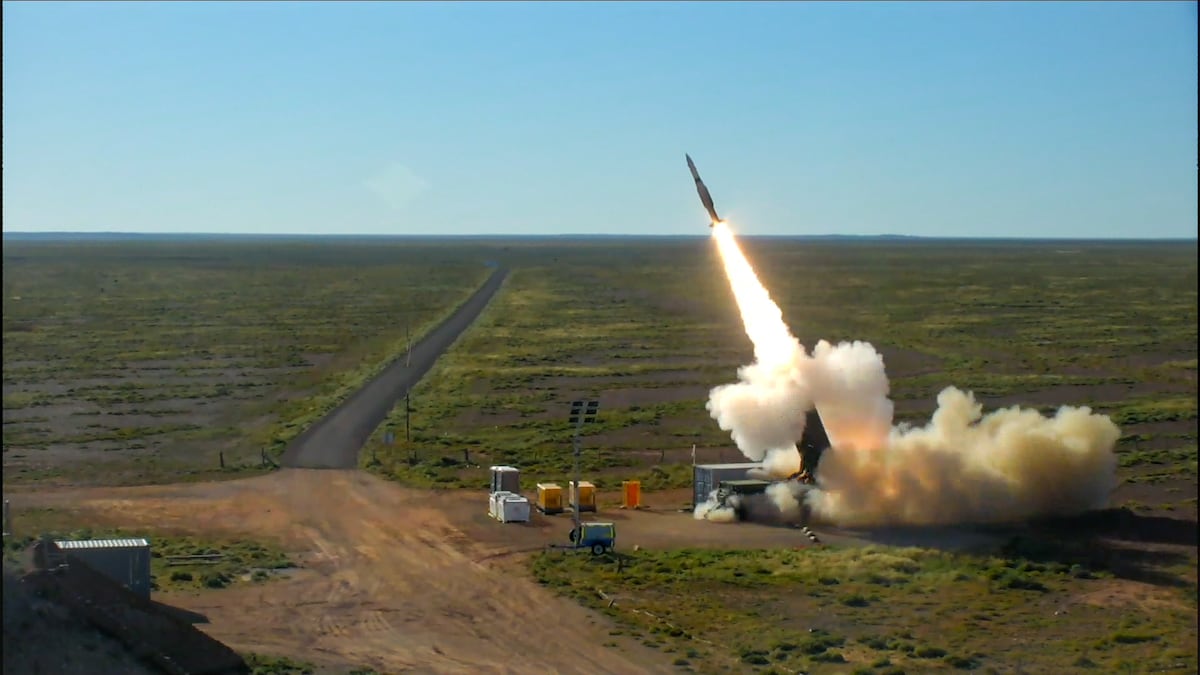
CHRISTCHURCH, New Zealand — Australia successfully tested a “Frankenstein” medium-range air defense system last month, harnessing existing and new capabilities in a way nobody has tried before.
After dawdling over the need to improve its ground-based air defense (GBAD) capabilities, Australia — with American assistance — is prioritizing a hybrid solution that takes sensors, software and weapons already in the Australian inventory.
This first-of-type integration, which successfully fired an SM-2 interceptor missile, offers an alternative to buying expensive Patriot-type air defense systems, for example.
A Department of Defence press statement said the SM-2 test “followed a period of close collaboration, innovation and engineering to produce this successful prototype.”
Lockheed Martin and the U.S. Navy were heavily involved, for example.
During Exercise Taipan Strike 2026, an SM-2 was launched from a Derringer trailer-mounted launcher – also called the Expeditionary Launch System – at the Woomera test range in the south of Australia.
To shoot down a BQM-74E target drone, the SM-2 was controlled by a virtualized Lockheed Martin Aegis combat system, and guided by a phased-array radar from Australian firm CEA Technologies.
Aegis, normally utilized aboard warships, was deployed in a small-scale, expeditionary form factor. The Aegis test setup was based on the baseline version found on the Australian navy’s Hunter-class frigates and Hobart-class destroyers.
In a statement to Defense News, Lockheed Martin said this approach “unlocks cross-service integration and interoperability, delivering greater capability and value.”
Jeremy King, chief executive of Lockheed Martin Australia and New Zealand, also remarked that “this prototype system leverages existing weapons, launchers and command and control. It can fire any of the weapons currently fielded on the Hobart-class destroyers or future Hunter-class frigates.”
This is an important revelation for the Royal Australian Navy, as the service has the SM-2 Block IIIB and Block IIIC missiles in its inventory, as well as the SM-6.
The SM-6 could now be considered a candidate for an Australian defense against ballistic missiles. However, this would require a strike-length variant of the Mk 41 Vertical Launching System on the mobile Derringer launcher.
Taking aiming at GBAD
The novel Australian air-defense technology pairing appears to have been on the drawing board for a while, at least conceptually.
“When you have a limited [missile] inventory, you want to be able to be as flexible as possible, so that might be using maritime stocks on land, it might be using land stocks in the maritime domain,” Air Vice-Marshal Nick Hogan, head of Air Force Capability told Defense News last year. “There are many options to go forward. What we’re trying to do is make sure, where possible, we can get the biggest return on investment using sovereign capabilities.”
Australia’s 2023 Defence Strategic Review urged, instead of “pursuing a long-term, near-perfect solution at unaffordable cost,” that Canberra should allocate sufficient resources “to deliver the initial capability in a timely way”.
Later, the 2026 National Defence Strategy called for “accelerated introduction of medium-range, ground-based, active missile defense through investment in missile launchers and munitions and integrating them with … command-and-control systems.”
The same document identified missile defense as a priority, with a need to protect critical defense infrastructure from long-range and high-speed missile threats.
In fact, the July 9 timing of Australia’s announcement of the SM-2 test was significant. The test had actually been conducted a month earlier, but Canberra publicized it just three days after a Chinese submarine hurled a nuclear-capable ballistic missile deep into the South Pacific.
After the Chinese launch, Australia’s opposition party warned how “dangerously exposed” military bases are and the country’s insufficient ability to counter ballistic or cruise missiles.
Australian defense officials stress that the new air-defense weapon is still a work in progress. However, the test reduces technical risk and validates the prototype system’s performance, as Australia weighs cost-effective medium-range GBAD options.
Lockheed Martin added that this hybrid solution represents a “robust air defense capability option paving the way for continued integration efforts.”
The significance of this demonstration extends beyond Australia, as Lockheed Martin said “it demonstrates the potential for enhanced air defense capabilities that can be tailored to meet the specific needs of countries and regions.”
Gordon Arthur is an Asia correspondent for Defense News. After a 20-year stint working in Hong Kong, he now resides in New Zealand. He has attended military exercises and defense exhibitions in about 20 countries around the Asia-Pacific region.
新西兰基督城——澳大利亚上个月成功测试了一种名为“弗兰肯斯坦”的中程防空系统,该系统以前所未有的方式整合了现有和新的能力。
澳大利亚在提高其地面防空(GBAD)能力方面犹豫不决,如今在美国的协助下,澳大利亚正优先考虑一种混合解决方案,该方案利用澳大利亚库存中已有的传感器、软件和武器。
这项首例集成试验成功发射了一枚 SM-2 拦截导弹,为购买昂贵的爱国者型防空系统提供了一种替代方案。
美国国防部新闻稿称,SM-2 测试“是在经过一段时间的密切合作、创新和工程研发后,才成功制造出这个原型机”。
例如,洛克希德·马丁公司和美国海军都深度参与其中。
在“太攀蛇打击 2026”演习期间,一枚 SM-2 导弹从德林格拖车式发射器(也称为远征发射系统)在澳大利亚南部的伍默拉试验场发射。
为了击落 BQM-74E 靶机,SM-2 由洛克希德·马丁公司的虚拟化宙斯盾作战系统控制,并由澳大利亚 CEA Technologies 公司的相控阵雷达引导。
宙斯盾系统通常部署在军舰上,此次则以小规模远征部署形式进行。宙斯盾测试系统基于澳大利亚海军“猎人”级护卫舰和“霍巴特”级驱逐舰上的基线版本。
洛克希德·马丁公司在给《防务新闻》的一份声明中表示,这种方法“解锁了跨军种集成和互操作性,从而提供了更大的能力和价值”。
洛克希德·马丁澳大利亚和新西兰首席执行官杰里米·金也表示:“该原型系统利用了现有的武器、发射器和指挥控制系统。它可以发射目前霍巴特级驱逐舰或未来的猎人级护卫舰上部署的任何武器。”
这对澳大利亚皇家海军来说是一个重要的发现,因为该海军的装备库中拥有SM-2 Block IIIB和Block IIIC导弹,以及SM-6导弹。
SM-6导弹现在可以被视为澳大利亚防御弹道导弹的候选方案。然而,这需要将Mk 41垂直发射系统改进型安装在德林格移动式发射器上,并使其具备打击长度。
瞄准GBAD
澳大利亚这项新型防空技术组合似乎已经酝酿了一段时间,至少在概念上是如此。
“导弹库存有限时,我们需要尽可能灵活应对,这可能意味着在陆地上使用海上储备,也可能意味着在海上使用陆地储备,”空军能力部门负责人尼克·霍根空军中将去年告诉《防务新闻》。“有很多方案可供选择。我们正在努力确保,在可能的情况下,利用自主能力获得最大的投资回报。”
澳大利亚 2023 年国防战略评估报告敦促堪培拉不要“以不堪承受的成本追求长期的、近乎完美的解决方案”,而应分配足够的资源“及时交付初始能力”。
后来,《2026 年国防战略》呼吁“通过投资导弹发射器和弹药,并将其与……指挥控制系统相结合,加快引入中程陆基主动导弹防御”。
同一份文件将导弹防御列为优先事项,需要保护关键国防基础设施免受远程高速导弹的威胁。
事实上,澳大利亚选择在7月9日宣布SM-2导弹试射的时机意义重大。该试射实际上在一个月前就已经进行,但堪培拉方面却在中国潜艇向南太平洋深处发射一枚可携带核弹头的弹道导弹三天后才公布此事。
中国发射导弹后,澳大利亚反对党警告说,军事基地“极其危险”,而且该国应对弹道导弹或巡航导弹的能力不足。
澳大利亚国防官员强调,这种新型防空武器仍在研发中。然而,此次测试降低了技术风险,并验证了原型系统的性能,因为澳大利亚正在权衡各种经济高效的中程地面防空方案。
洛克希德·马丁公司补充说,这种混合解决方案代表了一种“强大的防空能力选择,为持续的整合工作铺平了道路”。
此次演示的意义远不止于澳大利亚,正如洛克希德·马丁公司所说,“它展示了增强防空能力的潜力,这种能力可以根据国家和地区的具体需求进行调整。”
戈登·阿瑟是《防务新闻》的亚洲特派记者。在香港工作20年后,他现居新西兰。他曾到访亚太地区约20个国家,参加过军事演习和防务展览。