In a war, the US Army could destroy China’s ports. Should it?战争时期,美国军队可以摧毁中国的港口。他们应该这样做吗?
If America were to go to war with China, damaging Chinese ports or seizing economic facilities would be a strategic blunder, one officer argues.
If America goes to war with China, rocketry may be the U.S. Army’s most important contribution. A conflict across the vast Pacific would be waged primarily by air and sea forces, backed by small contingents of ground troops.
But while the Army may not storm Shanghai in a ground assault, it certainly has the ability to strike Chinese territory. The Army has an arsenal of long-range munitions in service or under development, including the shorter-range Precision Strike Missile, the Typhon Strategic Mid-Range Fires system and the Dark Eagle Long-Range Hypersonic Weapon. These missiles can hit targets 1,000 to almost 3,000 kilometers away.
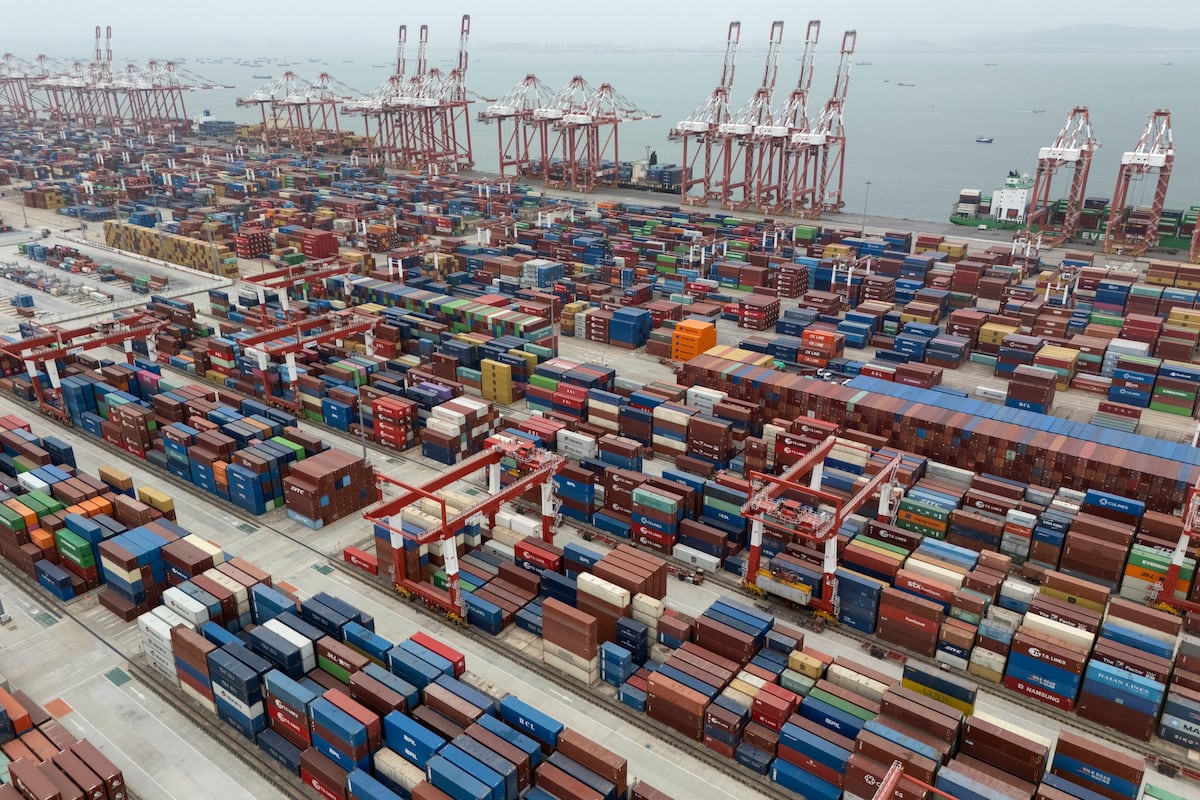
A likely target would be Chinese ports that would be key to supporting the Chinese fleet, staging an amphibious invasion of Taiwan and sustaining Chinese exports and imports.
But damaging Chinese ports or seizing Chinese economic facilities is a bad idea, warns an Army National Guard officer. In fact, “the Army should preserve Chinese maritime shipping infrastructure during conflict so that it is usable postwar,” wrote Capt. Micah Neidorfler in a recent essay for Military Review .
This sounds counterintuitive; compelling the enemy to capitulate by destroying his strategic infrastructure has been a plank of U.S. policy since the B-17 bombers of the 1930s. But despite U.S. efforts to decouple its economy from China’s, America still depends on China for everything from iPhones and rare earths to providing an export market for American farmers. Much of the global economy — especially manufacturing — relies on Chinese industry.
Yet, “U.S. joint doctrine specifically identifies ports as targets, and predictions for a U.S.-China war perceive Chinese ports as likely targets for U.S. strikes,” Neidorfler noted. “Therefore, in any U.S.-China conflict, Chinese maritime infrastructure will be exposed to the devastation of twenty-first-century warfare.”
If devastating China’s ports cripples the global or U.S. economy, any victory could prove pyrrhic. Since an unconditional Chinese surrender is unlikely, there will inevitably be a negotiated peace and a need to restore postwar trade, Neidorfler argued.
“Suggesting that the Army should preserve enemy strategic infrastructure might make many balk, but the reasoning is sound,” wrote Neidorfler. “U.S. domestic prosperity significantly depends upon international trade and the global economy, which in turn are deeply intertwined with China.”
But Neidorfler sees a way out of this dilemma. Ports are complex entities with numerous — and vulnerable — components for loading and unloading cargo, storing it and transporting goods to and from the site. Thus, ports are vulnerable to disruption at many points, including cranes, piers, rail yards and oil storage tanks. It is possible to hit specific targets that render a port temporarily inoperable, but without inflicting long-term damage.
“Applying this tactic to Chinese ports would fulfill a strategic aim of preventing or degrading their utility during wartime while remaining relatively easy to repair post-conflict, allowing China to return to maritime trade quickly,” argued Neidorfler. In addition, because “destroying subcomponents does not threaten ports’ long-term functionality, this dramatically reduces the escalatory nature of targeting them.”
All of this ties into the larger question of the Army’s role as a major player in a Pacific war.
Defense tank analyses of a possible U.S.-China war have ignored Army contributions or focused on the service’s niche capabilities, Neidorfler noted. But in reality, “over the last decade, the Army has focused on five main themes,” he wrote, including command and control for the joint force, sustaining the joint force and also protecting it via air defense, ground-based long-range fires and traditional maneuver forces.
Whether the U.S would actually attack Chinese ports is open to debate. Given that China has the world’s third-largest nuclear arsenal and ICBMs that can reach the continental United States, the decision to fire missiles at Chinese cities may be more of a political than a military decision.
However, Neidorfler offers an alternative: using the Army to seize Chinese-owned ports in other nations, to use as bargaining chips or to prevent their use as military and intelligence bases. China’s investment in foreign ports is massive: 129 projects in which Chinese companies own equity or are involved in port operations, according to a 2024 estimate. He argues the majority of the Army’s force structure would be available for such a strategy, as a U.S.-China conflict would not require a vast number of maneuver units in the Pacific.
The Army would enjoy a variety of means to capture Chinese-owned overseas infrastructure that would be lightly defended at best, he argued. These include special operations forces, and for a more diplomatic approach, Army foreign area officers and National Guard bilateral affairs officers who could work with the host nations.
But even here, there are political complications, Neidorfler cautioned. Seizing Chinese property “raises sovereignty issues for the nations housing Chinese ports, and the United States could not pursue this unilaterally,” wrote Neidorfler. Since many countries — especially in the Global South — are unlikely to welcome American military intervention, “third-party states’ own militaries seizing assets would be more realistic.”
U.S. experts on China have misgivings on these ideas. Authorization to attack Chinese ports is not a given, Lonnie Henley, a researcher at the Foreign Policy Research Institute, told Defense News.
“Who knows what some future president in some unspecified global circumstances would decide,” Henley said.
As for Army long-range missiles, “you need a place to stand to launch those weapons, and you have to get the forces there, and sustain them, and defend them from counterattack,” said Henley, a former Army lieutenant colonel with long experience as an intelligence expert on East Asia.
In addition, the U.S. Air Force and U.S. Navy already have plenty of missiles.
“More weapons on target is always good, but how many more can the Army provide, compared to another dozen B-52 sorties?” Henley asked.
The U.S. and its allies could probably cut off most Chinese maritime trade.
“So what’s the added benefit of seizing ports in third countries?” Henley said. “None that I can see.”
Even Neidorfler admits that his ideas are “not an intuitive strategy,” as culturally, the Army is “focused on achieving decisive victory in the shortest time possible.”
Yet short of global nuclear war, a Sino-American war would inevitably end in some kind of peace agreement.
“If the U.S. Army is truly preparing for a conventional war, it must recognize that any settlement must be mutually acceptable for it to last,” Neidorfler concluded.
Michael Peck is a correspondent for Defense News and a columnist for the Center for European Policy Analysis. He holds an M.A. in political science from Rutgers University. Find him at theuncommondefense.com. His email is mikedefense1@gmail.com.
如果美国与中国开战,火箭技术或许会成为美国陆军最重要的贡献。这场横跨广袤太平洋的冲突将主要由空军和海军力量主导,地面部队则以小规模作战为主。
虽然陆军可能不会对上海发动地面突袭,但它绝对有能力打击中国领土。陆军拥有现役或正在研发的一系列远程弹药,包括射程较短的精确打击导弹、“台风”战略中程火力系统和“暗鹰”远程高超音速武器。这些导弹可以打击1000至近3000公里外的目标。
可能的攻击目标是中国的港口,这些港口对于支持中国舰队、对台湾发动两栖入侵以及维持中国的进出口至关重要。
但一位陆军国民警卫队军官警告说,破坏中国港口或占领中国经济设施并非明智之举。事实上,米卡·内多夫勒上尉在最近发表于《军事评论》的一篇文章中写道:“陆军应该在冲突期间保护中国的海上运输基础设施,以便战后能够继续使用。”
这听起来似乎有悖常理;自上世纪30年代B-17轰炸机时代以来,通过摧毁敌方战略基础设施迫使其投降一直是美国政策的核心内容。然而,尽管美国努力使其经济与中国脱钩,但美国在方方面面仍然依赖中国,从iPhone、稀土到为美国农民提供出口市场,无一例外。全球经济的很大一部分——尤其是制造业——都依赖于中国的产业。
然而,内多夫勒指出,“美国联合作战条令明确将港口列为攻击目标,而对中美战争的预测也认为中国港口很可能成为美国打击的目标。因此,在任何中美冲突中,中国的海上基础设施都将遭受21世纪战争的破坏。”
内多夫勒认为,如果摧毁中国的港口会重创全球或美国经济,那么任何胜利都可能是得不偿失的。由于中国无条件投降的可能性不大,因此必然会通过谈判达成和平,并且需要恢复战后贸易。
内多夫勒写道:“建议陆军应该保护敌方战略基础设施可能会让很多人感到反对,但这种说法是有道理的。美国的国内繁荣在很大程度上依赖于国际贸易和全球经济,而这两者又与中国有着千丝万缕的联系。”
但奈多夫勒认为有办法解决这个难题。港口是复杂的实体,包含众多且脆弱的环节,用于货物的装卸、存储和运输。因此,港口在很多方面都容易受到干扰,包括起重机、码头、铁路货场和储油罐。虽然可以针对特定目标进行攻击,使港口暂时瘫痪,但不会造成长期损害,这是完全有可能的。
内多夫勒认为,“将这种策略应用于中国港口,可以实现一项战略目标,即在战时阻止或削弱港口的效用,同时在冲突后相对容易修复,使中国能够迅速恢复海上贸易。”此外,由于“摧毁次级部件不会威胁港口的长期功能,因此大大降低了以港口为目标的升级性。”
所有这些都与陆军在太平洋战争中作为主要参与者的角色这一更大的问题息息相关。
内多夫勒指出,以往对美中可能发生的战争的国防坦克分析要么忽略了陆军的贡献,要么只关注陆军的某些特殊能力。但他写道,实际上,“过去十年,陆军一直专注于五个主要方面”,包括联合部队的指挥与控制、联合部队的后勤保障,以及通过防空、地面远程火力支援和传统机动部队来保护联合部队。
美国是否真的会攻击中国港口尚存争议。鉴于中国拥有世界第三大核武库和能够打到美国本土的洲际弹道导弹,向中国城市发射导弹的决定或许更多是出于政治考量而非军事考量。
然而,奈多夫勒提出了另一种方案:利用陆军夺取中国在其他国家拥有的港口,以此作为谈判筹码或阻止其被用作军事和情报基地。中国在海外港口的投资规模庞大:据2024年的估计,中国企业拥有股权或参与港口运营的项目共有129个。他认为,陆军的大部分兵力结构都可用于这种战略,因为美中冲突并不需要大量机动部队部署在太平洋地区。
他认为,陆军可以利用多种手段夺取中国在海外拥有的、防御薄弱的基础设施。这些手段包括特种作战部队,以及采取更具外交手段的陆军外事官员和国民警卫队双边事务官员,他们可以与东道国合作。
但内多夫勒警告说,即便如此,也存在政治上的复杂性。他写道,扣押中国财产“会引发中国港口所在国的主权问题,美国无法单方面采取行动”。由于许多国家——尤其是全球南方国家——不太可能欢迎美国的军事干预,“第三方国家的军队扣押资产或许更为现实”。
美国对华问题专家对这些想法持保留意见。外交政策研究所研究员朗尼·亨利告诉《防务新闻》,授权攻击中国港口并非理所当然。
“谁知道未来某个总统在某种未知的全球形势下会做出什么决定呢?”亨利说道。
至于陆军远程导弹,“你需要一个发射这些武器的阵地,你必须把部队部署到那里,维持他们的存在,并保护他们免受反击,”亨利说道。他曾是陆军中校,在东亚地区担任情报专家多年。
此外,美国空军和美国海军已经拥有大量的导弹。
“增加目标上的武器数量固然是好事,但与再派出十几架B-52轰炸机相比,陆军能提供多少额外的武器呢?”亨利问道。
美国及其盟友或许能够切断中国的大部分海上贸易。
“那么,占领第三国港口还有什么额外好处呢?”亨利说,“我看不出有什么好处。”
就连奈多夫勒也承认,他的想法“并非一种直觉性的战略”,因为从文化角度来看,军队“专注于在最短的时间内取得决定性的胜利”。
然而,除非爆发全球核战争,否则中美之间的战争必然会以某种和平协议告终。
“如果美国陆军真的在为常规战争做准备,它就必须认识到,任何解决方案都必须是双方都能接受的,才能持久有效,”内多夫勒总结道。
迈克尔·佩克是《防务新闻》的通讯员,也是欧洲政策分析中心的专栏作家。他拥有罗格斯大学政治学硕士学位。您可以在theuncommondefense.com找到他。他的邮箱是mikedefense1@gmail.com。