Austria could turn its back on European missile shield pact奥地利可能退出欧洲导弹防御条约
Dropping the German-led European Sky Shield Initiative would appease the far-right FPÖ in Austria's new government.
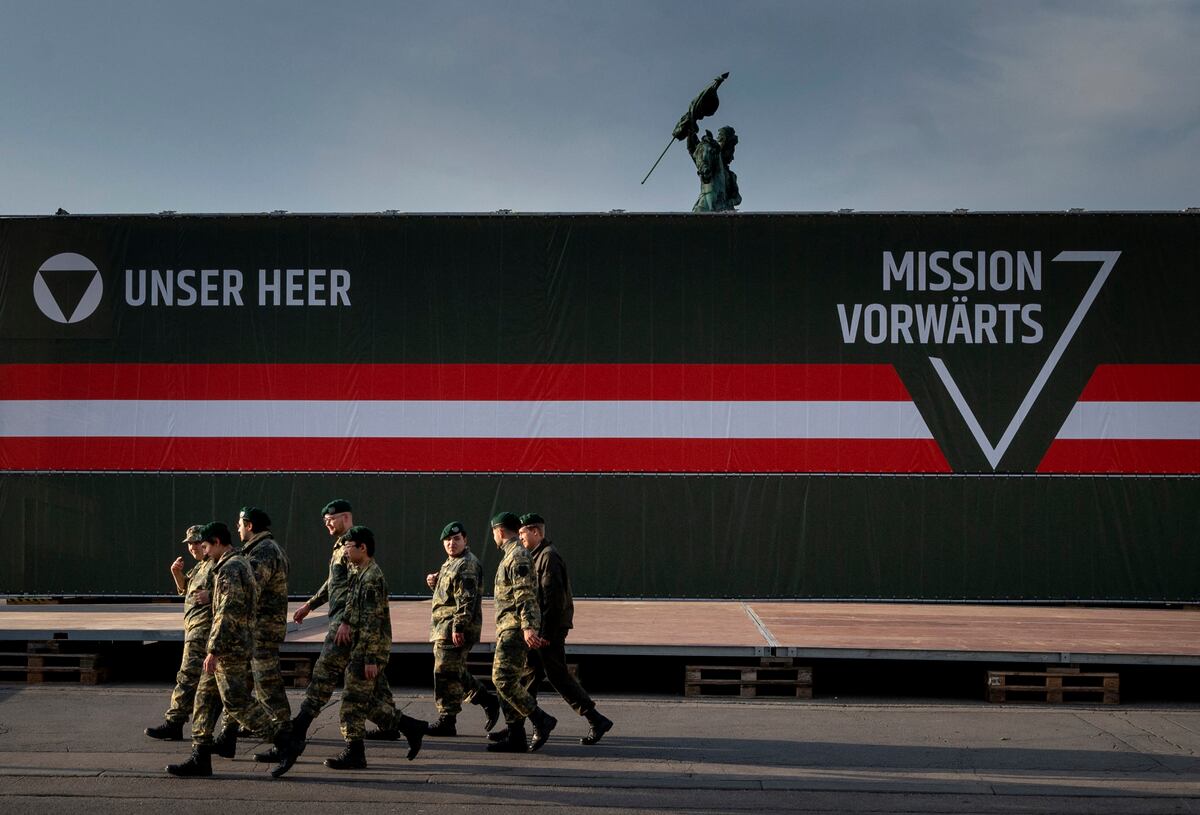
BERLIN — The election of a far-right government in Austria puts into question the country’s continued membership in the European Sky Shield Initiative, a joint procurement scheme for missile defense equipment.
In a radio interview, Acting Defense Minister Klaudia Tanner of the conservative party indicated that Vienna’s participation in the German-led scheme could fall by the wayside in the formation of a new government. Her party hopes to form a coalition with the far-right “Freedom Party” (FPÖ) which came first in elections in October.
The far-right has long criticized the project, calling it a back door into NATO and claiming it isn’t compatible with Austria’s constitutionally enshrined neutrality . Legal experts dispute this claim.
Austria declared its intention to join Sky Shield together with its western neighbor Switzerland – itself famously neutral – in July of 2023.
Tanner had previously called the project the “spearhead of neutrality” and was the minister of defense under whom the deal was concluded in the first place.
In the past, she had called it “indispensable” and emphasized: “We are doing this for our security and for the security of our children and grandchildren.” Along with her party’s 180-degree turn when it comes to being in a coalition with the Euro-skeptic and Russia-friendly far-right – a prospect categorically ruled out until a few weeks ago – this tune has now changed, too.
If Austria does decide to leave, it would be free to do so: There is no legally binding agreement for membership in ESSI, only a political memorandum of understanding. However, Austria would be the first country to leave ESSI, while the number of members has otherwise grown from a founding 15 to now 21, stretching like a belt across Europe from Norway to Turkey.
That’s not to say it would be without consequences. One of the key selling points of Sky Shield is the aspect of joint procurement, allowing governments to coordinate their orders for equipment and so receive lower per-item price tags. Even after leaving the initiative, Austria would likely still need to procure much of the same gear, with Austrian media estimating it might cost the taxpayer an extra €100 million ($103 million). Additionally, ESSI lays the groundwork for shared maintenance and training, further reducing costs.
Outgoing German chancellor Olaf Scholz launched the European Sky Shield Initiative in August of 2022 as a consequence of lessons learned from Russia’s invasion of Ukraine, which began a few months earlier in February. It seeks to coordinate procurement but also foster interoperability between European countries’ air defense systems to be able to protect against ballistic missiles, drones, cruise missiles and other airborne threats such as the ones used against Ukraine.
The scheme has enjoyed considerable regional buy-in, including from the Nordic Countries, the Baltics, much of Central Europe, the UK and the eastern Balkans, although noteworthy holdouts include France and Italy, who criticize the project for relying too heavily on foreign-made systems.
Linus Höller is Defense News' Europe correspondent and OSINT investigator. He reports on the arms deals, sanctions, and geopolitics shaping Europe and the world. He holds master’s degrees in WMD nonproliferation, terrorism studies, and international relations, and works in four languages: English, German, Russian, and Spanish.
柏林——奥地利极右翼政府的当选,使该国能否继续留在欧洲天空之盾计划(一项导弹防御设备的联合采购计划)受到质疑。
保守党代理国防部长克劳迪娅·坦纳在一次电台采访中表示,维也纳参与德国主导的联合组阁计划的进程可能会在新政府组建过程中被搁置。她的政党希望与在10月份大选中获胜的极右翼“自由党”(FPÖ)组建联合政府。
极右翼长期以来一直批评该项目,称其为加入北约的后门,并声称这与奥地利宪法保障的中立原则不符。法律专家对这种说法提出异议。
奥地利于 2023 年 7 月宣布有意与西部邻国瑞士(瑞士本身以保持中立而闻名)一起加入“天空之盾”计划。
坦纳此前曾称该项目为“中立的先锋”,而他正是促成该协议达成的国防部长。
过去,她曾称此举“不可或缺”,并强调:“我们这样做是为了我们自身的安全,也是为了我们的子孙后代的安全。” 然而,随着她所在的政党在与疑欧派、亲俄极右翼组建联合政府的问题上态度180度大转弯——几周前她还断然排除这种可能性——她的这番话也随之改变了。
如果奥地利决定退出,它完全可以自由选择:欧洲结构和结构协会(ESSI)的成员资格没有法律约束力的协议,只有一份政治谅解备忘录。然而,奥地利将成为第一个退出ESSI的国家,而ESSI的成员国数量已从最初的15个增加到现在的21个,如同一条腰带横跨欧洲,从挪威延伸到土耳其。
但这并不意味着退出该计划不会带来任何后果。“天空之盾”计划的关键卖点之一是联合采购,它允许各国政府协调设备订单,从而降低单价。即使退出该计划,奥地利可能仍然需要采购大量相同的设备,奥地利媒体估计这可能会使纳税人额外花费1亿欧元(1.03亿美元)。此外,ESSI计划还为共享维护和培训奠定了基础,进一步降低了成本。
即将卸任的德国总理奥拉夫·朔尔茨于2022年8月启动了“欧洲天空之盾”倡议,这是吸取了俄罗斯入侵乌克兰(始于几个月前的2月)的教训后采取的行动。该倡议旨在协调采购,并促进欧洲各国防空系统之间的互操作性,以便能够防御弹道导弹、无人机、巡航导弹和其他空中威胁,例如针对乌克兰的那些威胁。
该方案已获得包括北欧国家、波罗的海国家、中欧大部分地区、英国和东巴尔干地区在内的相当多的区域支持,但值得注意的是,法国和意大利持反对意见,批评该项目过于依赖外国制造的系统。
林努斯·霍勒是《防务新闻》的欧洲记者和开源情报调查员。他报道影响欧洲乃至全球的军火交易、制裁和地缘政治。他拥有大规模杀伤性武器不扩散、恐怖主义研究和国际关系三个硕士学位,并精通英语、德语、俄语和西班牙语四种语言。