Germany, France to ‘clarify’ FCAS project by year-end as firms bicker德国和法国将在年底前“澄清”FCAS项目,此前各公司就此争论不休。
The countries' two defense ministers offered political backing at a "moment of truth" to a program rocked by industrial infighting.
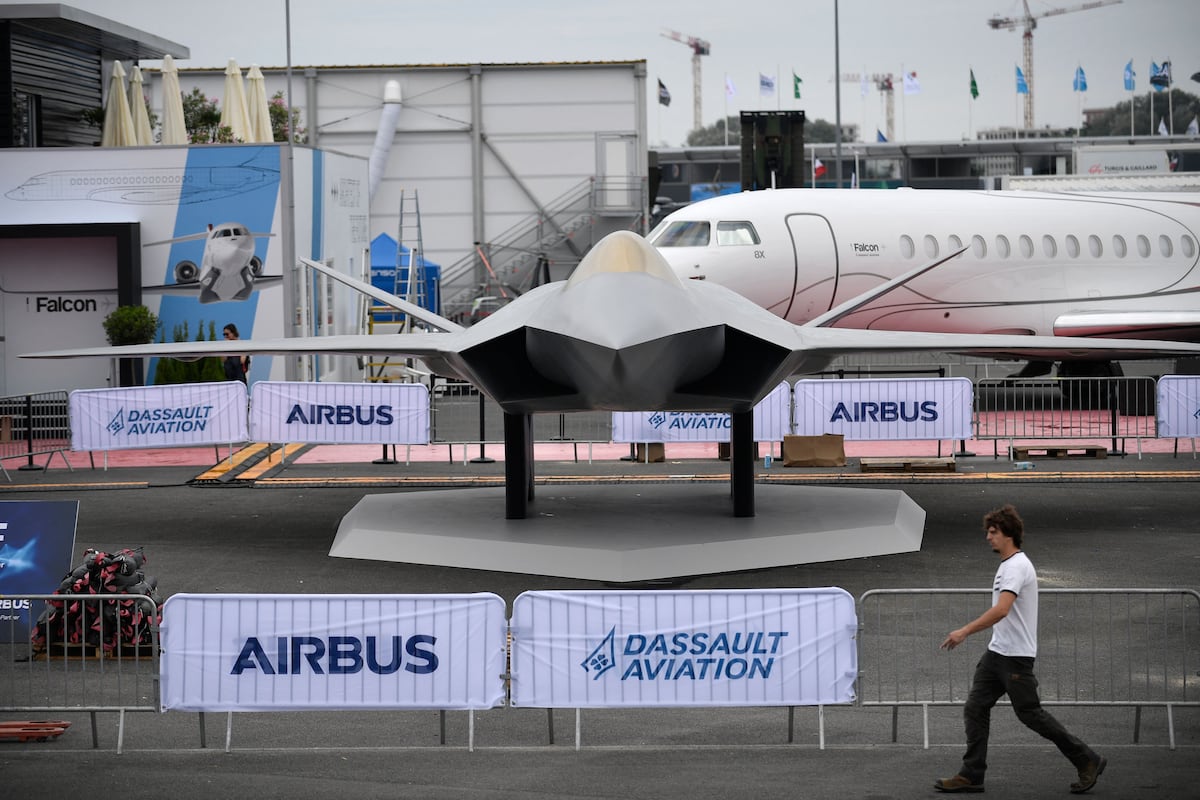
PARIS — Germany and France will “clarify the situation” regarding their Future Combat Air System project by the end of the year, German Defence Minister Boris Pistorius said after a July 24 meeting with his French counterpart, in response to bickering between partner companies about work share.
“Some of the involved companies not only have enormous amounts of expertise, they also have – naturally – their own interests and their own will,” Pistorius said in a joint press conference with French Armed Forces Minister Sebastien Lecornu in Osnabrück, western Germany. “We knew that from the beginning.”
“What’s important for the two of us is that the projects represent German-French cooperation and partnership, they don’t represent national egotism.”
French plane maker Dassault Aviation, the lead on developing a new fighter jet at the heart of the system, has been vocal about wanting a larger role. Its CEO Eric Trappier has repeatedly complained of delays due to wrangling over work share with Airbus, which represents Germany and Spain for the fighter segment of the project.
France has proposed to partners Germany and Spain to reconsider the FCAS work share to ensure the project meets its 2040 deadline, the country’s armaments directorate said earlier this month .
The FCAS project has arrived at a “moment of truth,” with the next step of phase 2 including the development of a demonstrator, Lecornu said. That raises “more operational questions, because the coming phases will tie us together definitely to produce an aircraft,” the French minister said.
Pistorius acknowledged that hurdles exist, but said none of those are insurmountable.
Lecornu said the partners audited what worked and what didn’t in phases 1A and 1B of the project, and the meeting in Osnabrück will allow the ministers to issue instructions to their armaments agencies as well as the companies involved, “since obviously everyone must participate in the solutions.”
Strengthening Europe’s defense readiness can only succeed through close French-German cooperation, Pistorius said, adding that both ministers are fully committed to both FCAS as well as the future Main Ground Combat System. He said the future land-combat system is scheduled for 2040.
The French minister said the first criteria for FCAS is that the project corresponds to the needs of the countries’ armed forces, trumping any other concerns.
For France, those needs include being able to carry a nuclear weapon as well as being able to operate from an aircraft carrier.
“Basically, we are not here to carry out industrial operations or projects, but to carry out armament projects for our forces, and as a result, place orders with our manufacturers,” Lecornu said. “This is a slight novelty, as for years cooperation was sometimes aimed at developing our industries.”
The second criteria is that the FCAS project stick to its timetable, with a delay of three, four or five years meaning Germany and France could fall behind, according to Lecornu. While the timetable calls for FCAS to be fully operational by 2040, Trappier at Dassault has repeatedly said delays make 2045 more likely for the fighter.
For France, a third consideration is that the project respects the country’s sovereignty, Lecornu said.
Germany will not stand in the way of future exports related to the FCAS program, Pistorius said, stressing the question of arms exports is a national one, with no role for the European Commission.
Sebastian Sprenger in Cologne, Germany, contributed to this report.
Rudy Ruitenberg is a Europe correspondent for Defense News. He started his career at Bloomberg News and has experience reporting on technology, commodity markets and politics.
巴黎——德国国防部长鲍里斯·皮斯托里乌斯在7月24日与法国国防部长会晤后表示,德国和法国将在年底前“澄清”未来作战空中系统项目的情况,以回应合作伙伴公司之间关于工作分配的争吵。
“涉事公司不仅拥有丰富的专业知识,而且——自然而然地——也有自己的利益和意愿,”皮斯托瑞斯在德国西部城市奥斯纳布吕克与法国武装部队部长塞巴斯蒂安·勒科尔努举行的联合新闻发布会上说。“我们从一开始就知道这一点。”
“对我们双方来说,重要的是这些项目代表了德法合作与伙伴关系,而不是代表了民族自私。”
法国飞机制造商达索航空公司是该系统核心新型战斗机研发的牵头企业,一直公开表示希望在该项目中扮演更重要的角色。其首席执行官埃里克·特拉皮耶多次抱怨,由于与代表德国和西班牙参与该项目战斗机部分的空客公司在工作分工问题上存在分歧,导致项目延误。
法国军备局本月早些时候表示,法国已向合作伙伴德国和西班牙提议重新考虑未来空中作战系统(FCAS)的工作份额,以确保该项目能够按期在 2040 年完成。
法国国防部长勒科尔努表示,FCAS项目已进入“关键时刻”,第二阶段的下一步工作包括研发验证机。他指出,这引发了“更多操作方面的问题,因为接下来的阶段将最终把我们联系在一起,共同制造出一架飞机”。
皮斯托瑞斯承认存在障碍,但他表示这些障碍都不是不可克服的。
莱科尔努表示,合作伙伴对项目 1A 和 1B 阶段哪些措施有效、哪些无效进行了审核,奥斯纳布吕克会议将允许部长们向各自的军备机构以及相关公司发出指示,“因为显然每个人都必须参与解决方案的制定”。
皮斯托里乌斯表示,加强欧洲的防务准备只有通过法德密切合作才能成功。他还补充说,两国部长都全力支持未来空中作战系统(FCAS)以及未来的主战地面作战系统(Main Ground Combat System)。他指出,未来的主战地面作战系统计划于2040年投入使用。
法国部长表示,FCAS的首要标准是该项目必须符合各国武装部队的需求,其他任何考虑因素都应置于首位。
对法国而言,这些需求包括能够携带核武器以及能够从航空母舰上作战。
莱科尔努说:“基本上,我们来这里不是为了开展工业生产或项目,而是为了开展部队的武器装备项目,并因此向我们的制造商下订单。这算是一种小小的变化,因为多年来,合作有时旨在发展我们各自的工业。”
第二个标准是FCAS项目必须按计划进行,勒科尔努表示,如果延误三到五年,德国和法国可能会落后。虽然计划要求FCAS在2040年全面投入使用,但达索公司的特拉皮耶多次表示,延误可能会使该战斗机的服役时间推迟到2045年。
勒科尔努表示,对法国而言,第三个考虑因素是该项目尊重国家主权。
皮斯托瑞斯表示,德国不会阻碍未来与FCAS计划相关的出口,并强调武器出口问题是国家问题,欧盟委员会无权干涉。
德国科隆的塞巴斯蒂安·斯普伦格对本报道亦有贡献。
鲁迪·鲁伊滕贝格是《防务新闻》的欧洲记者。他的职业生涯始于彭博新闻社,拥有报道科技、大宗商品市场和政治方面的经验。