Qatar used layers of US weapons to counter Iranian missiles卡塔尔动用多层美国武器来对抗伊朗导弹。
Four main systems, all made by American manufacturers, were highlighted as part of the Qatari armed forces’ military response.
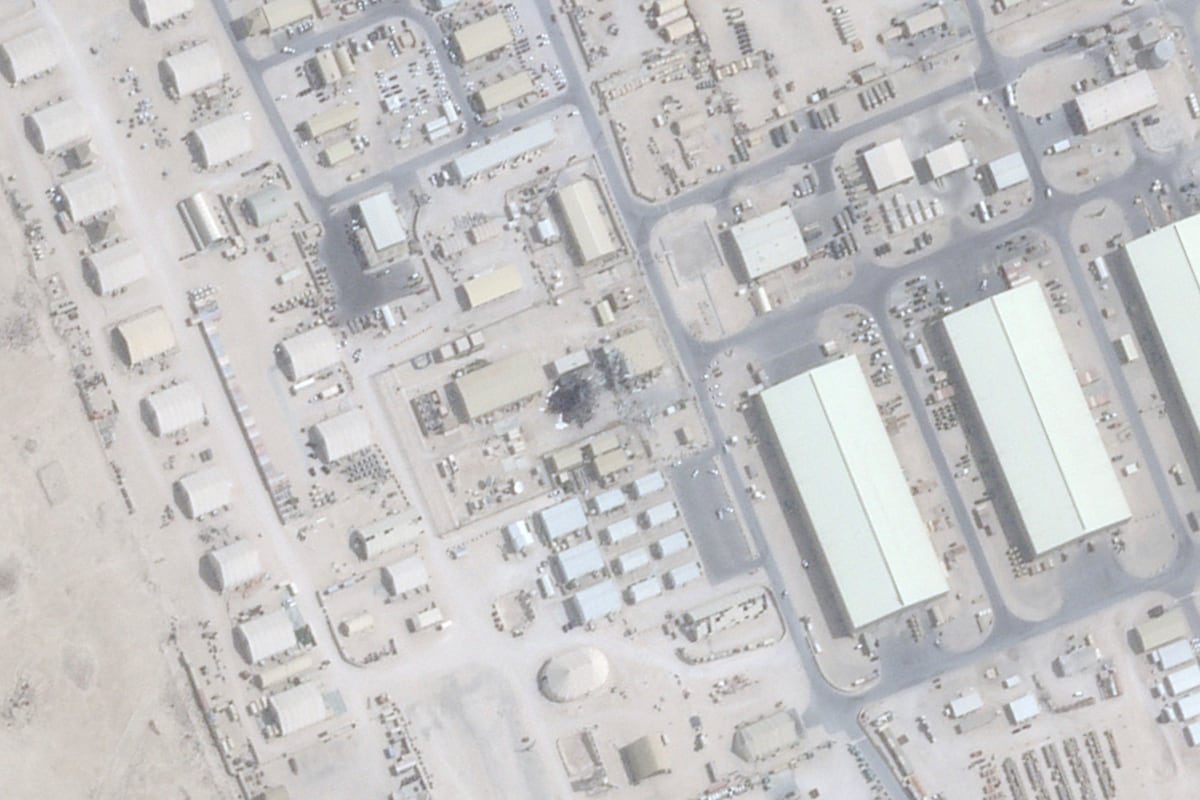
MILAN — Newly released footage reveals that several U.S.-made weapon systems played a central role in Qatar’s recent interception operation, forming a layered line of defense against Iranian-launched missiles during last month’s attack.
The Doha-headquartered media conglomerate Al Jazeera recently released a video featuring the insights of Qatari military officers who were involved in intercepting Iran’s missile attack on the Gulf state on June 23.
It revealed that on the morning of the strike, Qatar received intelligence that the interests of the United States were being targeted in the region, and a request was made from the Qatari leadership to close the country’s airspace.
The largest U.S. military base in the Middle East, Al-Udeid, is located outside Doha and houses approximately 10,000 American troops.
Four main systems, all made by American manufacturers, were highlighted as part of the Qatari armed forces’ military response: F-15 fighter jets, Apache helicopters, Patriot air defense systems, and National Advanced Surface-to-Air Missile systems.
The role of the F-15s was to conduct long patrol flights to prepare for a possible interception.
According to the statements of the Qatari fighter pilots featured, the aircraft’s “around-the-clock” rotation ranged from two to three hours, but refueling was available in the case of an alert, which would have allowed them to be in the air for up to six to eight hours.
The aircraft transmitted information to ground radars via the Link 16 network, a military data link network that essentially acts as an encrypted and jam-resistant Bluetooth, allowing U.S. and allies to send data back and forth. Qatar is one of the only non-NATO members known to have access to it.
The fighter jets were complemented by Apache AH-64E attack helicopters.
“Apache helicopters continued interception operations but at different altitudes than what the F-15s were flying, and they were fully ready to confront any attacks or interference by drones, if any,” an officer named Jaber Al-Naama from the Qatar Emiri Air Force said in the Al Jazeera video.
It appears the Qatari military has drawn inspiration from the U.S. Army by using Apaches in an air defense role. Other armed forces trialling the potential of helicopters in such operations include France, which last year reportedly used an NH-90 to shoot down a Houthi drone over the Red Sea, and Israel, which has used the AH-64 in counter-drone missions.
Around 7:30 p.m. that night, early warning systems detected that Iran launched missiles in two consecutive waves: Some came from the northeastern direction above territorial waters and the remaining missiles came from the northern direction.
Multiple Qatari Patriot anti-air missile batteries across two sites were activated, with seven missiles intercepted over the Persian Gulf, 11 countered over Doha, and one landed in the Al-Udeid base, the country’s foreign ministry spokesperson Majed Al-Ansari told CNN in June.
The latest footage indicates that one of the Patriot systems was stationed at a coastal site near territorial waters. The Gulf nation set up a two-layer air defense system: the first tier included Patriots, and the second was composed of NASAMS, co-produced by the Norwegian company Kongsberg and RTX.
However, officers noted that the secondary defense did not have to intervene given that the Patriot intercepted all of the 19 missiles launched and that no drones were involved in the attack.
Elisabeth Gosselin-Malo was a Europe correspondent for Defense News. She covers a wide range of topics related to military procurement and international security, and specializes in reporting on the aviation sector. She is based in Milan, Italy.
米兰——最新公布的视频显示,几套美国制造的武器系统在卡塔尔最近的拦截行动中发挥了核心作用,在上个月的袭击中,它们构成了一道多层防御防线,抵御伊朗发射的导弹。
总部位于多哈的媒体集团半岛电视台最近发布了一段视频,其中收录了参与拦截伊朗6月23日对海湾国家发动的导弹袭击的卡塔尔军官的见解。
报告透露,在袭击发生的当天早上,卡塔尔收到情报称,美国在该地区的利益正成为攻击目标,卡塔尔领导层随后请求关闭该国领空。
中东地区最大的美军基地乌代德基地位于多哈郊外,驻扎着约 10,000 名美军士兵。
卡塔尔武装部队的军事应对措施重点展示了四大系统,全部由美国制造商制造:F-15战斗机、阿帕奇直升机、爱国者防空系统和国家先进地对空导弹系统。
F-15 的任务是执行长时间巡逻飞行,为可能的拦截行动做好准备。
根据接受采访的卡塔尔战斗机飞行员的说法,该飞机的“全天候”轮换飞行时间为两到三个小时,但如果接到警报,可以进行空中加油,这样一来,他们就可以在空中飞行长达六到八个小时。
该飞机通过Link 16网络向地面雷达传输信息。Link 16是一种军用数据链网络,其功能类似于加密且抗干扰的蓝牙,使美国及其盟国能够双向传输数据。卡塔尔是目前已知少数几个拥有该网络访问权限的非北约成员国之一。
战斗机还得到了阿帕奇AH-64E攻击直升机的支援。
“阿帕奇直升机继续执行拦截任务,但飞行高度与F-15战斗机不同,他们已做好充分准备应对任何无人机的攻击或干扰,”卡塔尔埃米尔空军的一名军官贾贝尔·纳阿马在半岛电视台的视频中说道。
卡塔尔军方似乎从美国陆军汲取灵感,将阿帕奇直升机用于防空作战。其他也在试验直升机在类似行动中应用潜力的武装力量包括法国(据报道,法国去年曾使用NH-90直升机在红海上空击落一架胡塞武装无人机)和以色列(曾使用AH-64直升机执行反无人机任务)。
当晚7点30分左右,预警系统探测到伊朗分两波发射导弹:一部分导弹从东北方向飞越领海,其余导弹从北部方向飞来。
卡塔尔外交部发言人马吉德·安萨里 (Majed Al-Ansari) 6 月告诉 CNN,卡塔尔在两个地点部署了多个“爱国者”防空导弹系统,其中 7 枚导弹在波斯湾被拦截,11 枚导弹在多哈被反击,1 枚导弹落在乌代德空军基地。
最新画面显示,一套“爱国者”导弹系统部署在靠近领海的沿海地点。这个海湾国家建立了一套双层防空系统:第一层由“爱国者”导弹系统组成,第二层则由挪威康斯伯格公司和RTX公司联合生产的NASAMS防空系统构成。
然而,官员们指出,由于爱国者导弹系统拦截了所有发射的 19 枚导弹,而且袭击中没有无人机参与,因此二级防御系统不必介入。
伊丽莎白·戈斯林-马洛曾任《防务新闻》欧洲通讯员。她的报道涵盖军事采购和国际安全等广泛领域,尤其擅长航空领域的报道。她常驻意大利米兰。