Dutch to cobble together mobile anti-drone system to plug C-UAS hole荷兰将拼凑一套移动式反无人机系统,以填补反无人机系统漏洞。
The systems will be put together from various military off-the-shelf components, including a wheeled armor vehicle and a remote-controlled weapon station.
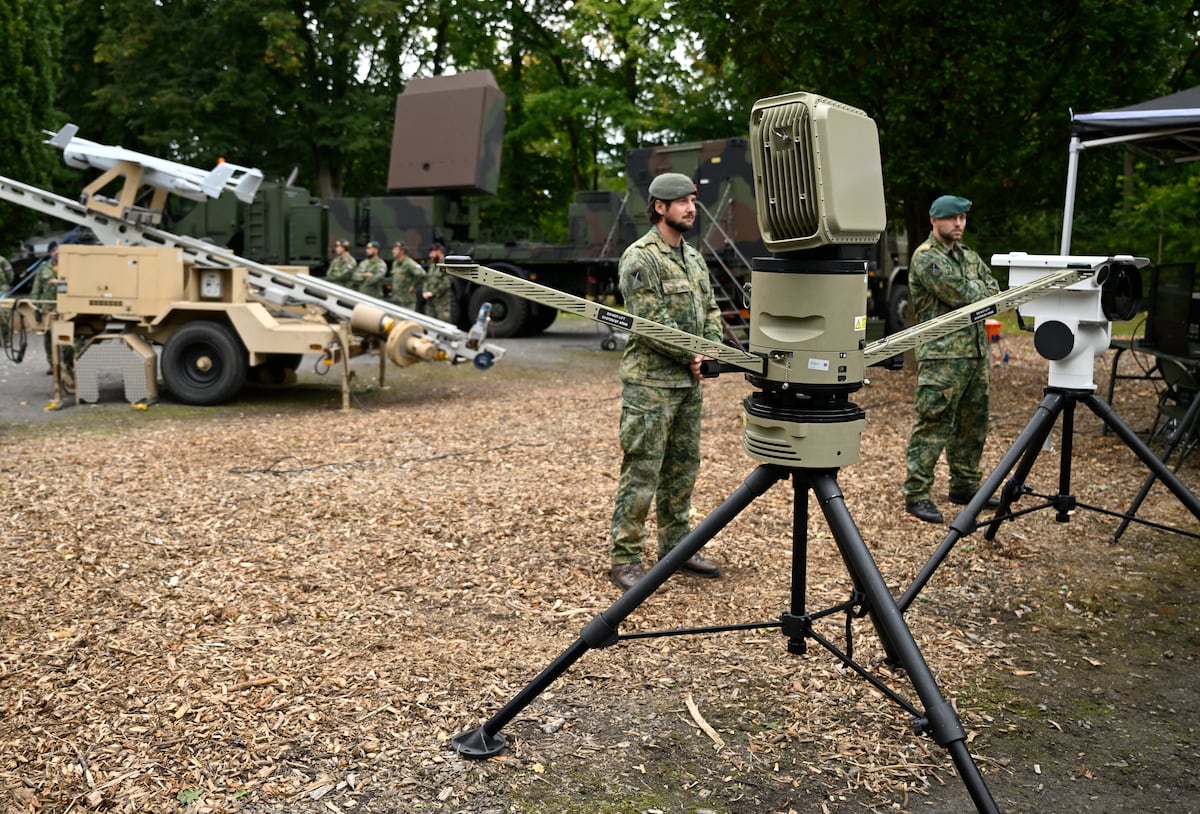
PARIS – The Netherlands plans to cobble together an air-defense system by fitting a remote-controlled weapon system on wheeled armor to provide its infantry units with mobile anti-drone capacity, plugging a capability gap ahead of the first delivery of Rheinmetall’s Skyranger 30 in 2028.
The Dutch need counter unmanned aerial systems or C-UAS that can be delivered quickly in response to the growing drone threat, State Secretary for Defence Gijs Tuinman wrote in a letter to parliament on Monday. The new systems are part of €1 billion to €2.5 billion of additional spending on counter-drone equipment.
With drones now reportedly accounting for the majority of front-line casualties in Ukraine, European countries are scrambling for stop-gap measures to protect ground troops from the growing threat, ahead of the arrival of specialized equipment such as the Skyranger. France recently developed the Proteus anti-drone system, using a 1970s era 20mm anti-air cannon mounted on a 1980s four-wheel truck.
“The importance of counter-UAS capabilities for combating unmanned systems is considerable,” Tuinman wrote. “The Ministry of Defence is therefore investing in additional C-UAS resources and in this is incorporating lessons from the war in Ukraine.”
The new Dutch mobile anti-drone systems will be put together from various military off-the-shelf components including a wheeled armor vehicle, remote-controlled weapon station, ammunition and combat management systems, the Ministry of Defence said.
The MoD declined to comment on delivery dates or planned numbers, citing operational security, in response to questions from Defense News. The ministry will buy new systems and components but won’t comment on suppliers for now, and is still investigating which company will integrate the system, said Jiska Post, a spokesman for the state secretary for defence.
The Netherlands has ordered 22 Skyranger 30 s ystems, with the first deliveries planned for 2028. The additional mobile anti-drone systems will remain in service after delivery of the Rheinmetall air-defense cannons, the MoD said.
Europe faces growing unidentified-drone activity, and recent incidents with Russian drones in Romania and Poland, as well as small and cheap drones spotted over critical infrastructure in NATO partners are “worrisome developments,” Tuinman said.
The Netherlands over the weekend reported unidentified drones flying over Volkel Air Base and Eindhoven Airport, joining around a dozen of European countries that have reported unidentified drones, incursions or airspace violations in recent months, with Russia linked to a number of them.
The Dutch also plan to buy IRIS anti-drone radars, all-terrain patrol vehicles with an integrated remote-controlled weapon system, additional man-portable and vehicle-mounted C-UAS systems, as well as invest in interceptor drones, the MoD said.
The ministry also plans to invest in hard-kill C-UAS for the Royal Netherlands Navy, Tuinman wrote in a separate letter to parliament. Most of the current maritime anti-drone systems are either based on soft-kill measures such as jamming, or use expensive kinetic counters such as missiles, the state secretary said.
“There is therefore a capability gap between, on the one hand, protecting units that do not themselves have a kinetic system for taking out unmanned aerial systems and, on the other hand, building up a layered self defense of naval vessels to supplement the close-in weapon and soft-kill systems,” Tuinman said.
The planned capability would fall somewhere between small-caliber short-range self defense and long-range missiles, with the latter an expensive capability available in only a limited number, according to the MoD. The planned investment is between €250 million and €1 billion, with details expected to be provided to parliament in the spring of 2026, the ministry said.
“A defense system against medium-range threats from unmanned systems is therefore an urgent need that will increase the survivability of our sailing units,” Tuinman said.
Rudy Ruitenberg is a Europe correspondent for Defense News. He started his career at Bloomberg News and has experience reporting on technology, commodity markets and politics.
巴黎——荷兰计划将遥控武器系统安装在轮式装甲车上,拼凑出一套防空系统,为步兵部队提供移动反无人机能力,以填补莱茵金属公司 Skyranger 30 于 2028 年首次交付之前的能力缺口。
荷兰国防国务秘书吉斯·图因曼周一在致议会的一封信中写道,荷兰需要能够快速部署的反无人机系统(C-UAS),以应对日益增长的无人机威胁。这些新系统是荷兰政府追加10亿至25亿欧元反无人机装备采购计划的一部分。
据报道,无人机目前已造成乌克兰前线部队伤亡的大多数,在“天行者”(Skyranger)等专用装备到来之前,欧洲各国正争相采取权宜之计,以保护地面部队免受日益增长的威胁。法国最近研发了“普罗透斯”(Proteus)反无人机系统,该系统使用一门20世纪70年代的20毫米防空炮,并将其安装在一辆20世纪80年代的四轮卡车上。
图因曼写道:“反无人机系统能力对于对抗无人系统至关重要。因此,国防部正在加大对反无人机系统资源的投入,并将乌克兰战争的经验教训纳入其中。”
荷兰国防部表示,新型荷兰移动式反无人机系统将由各种现成的军用组件组装而成,包括轮式装甲车、遥控武器站、弹药和作战管理系统。
国防部以行动安全为由,拒绝就交付日期或计划数量置评,回应《防务新闻》的提问。国防部国务秘书发言人吉斯卡·波斯特表示,国防部将采购新的系统和组件,但目前不会透露供应商信息,仍在调查由哪家公司负责系统集成。
荷兰已订购 22 套 Skyranger 30 系统,首批交付计划于 2028 年进行。荷兰国防部表示,在莱茵金属公司交付防空炮后,这些额外的移动式反无人机系统将继续服役。
图因曼表示,欧洲面临着日益增多的不明无人机活动,最近在罗马尼亚和波兰发生的俄罗斯无人机事件,以及在北约伙伴的关键基础设施上空发现的小型廉价无人机,都是“令人担忧的事态发展”。
荷兰周末报告称,有不明无人机飞越沃尔克尔空军基地和埃因霍温机场。近几个月来,已有十几个欧洲国家报告了不明无人机、入侵或侵犯领空事件,其中一些事件与俄罗斯有关。
荷兰国防部表示,荷兰还计划购买 IRIS 反无人机雷达、配备集成遥控武器系统的全地形巡逻车、更多便携式和车载式反无人机系统,并投资拦截无人机。
图伊曼在另一封致议会的信中写道,国防部还计划为荷兰皇家海军投资研发硬杀伤反无人机系统。这位国务秘书表示,目前大多数海上反无人机系统要么基于干扰等软杀伤措施,要么使用导弹等昂贵的动能反制手段。
“因此,一方面,保护那些自身没有动能系统来摧毁无人机系统的部队,另一方面,建立海军舰艇的多层自卫能力,以补充近程武器和软杀伤系统,这两者之间存在能力差距,”图因曼说。
据英国国防部称,计划中的这项能力将介于小口径短程自卫武器和远程导弹之间,后者是一种成本高昂且数量有限的能力。国防部表示,计划投资额在2.5亿欧元至10亿欧元之间,预计将于2026年春季向议会提交详细方案。
“因此,迫切需要一种能够防御来自无人系统的中程威胁的防御系统,这将提高我们航海部队的生存能力,”图因曼说。
鲁迪·鲁伊滕贝格是《防务新闻》的欧洲记者。他的职业生涯始于彭博新闻社,拥有报道科技、大宗商品市场和政治方面的经验。