Kyiv’s drone leverage moved the US. Moscow could be next, a top Ukrainian official says.基辅利用无人机取得优势促使美国采取行动,一位乌克兰高级官员表示,莫斯科可能是下一个目标。
After years of needing Western weapons, Kyiv is approaching negotiations with battlefield tech the U.S. now wants — and a possible ceasefire looming.
KYIV, Ukraine — U.S. President Donald Trump told Ukrainian President Volodymyr Zelenskyy at the Group of Seven summit in France that he would consider letting Ukraine build its own Patriot interceptor missiles, the first time Washington has signaled openness to a request Kyiv has made since Russia launched its full-scale invasion in 2022.
Ukraine previewed the shift weeks before Trump’s signal proved the point. Asked by Defense News earlier this month in Kyiv whether its growing web of weapons deals was changing its hand in the peace talks, Kyrylo Budanov, head of the Office of the President of Ukraine and the country’s former military intelligence chief, said Kyiv no longer comes to the table empty-handed.
“Ukraine is not a leader that only asks — we are partners who are ready to offer something that will be interesting,” he said. “We will take on what is actually interesting for the USA.”
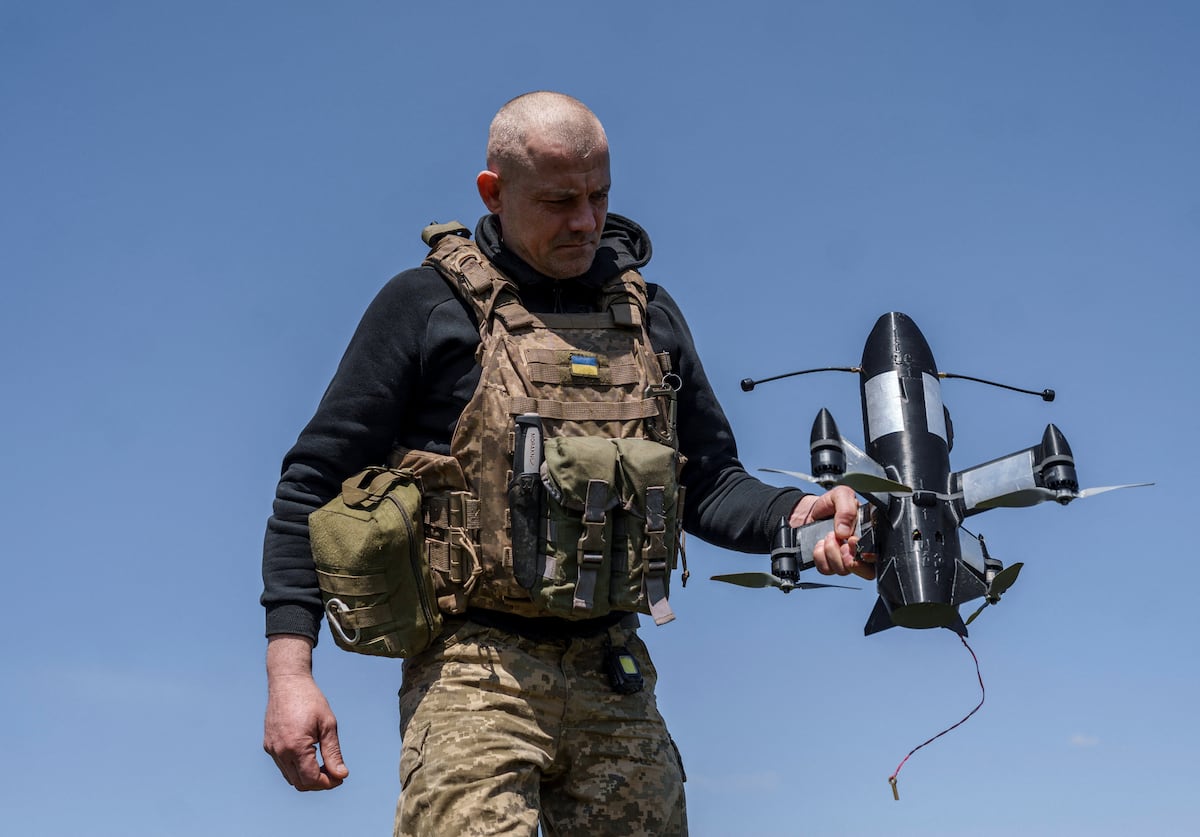
For most of the war, Ukraine has relied on Western weapons transfers to hold the line. That is starting to change as the United States looks to Ukraine’s interceptor drones to fill gaps in American air defenses that have been put to the test during the Iran war.
“Licenses for the production of our missiles are being perceived positively by the American side for the first time,” Zelenskyy said on Tuesday, describing his conversation with Trump in Évian.
Two days later in Brussels, Zelenskyy’s defense minister signed a separate agreement with Germany to jointly develop anti-ballistic missile defenses, the second major weapons-production deal with a key Western ally in a week.
The war, meanwhile, is grinding toward a possible ceasefire by September, a window Zelenskyy has called the effective deadline for serious talks that have effectively been on hold since February. Ukraine is approaching it with something to trade rather than only a list of needs, according to Budanov.
Some officials still see Ukraine’s stronger negotiating hand as a matter of debate. Trump said in March the U.S. does not need Ukrainian help with drone defense.
“We know more about drones than anybody,” he told Fox News while discussing Kyiv’s offer to share its counter-drone expertise.
Russian President Vladimir Putin, for his part, said over Victory Day last month that the war was “coming to an end,” with victory “always” Russia’s.
Budanov waved off the Russian leader’s optimism as “a classic special information operation.” Putin “will always say they’re good even if they’re collapsing,” he said.
Head of the Office of the President of Ukraine Kyrylo Budanov in Davos, Switzerland, Jan. 20, 2026. (Denis Balibouse)
Budanov has bristled at the supplicant framing more broadly. Pushing back at the same briefing on a question about when the war’s hot phase might end, he rejected the idea that Ukraine’s fate rests on what others decide to hand it.
“Stop diminishing our role as if someone has to give us something, tell us something, donate something,” he said.
The leverage is real, in his account, because Russia has exhausted its alternatives. Moscow cannot win the war by force and knows it, he said, which leaves the negotiating table as its only way out.
Ukraine underscored that argument last week, launching its largest-ever drone offensive on Moscow — striking the Russian capital’s main oil refinery twice in a single week — in a deepening campaign against Russian energy infrastructure that Budanov described as designed in part to push the Kremlin toward the negotiating table.
“Both Russia and the United States clearly understand that without resolving our situation, they cannot openly restart their economic relationship,” Budanov said.
On the battlefield, Ukraine’s interceptor technology is improving fast. Ukrainian air defenses downed roughly 92% of the Shaheds and other attack drones Russia launched in May, up from 80% in December 2024, the Defense Ministry reported.
Counting missiles as well as drones, the General Staff put the May intercept rate at more than 88%. Early-June attacks have run at similar levels. Ukraine intercepted 92% of a 272-drone barrage on June 6 alone, according to the Ukrainian Air Force.
Interceptor drones are driving more of those kills. Their share of downed Shaheds has doubled over the past four months, Defense Minister Mykhailo Fedorov said May 20. Ukraine produced 100,000 interceptor drones in 2025, a total Fedorov said it doubled in the first four months of 2026 alone.
The deal that would formalize the exchange remains unsigned. A draft memorandum drawn up by the State Department and Ukrainian Ambassador Olha Stefanishyna was completed in May but awaits Trump’s signature amid what CBS News reported as a “lack of buy-in” from senior Pentagon and White House officials.
What shifted the ground beneath that deal is Iran. The war there has freed Washington to refocus on Ukraine, Budanov said, and it exposed the precise shortfall Kyiv is positioned to fill.
The U.S. fired between 1,060 and 1,430 Patriot interceptors during the Iran war at roughly $3.9 million apiece, according to an April CSIS analysis — more than the roughly 600 Patriots Ukraine received from all its Western allies combined across four years of war.
That is the missile Ukraine wants to build. U.S. plants turn out only 60 to 65 Patriot interceptors a month, a rate Zelenskyy told CBS News is “nothing” for today’s challenges. Licensing production to allies, he argued, is the only way to close the gap.
What Ukraine offers in return is the other half of the air-defense problem: Its interceptor drones, built to knock down the cheap Shaheds that swarm Ukrainian cities nightly, run $1,000 to $2,500 apiece, and a new system automates 95% of the intercept, Fedorov said this month.
Ukraine spent more than four years asking for weapons from partners to survive. Now, it is taking the war to Moscow and betting that the pressure forces Russia back to the negotiation table before the September window closes.
“Winning by military means is not working, and they know it perfectly well,” Budanov said of the Russians. “It means you need to negotiate.”
Katie Livingstone is the Ukraine correspondent for Defense News and Military Times. Based in Kyiv, she has covered Russia's full-scale invasion since its first days. She is a former Fulbright fellow whose award-winning work has appeared in outlets across Europe and the U.S.
乌克兰基辅——美国总统唐纳德·特朗普在法国举行的七国集团峰会上告诉乌克兰总统弗拉基米尔·泽连斯基,他会考虑让乌克兰建造自己的“爱国者”拦截导弹。这是自俄罗斯在2022年发动全面入侵以来,华盛顿首次对基辅提出的请求表示开放态度。
早在特朗普发出信号之前几周,乌克兰就已预示了这一转变。本月初,《防务新闻》在基辅采访乌克兰总统办公厅主任、该国前军事情报局长基里洛·布达诺夫时,询问他乌克兰日益庞大的武器交易网络是否会改变其在和平谈判中的筹码。布达诺夫表示,基辅不再空手而来。
他说:“乌克兰不是只会提要求的领导者——我们是愿意提供一些有价值东西的合作伙伴。我们会接受对美国真正有价值的东西。”
在战争的大部分时间里,乌克兰依靠西方的武器援助来维持防线。但随着美国开始寻求乌克兰的拦截无人机来填补美国防空系统在两伊战争中经受考验的漏洞,这种情况正在发生改变。
泽连斯基周二在埃维昂描述他与特朗普的谈话时说:“美方第一次对我们导弹的生产许可证表示积极看法。”
两天后在布鲁塞尔,泽连斯基的国防部长与德国签署了一项单独的协议,共同开发反弹道导弹防御系统。这是一周内与西方重要盟友达成的第二项重大武器生产协议。
与此同时,战争正朝着9月份可能达成的停火协议缓慢推进。泽连斯基称9月份是举行实质性谈判的有效最后期限,而自2月份以来,谈判实际上一直处于停滞状态。布达诺夫表示,乌克兰此次与泽连斯基接触,除了列出一系列需求外,还带来了一些可以交换的条件。
一些官员仍然认为乌克兰在谈判中占据更有利的地位尚存争议。特朗普在三月份曾表示,美国不需要乌克兰在无人机防御方面提供帮助。
“我们比任何人都更了解无人机,”他在接受福克斯新闻采访时谈到基辅方面提出的分享其反无人机专业知识的提议时说道。
俄罗斯总统弗拉基米尔·普京上个月在胜利日表示,战争“即将结束”,胜利“永远”属于俄罗斯。
布达诺夫对俄罗斯领导人的乐观态度不以为然,称其为“典型的特殊情报行动”。他说,普京“即使国家正在崩溃,也总会说他们很好”。
乌克兰总统办公室主任凯里洛·布达诺夫 (Kyrylo Budanov) 于 2026 年 1 月 20 日在瑞士达沃斯出席。 (Denis Balibouse)
布达诺夫对这种乞求式的论调感到不满。在同一场简报会上,当被问及战争的激烈阶段何时结束时,他反驳了乌克兰的命运取决于他人决定的说法。
他说:“不要贬低我们的作用,好像有人必须给我们什么、告诉我们什么、捐赠什么似的。”
在他看来,俄罗斯之所以拥有真正的筹码,是因为它已经用尽了所有其他选择。他说,莫斯科无法通过武力赢得战争,而且它也明白这一点,因此谈判桌成了它唯一的出路。
上周,乌克兰发动了有史以来规模最大的无人机袭击莫斯科的行动,进一步强化了这一论点。在一周内两次袭击俄罗斯首都的主要炼油厂,乌克兰加大了对俄罗斯能源基础设施的打击力度。布达诺夫称,此次行动的部分目的是为了迫使克里姆林宫回到谈判桌前。
布达诺夫说:“俄罗斯和美国都清楚地认识到,如果不解决我们之间的问题,他们就无法公开重启经济关系。”
乌克兰国防部报告称,在战场上,乌克兰的拦截技术正在快速提升。今年5月,乌克兰防空部队击落了俄罗斯发射的约92%的“沙赫德”无人机和其他攻击型无人机,高于2024年12月的80%。
乌克兰总参谋部统计,5月份拦截导弹和无人机的成功率超过88%。6月初的袭击事件也保持了类似的水平。据乌克兰空军称,仅在6月6日一天,乌克兰就拦截了272架无人机袭击中的92%。
拦截无人机在击落敌机方面发挥了越来越重要的作用。乌克兰国防部长米哈伊洛·费多罗夫5月20日表示,过去四个月里,拦截无人机击落的“沙赫德”战斗机数量翻了一番。费多罗夫称,乌克兰计划在2025年生产10万架拦截无人机,而仅在2026年的前四个月,这一数字就翻了一番。
正式的交换协议仍未签署。美国国务院和乌克兰大使奥尔加·斯特凡尼什娜于5月起草了一份备忘录草案,但由于五角大楼和白宫高级官员“缺乏支持”,该草案仍等待特朗普总统签署。哥伦比亚广播公司新闻报道称,
真正改变这项协议根基的是伊朗。布达诺夫表示,伊朗战争让华盛顿得以重新聚焦乌克兰,同时也暴露了基辅能够填补的精准缺口。
根据 CSIS 4 月份的一项分析,美国在伊朗战争期间发射了 1060 至 1430 枚“爱国者”拦截导弹,每枚价值约 390 万美元——这比乌克兰在四年战争期间从所有西方盟友那里获得的约 600 枚“爱国者”导弹的总和还要多。
这就是乌克兰想要研制的导弹。美国工厂每月只能生产60到65枚“爱国者”拦截导弹,泽连斯基告诉哥伦比亚广播公司新闻网,这个速度对于当今的挑战来说“根本不够”。他认为,将生产许可授权给盟友是弥合差距的唯一途径。
乌克兰提供的回报是防空问题的另一半:费多罗夫本月表示,乌克兰的拦截无人机旨在击落每晚涌入乌克兰城市的廉价“沙赫德”无人机,每架售价1000至2500美元,而且一套新的系统可以自动完成95%的拦截工作。
乌克兰花了四年多时间向盟友寻求武器以求生存。如今,它却将战火烧到了莫斯科,并寄希望于压力能迫使俄罗斯在九月谈判窗口关闭前重返谈判桌。
布达诺夫谈到俄罗斯人时说:“靠军事手段取胜行不通,他们对此心知肚明。这意味着你们需要谈判。”
凯蒂·利文斯通是《防务新闻》和《军事时报》的乌克兰特派记者。她常驻基辅,自俄罗斯全面入侵乌克兰之初便开始报道此事。她曾是富布赖特学者,其获奖作品发表于欧洲和美国的多家媒体。