Japan Opens The Door To Acquiring Nuclear-Powered Submarines日本敞开大门,寻求购买核动力潜艇
Japan’s naval capabilities are evolving rapidly in the face of growing threats and so are its undersea requirements. Tokyo is keeping its options open as China’s expanding naval reach reshapes Japan’s undersea requirements.
新闻视频
Published Sep 18, 2026 12:36 PM EDT
U.S. Marine Corps photo by Lance Cpl. Ella Cadby
Japan has said it is keeping the door open to acquiring nuclear-powered submarines , a potentially major shift for a country whose submarine force has historically relied exclusively on conventional propulsion. Defense Minister Shinjiro Koizumi confirmed recently that Tokyo is not ruling out nuclear-powered submarines as it considers the future requirements of the Japan Maritime Self-Defense Force (JMSDF).
Should Japan ultimately pursue the capability, it would join an exclusive group of nations operating nuclear-powered submarines. China, France, India, Russia, the United Kingdom, and the United States are currently the only countries with nuclear-powered submarines in active service. Brazil is already working to join the club, while Australian and South Korean nuclear-powered submarine plans are somewhat longer-term .
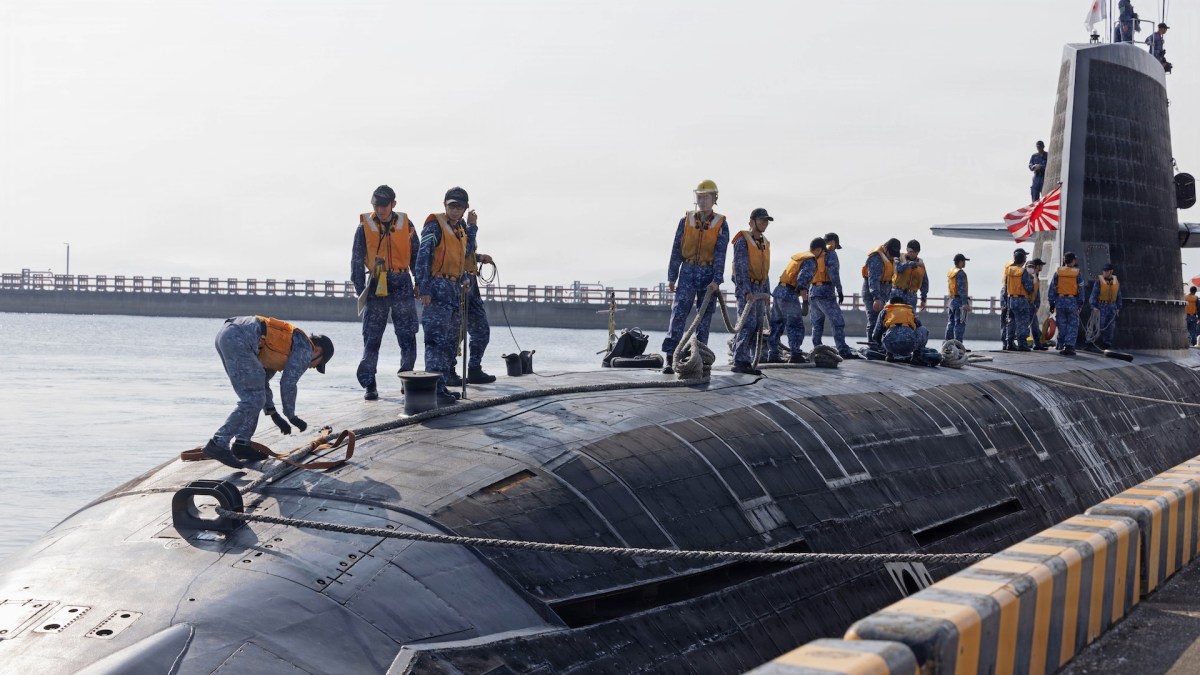
A submarine of the Japan Maritime Self-Defense Force surfaces during a naval review off Sagami Bay, Japan. Photo by Koichi Kamoshida/Getty Images
Japan’s submarine fleet is already regarded as among the most capable conventionally powered forces, and is very much at the forefront of advanced naval propulsion technologies . Even with that considerable expertise, however, developing and sustaining a nuclear propulsion capability would represent a huge challenge, requiring expertise and infrastructure far beyond those needed to build Japan’s existing conventionally powered submarines.
Koizumi’s comments do not represent a decision to acquire nuclear-powered submarines, nor do they indicate that Japan has begun a procurement program. They do, however, mark a significant evolution in the country’s public debate over submarine propulsion and point to a growing willingness within the Japanese defense establishment to consider capabilities that were previously largely outside the mainstream of defense planning.
Secretary of War Pete Hegseth hosts a bilateral meeting with Japanese Minister of Defense Shinjirō Koizumi at the Pentagon, Washington, D.C., Jan. 15, 2026. (DoW photo by U.S. Navy Petty Officer 1st Class Alexander Kubitza)
Currently, Japan operates one of the world’s most capable conventional submarine fleets, centered on increasingly sophisticated diesel-electric boats equipped with air-independent propulsion and advanced lithium-ion batteries . These submarines are well suited to operations around Japan and the country’s surrounding waters.
The JMSDF currently operates 22 conventionally powered submarines, maintaining the force structure established in the 2010s while progressively replacing older boats with the more capable Taigei class . Five Taigei class submarines are now in JMSDF service, with additional boats in the pipeline.
The first-of-class Taigei was launched on October 14, 2020, at the Mitsubishi Heavy Industries (MHI) shipyard in the city of Kobe, in the western prefecture of Hyogo. Japan Maritime Self-Defense Force
Nuclear propulsion, however, would offer substantially greater endurance and sustained underwater speed, allowing Japanese submarines to conduct longer-range operations across the broader Western Pacific with minimal support. This is a requirement that is becoming increasingly relevant as Tokyo’s strategic focus expands beyond its immediate maritime approaches.
China’s rapidly expanding naval force , including its growing submarine fleet and increasingly distant maritime operations , is forcing Tokyo to consider how it would monitor and potentially counter Chinese forces farther from the Japanese archipelago. A nuclear-powered attack submarine could remain submerged for extended periods without the endurance limitations imposed by conventional propulsion, making it particularly useful for long-range surveillance, tracking, and sea-denial missions.
Japan’s debate is also unfolding alongside a significant development in neighboring South Korea. Seoul has confirmed plans to develop a new class of nuclear-powered submarines , a move that could add further momentum to an emerging undersea competition in Northeast Asia. South Korea’s decision is particularly relevant to Tokyo because it demonstrates that nuclear propulsion is no longer merely a theoretical capability for U.S. allies in the region. While the missions and strategic priorities of the Japanese and South Korean navies are different, both countries face the challenge of operating in waters increasingly contested by China and North Korea.
A South Korean Ministry of Defense rendering shows how the nuclear-powered Jang Bogo N Project boats may look. MND
The development could also create new opportunities for Japan to work more closely with Australia and the other AUKUS partners. Australia is in the process of acquiring its own conventionally armed, nuclear-powered submarine capability under AUKUS Pillar I, with U.S. and U.K. nuclear-powered submarines also scheduled to operate from Australia . Japan has separately been identified as a potential partner for AUKUS Pillar II, which covers advanced capabilities and technology cooperation.
A Japanese decision to pursue SSNs could eventually create a much deeper basis for cooperation with Australia, including submarine interoperability, undersea warfare, workforce and technical expertise, infrastructure, sustainment, and potentially aspects of the industrial base. Analysts have already examined how Japan could fit into the wider AUKUS submarine ecosystem as Australia’s nuclear-submarine program develops.
Concept art of the submerged SSN-AUKUS nuclear-powered attack submarine. U.K. Ministry of Defense illustration
A Japanese nuclear-powered submarine with a robust capacity to launch land attack cruise missiles would also be a powerful component in the country’s emerging “counterstrike” posture , which is increasingly centered on acquiring the ability to strike targets at longer ranges.
Japan has already begun deploying domestically developed long-range missile systems, including the Upgraded Type 12 surface-to-ship missile , while also acquiring the U.S.-made Tomahawk cruise missile .
Launch of the first Tomahawk missile from the Kongō class Aegis destroyer Chōkai at an undisclosed location in the Pacific. Japan Ministry of Defense
An SSN would potentially add a highly survivable, mobile platform to this emerging strike architecture, allowing Japan to position long-range weapons farther from its home territory and complicating an adversary’s efforts to locate and neutralize them. That could be particularly valuable in a conflict in which Japanese air bases, missile batteries, and other fixed infrastructure were under attack.
The potential SSN requirement also fits with Japan’s expanding expeditionary ambitions. As the JMSDF converts its Izumo class helicopter destroyers to operate F-35B fighters , giving Japan a more credible carrier aviation capability , nuclear-powered attack submarines could provide a valuable escort for these increasingly important surface groups. Their speed, endurance, and ability to remain submerged for extended periods makes SSNs particularly well suited to accompanying carrier forces on longer-range deployments and supporting contingencies farther from Japanese waters.
Looking at the bigger picture, it is highly significant that nuclear propulsion was effectively excluded from Japan’s conventional defense debate for decades. More recently, however, Japanese defense officials and policymakers have begun examining whether future submarines will require a different propulsion system. The issue is now one that can now be discussed openly at the ministerial level.
Nevertheless, pursuing a nuclear-powered submarine program would come with huge challenges.
The Japan Maritime Self-Defense Force Sōryū class submarine Hakuryū arrives at the submarine piers of Joint Base Pearl Harbor-Hickam. U.S. Navy photo by Mass Communication Specialist 1st Class Steven Khor/Released
Building and operating nuclear-powered submarines would require Japan to establish an entirely different industrial, regulatory, and training infrastructure. The vessels would also be considerably more expensive and complex to build and operate than Japan’s existing conventionally powered submarines. Tokyo would have to resolve questions involving nuclear regulation, reactor technology, maintenance facilities, crew training, and the handling of nuclear material.
There would also be a significant political dimension. Although naval nuclear propulsion is fundamentally different from possessing nuclear weapons, any move in that direction would inevitably receive scrutiny in a country whose postwar security policy has been shaped by its experience with nuclear weapons and its longstanding non-nuclear principles .
For those reasons, Koizumi’s statement should be viewed less as an announcement of a Japanese nuclear-submarine program than as evidence that the political barrier to discussing such a program is falling.
The Japanese Oyashio class submarine Yaeshio transits the Philippine Sea during Exercise Pacific Vanguard 23. U.S. Navy photo by Mass Communication Specialist 3rd Class Santiago Navarro
The next question is whether the Japanese government will move from keeping the option open to actually studying a nuclear-powered submarine design, propulsion technology and acquisition pathway in detail.
If it does, the consequences could extend well beyond Japan’s submarine fleet. A Japanese nuclear-powered submarine capability would represent a major enhancement of Tokyo’s ability to operate across the Western Pacific and could alter the undersea balance between Japan, China, and the United States’ other regional allies. At the very least, the idea is one that is now part of wider discussions at the highest levels.
Contact the author: thomas@thewarzone.com
Comments couldn’t be loaded. Please refresh the page.
发布于美国东部时间2026年9月18日下午12:36
美国海军陆战队下士埃拉·卡德比拍摄
日本表示,对采购核动力潜艇持开放态度,这对于一个潜艇部队历来完全依赖常规动力的国家来说,可能是一项重大转变。防卫大臣小泉进次郎近日证实,东京在考虑日本海上自卫队未来的需求时,并未排除采购核动力潜艇的可能性。
如果日本最终发展核动力潜艇,它将加入拥有核动力潜艇的少数几个国家行列。目前,全球仅有中国、法国、印度、俄罗斯、英国和美国拥有现役核动力潜艇。巴西已在积极筹备加入这一行列,而澳大利亚和韩国的核动力潜艇计划则更为长期。
日本海上自卫队的一艘潜艇在日本相模湾附近海域进行阅兵式时浮出水面。图片来源:Koichi Kamoshida/Getty Images
日本的潜艇舰队已被视为世界上最强大的常规动力潜艇部队之一,并在先进海军推进技术领域处于领先地位。然而,即便拥有如此雄厚的技术实力,发展和维持核动力推进能力仍将是一项巨大的挑战,所需的技术和基础设施远远超出日本建造现有常规动力潜艇所需的水平。
小泉的言论并不代表日本决定采购核动力潜艇,也不表明日本已经启动采购计划。然而,这确实标志着日本国内关于潜艇推进方式的公开辩论发生了重大转变,并表明日本国防机构越来越愿意考虑那些此前主要游离于国防规划主流之外的能力。
2026年1月15日,美国陆军部长皮特·赫格塞斯在华盛顿特区五角大楼主持与日本防卫大臣小泉进次郎的双边会晤。(美国海军一级士官亚历山大·库比扎摄,美国陆军部照片)
目前,日本拥有世界上最强大的常规潜艇舰队之一,其核心是日益精密的柴电潜艇,这些潜艇配备了不依赖空气推进系统和先进的锂离子电池。这些潜艇非常适合在日本及其周边海域执行任务。
日本海上自卫队目前拥有22艘常规动力潜艇,维持着2010年代建立的兵力结构,同时逐步用性能更先进的大鲸级潜艇替换老旧潜艇。目前已有5艘大鲸级潜艇在日本海上自卫队服役,另有更多潜艇正在建造中。
首舰“大鲸”号于2020年10月14日在兵库县神户市的三菱重工造船厂下水。日本海上自卫队
然而,核动力推进将显著提升潜艇的续航能力和水下持续航速,使日本潜艇能够在更广阔的西太平洋海域开展远程作战,且所需后勤保障极少。随着东京的战略重心逐渐拓展至其近海区域之外,这一需求的重要性也日益凸显。
中国海军力量的快速扩张,包括其不断壮大的潜艇舰队和日益远距离的海上行动,迫使东京考虑如何监控并可能反制远离日本列岛的中国力量。核动力攻击潜艇能够长时间潜航,不受传统动力推进方式续航能力的限制,使其在远程监视、跟踪和海上拒止任务中尤为有用。
日本的争论也与邻国韩国的一项重大进展同时展开。首尔已确认计划研发新型核动力潜艇,此举可能进一步加剧东北亚地区正在兴起的水下竞争。韩国的这一决定对东京尤为重要,因为它表明,对于美国在该地区的盟友而言,核动力推进不再仅仅是理论上的能力。尽管日韩两国海军的任务和战略重点有所不同,但两国都面临着在日益受到中国和朝鲜挑战的海域开展行动的挑战。
韩国国防部发布的一张效果图展示了核动力“张保皋N”型潜艇的可能外观。
这一进展也可能为日本与澳大利亚及其他AUKUS伙伴国更紧密地合作创造新的机遇。澳大利亚正在根据AUKUS第一支柱计划发展其常规武装核动力潜艇能力,美国和英国的核动力潜艇也计划从澳大利亚部署。此外,日本已被确定为AUKUS第二支柱计划的潜在合作伙伴,该计划涵盖先进能力和技术合作。
日本若决定发展攻击型核潜艇(SSN),最终可能为与澳大利亚的合作奠定更深层次的基础,包括潜艇互操作性、水下作战、人力和技术专长、基础设施、后勤保障,以及潜在的工业基础等。分析人士已探讨了随着澳大利亚核潜艇计划的发展,日本如何融入更广泛的“阿库斯”(AUKUS)潜艇生态系统。
SSN-AUKUS核动力攻击潜艇水下概念图。英国国防部插图
日本拥有一艘具备强大陆攻巡航导弹发射能力的核动力潜艇,也将成为该国正在形成的“反击”态势中的一个重要组成部分,而这种态势越来越侧重于获得打击远距离目标的能力。
日本已经开始部署国产远程导弹系统,包括升级版 12 型舰对舰导弹,同时还采购了美国制造的战斧巡航导弹。
日本防卫省:金刚级宙斯盾驱逐舰“鸟海”号在太平洋某秘密地点发射首枚战斧巡航导弹。
攻击型核潜艇(SSN)有望为这种新兴的打击架构增添一个高生存能力的机动平台,使日本能够将远程武器部署在远离本土的位置,从而增加敌方定位和摧毁这些武器的难度。在日军空军基地、导弹阵地和其他固定基础设施遭受攻击的冲突中,这一点尤为重要。
潜在的攻击型核潜艇(SSN)需求也符合日本不断扩大的远征野心。随着日本海上自卫队将出云级直升机驱逐舰改装为搭载F-35B战斗机,从而提升日本的航母舰载机作战能力,核动力攻击潜艇可以为这些日益重要的水面舰艇编队提供宝贵的护航。SSN的速度、续航能力以及长时间潜航能力使其特别适合伴随航母编队进行远程部署,并支援远离日本水域的突发事件。
从更宏观的角度来看,核动力推进技术在日本的常规防御讨论中被有效排除数十年之久,这一点意义重大。然而,近年来,日本国防官员和政策制定者已开始研究未来潜艇是否需要不同的推进系统。如今,这个问题已可以在部长级层面公开讨论。
然而,推进核动力潜艇计划将面临巨大挑战。
日本海上自卫队苍龙级潜艇“白龙”号抵达珍珠港-希卡姆联合基地潜艇码头。美国海军一级大众传播专家史蒂文·科尔拍摄/发布
建造和运营核动力潜艇将需要日本建立一套完全不同的工业、监管和培训体系。与日本现有的常规动力潜艇相比,核动力潜艇的建造和运营成本将大幅增加,复杂程度也将显著提高。东京方面必须解决一系列问题,包括核监管、反应堆技术、维护设施、船员培训以及核材料处理等。
这其中也包含着重要的政治因素。尽管海军核动力推进与拥有核武器有着本质区别,但在一个战后安全政策深受核武器经验和长期奉行的无核原则影响的国家,任何朝这个方向迈出的步伐都必然会受到严格审查。
基于这些原因,小泉的声明与其说是宣布日本将启动核潜艇计划,不如说是证明讨论此类计划的政治障碍正在降低。
日本亲潮级潜艇“八重潮”号在“太平洋先锋23”联合演习期间穿越菲律宾海。美国海军三级大众传播专家圣地亚哥·纳瓦罗摄
下一个问题是,日本政府是否会从保留选择权转向真正详细研究核动力潜艇的设计、推进技术和采购途径。
如果日本真的拥有核动力潜艇,其影响可能远远超出日本潜艇舰队。日本拥有核动力潜艇将极大地增强其在西太平洋的行动能力,并可能改变日本、中国以及美国其他地区盟友之间的水下力量平衡。至少,这一想法目前已在最高层展开更广泛的讨论。
联系作者:thomas@thewarzone.com
评论加载失败,请刷新页面。