General Atomics expands its reach into the Japanese defense market通用原子公司扩大其在日本国防市场的业务范围
The company has struck a partnership with Tokyo spanning civilian and defense topics, as executives hope to sell the MQ-9B SeaGuardian drone.
SINGAPORE — General Atomics is expanding its cooperation with Japan by investing in the nuclear-energy sector, a growing relationship that executives hope will propel the company’s drone-making defense business there.
“We plan to soon announce another partnership with a Japanese company, which I cannot yet disclose, to create a new type of communications pod for Japan that can provide assistance in part in the face of natural disasters,” C. Mark Brinkley, senior director of communications at General Atomics Aeronautical Systems told Defense News at the Singapore Airshow .
“It would be designed to be used with our aircraft, though podded systems can often also be used with other aircraft as well,” he added.
In recent days, the American drone manufacturer has emphasized how committed it is to strengthening its presence in Japan.
On the first day of the Airshow, organized here from Feb. 19-23, the firm announced that they are collaborating with Japanese partners to advance the development of technologies “in the maritime security, nuclear energy, and rare earth elements sectors.”
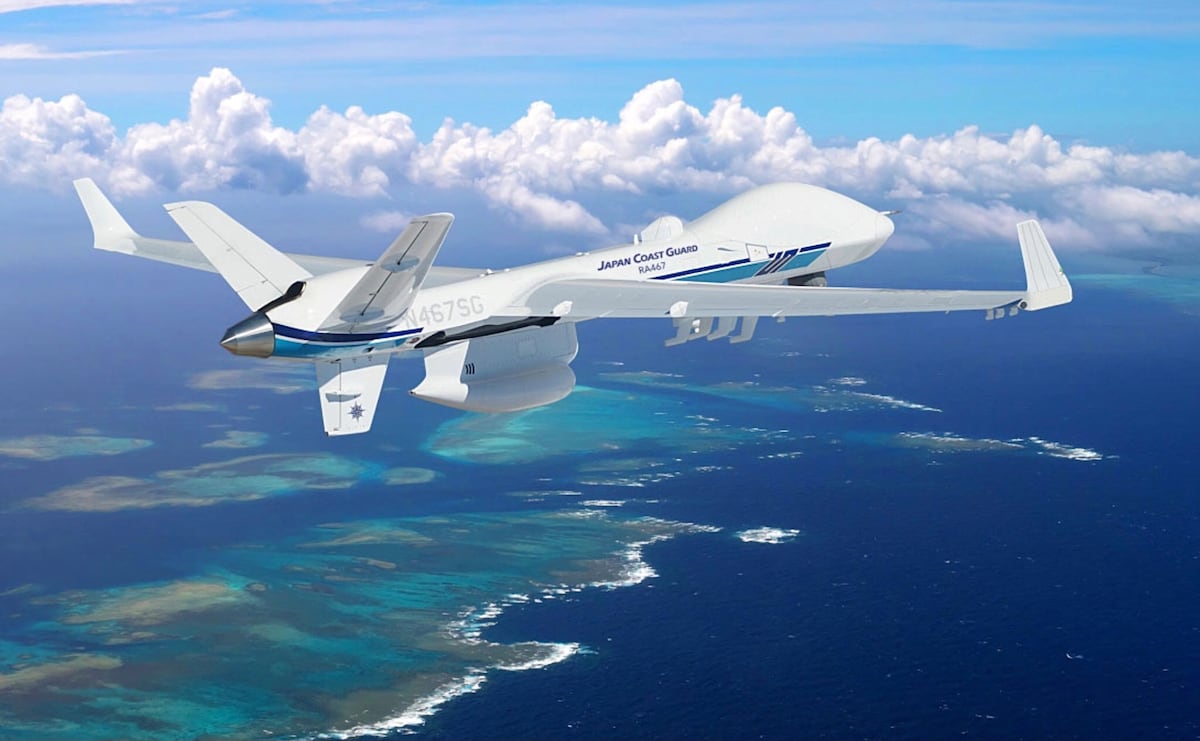
The Japan Coast Guard and Japan Maritime Self-Defense Force have been trialing the MQ-9B SeaGuardian drone for surveillance missions since last year. Japan’s Defense Minister Minoru Kihara said that the government plans to expand the scope of the testing period.
From July to September the MQ-9B will operate from Kanoya Air Base on Japan’s southern tip, and a simulated surveillance crisis over the East China Sea will be conducted on three different occasions as part of the tests, he said.
Brinkley said that the company welcomes the tests, suggesting the drones had been performing well.
“SeaGuardian is really going to open up Indo-Pacific monitoring efforts,” he said.
As for eventually purchasing MQ-9B drone, Brinkley said the state of negotiations was “advanced.”
A report published last year by the Washington-based Center for Strategic and International Studies highlights that one of the thrusts of Japan’s Defense Buildup Plan, approved in 2022, is to broaden research and development activities and projects with international partners to boost the country’s technological base.
When asked whether General Atomics’ new investments in the Japanese nuclear-energy and rare-earth sectors were connected to possible future defense contracts, Brinkley said that the company was interested in a “holistic” relationship with Tokyo. “Our defense efforts certainly open doors for conversations in other areas,” he said.
Elisabeth Gosselin-Malo was a Europe correspondent for Defense News. She covers a wide range of topics related to military procurement and international security, and specializes in reporting on the aviation sector. She is based in Milan, Italy.
新加坡——通用原子公司正在通过投资核能领域来扩大与日本的合作,公司高管希望这种日益密切的关系能够推动该公司在日本的无人机制造国防业务发展。
通用原子航空系统公司通信高级主管 C·马克·布林克利在新加坡航展上告诉《防务新闻》:“我们计划很快宣布与一家日本公司建立另一项合作关系,目前我还不能透露该公司的名称,目的是为日本创造一种新型通信舱,以便在面对自然灾害时提供部分援助。”
“虽然吊舱式系统通常也可以与其他飞机一起使用,但它的设计初衷是与我们的飞机配合使用,”他补充道。
近日,这家美国无人机制造商强调了其加强在日本市场地位的决心。
在 2 月 19 日至 23 日在此举行的航展首日,该公司宣布,他们正在与日本合作伙伴合作,推进“海上安全、核能和稀土元素领域”的技术发展。
日本海上保安厅和日本海上自卫队自去年以来一直在试用MQ-9B“海上卫士”无人机执行监视任务。日本防卫大臣木原稔表示,政府计划扩大测试范围。
他表示,从7月到9月,MQ-9B无人机将从日本南端的鹿屋空军基地起飞作战,并将在东海进行三次模拟监视危机演练,作为测试的一部分。
布林克利表示,公司欢迎这些测试,暗示无人机的性能一直很好。
他说:“SeaGuardian 将真正开启印度洋-太平洋地区的监测工作。”
至于最终购买 MQ-9B 无人机,布林克利表示谈判进展“顺利”。
去年,总部位于华盛顿的战略与国际研究中心发布的一份报告强调,日本于 2022 年批准的国防建设计划的重点之一是扩大与国际伙伴的研究和开发活动及项目,以提升该国的技术基础。
当被问及通用原子公司在日本核能和稀土领域的新投资是否与未来可能的国防合同有关时,布林克利表示,该公司有意与东京建立“全面”的合作关系。“我们在国防领域的努力无疑为其他领域的对话打开了大门,”他说道。
伊丽莎白·戈斯林-马洛曾任《防务新闻》欧洲通讯员。她的报道涵盖军事采购和国际安全等广泛领域,尤其擅长航空领域的报道。她常驻意大利米兰。