Israel says it will field Iron Beam air-defense lasers in a year以色列表示将在一年内部署“铁束”防空激光系统。
A contract with manufacturers Rafael and Elbit will accelerate the laser-defense system, which is meant to relieve pressure from traditional interceptors.
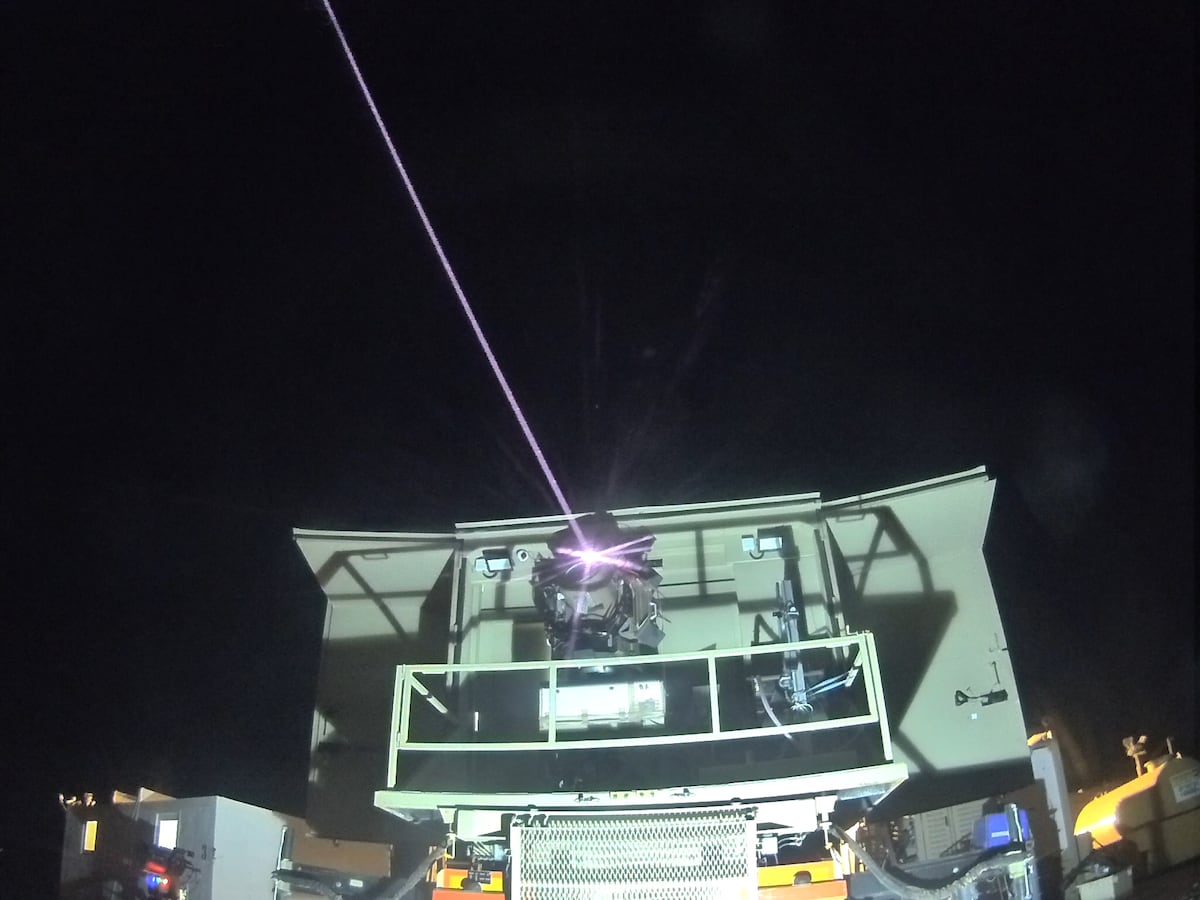
JERUSALEM — Iron Beam systems will be integrated into the network of Israeli air defense weapons within a year, the Israeli Ministry of Defense said on Monday.
The announcement comes after the government signed an armament agreement with contractors Rafael and Elbit to accelerate the development of the Iron Beam directed-energy weapon, according to the MOD director general, retired Maj. Gen. Eyal Zamir.
Iron Beam will operate as part of the Israeli air defense system alongside Iron Dome batteries, said military-research chief Daniel Gold. “The combination between laser interception and missile interception will further tighten the defense envelope against rockets, missiles, drones, cruise missiles and other threats,” he said.
Rafael is the main developer of the Iron Beam system, and Elbit supplies the laser cannon for it. The deal is for NIS 2 billion ($536 million), with Rafael’s share estimated at about 60% and Elbit’s share at 40%.
Iron Beam is a laser air defense system that operates against a variety of air threats such as rockets, mortar bombs, unmanned aerial vehicles, cruise missiles. It can be programmed to follow low-flying targets, zapping them with just enough energy to disable them.
It was presented for the first time in February 2014 at the Singapore Air Show, and after it proved its capabilities in a series of tests in southern Israel about 3 years ago it entered into operational development and adaptation to the battlefield.
The price of a Tamir missile, which is the interceptor launched by Iron Dome, is about $100,000, while the cost of interception using a laser shield is the price of the electricity used to launch it. Laser interception is meant to revolutionize the economy of air defense, which so far has favored attackers because missiles and drones are cheaper to deploy than to shoot down.
The Israeli air defense has been coping with drone threats from Lebanon, Iraq and Yemen, along with the tens of thousands of missiles that have been fired at the country since the outbreak of the war against Hamas and associated terror groups.
On the other hand, the laser system is more limited than Iron Dome in its ability to deal with large rocket barrages, along with limitations on days of impaired visibility due to clouds, rain or sandstorms.
Tzally Greenberg is the Israel correspondent for Defense News. He has experience reporting on economic affairs as well as defense and cyber companies.
耶路撒冷——以色列国防部周一表示,“铁束”系统将在一年内并入以色列防空武器网络。
据国防部总干事、退役少将埃亚尔·扎米尔称,此前政府与承包商拉斐尔和埃尔比特签署了一项军备协议,以加速“铁束”定向能武器的研发。
以色列军事研究主管丹尼尔·戈尔德表示,“铁光束”系统将与“铁穹”系统一同作为以色列防空系统的一部分运行。他说道:“激光拦截和导弹拦截相结合,将进一步加强对火箭弹、导弹、无人机、巡航导弹和其他威胁的防御能力。”
拉斐尔公司是“铁束”系统的主要开发商,埃尔比特公司则为其提供激光炮。这笔交易金额为20亿新谢克尔(约合5.36亿美元),其中拉斐尔公司预计占60%的股份,埃尔比特公司占40%的股份。
“铁束”是一种激光防空系统,可对抗多种空中威胁,例如火箭弹、迫击炮弹、无人机和巡航导弹。它可以被编程跟踪低空飞行目标,并用足以使其失效的能量对其进行攻击。
该武器于 2014 年 2 月在新加坡航展上首次亮相,并在大约 3 年前在以色列南部的一系列测试中证明了其性能后,进入了作战开发和战场适应阶段。
“铁穹”系统发射的拦截导弹“塔米尔”的价格约为10万美元,而使用激光护盾进行拦截的成本仅为发射所需的电力费用。激光拦截旨在彻底改变防空系统的经济性,因为迄今为止,导弹和无人机的部署成本远低于击落成本,因此防空系统一直对进攻方有利。
自以色列与哈马斯及其相关恐怖组织爆发战争以来,该国不仅要应对来自黎巴嫩、伊拉克和也门的无人机威胁,还要应对数万枚向该国发射的导弹。
另一方面,激光系统在应对大规模火箭弹幕方面的能力比铁穹系统要有限,而且在云层、雨水或沙尘暴导致能见度降低的情况下也会受到限制。
特扎利·格林伯格是《防务新闻》的以色列记者。他拥有丰富的经济事务以及国防和网络安全公司报道经验。