US-led artillery drill combines NATO nations’ firepower for mass effect美国主导的炮兵演习汇集了北约各国的火力,旨在产生大规模杀伤力。
Combined fires are meant to create a deterrence effect, with strikes “so unrelenting” that no adversary would dare to attack, one commander said.
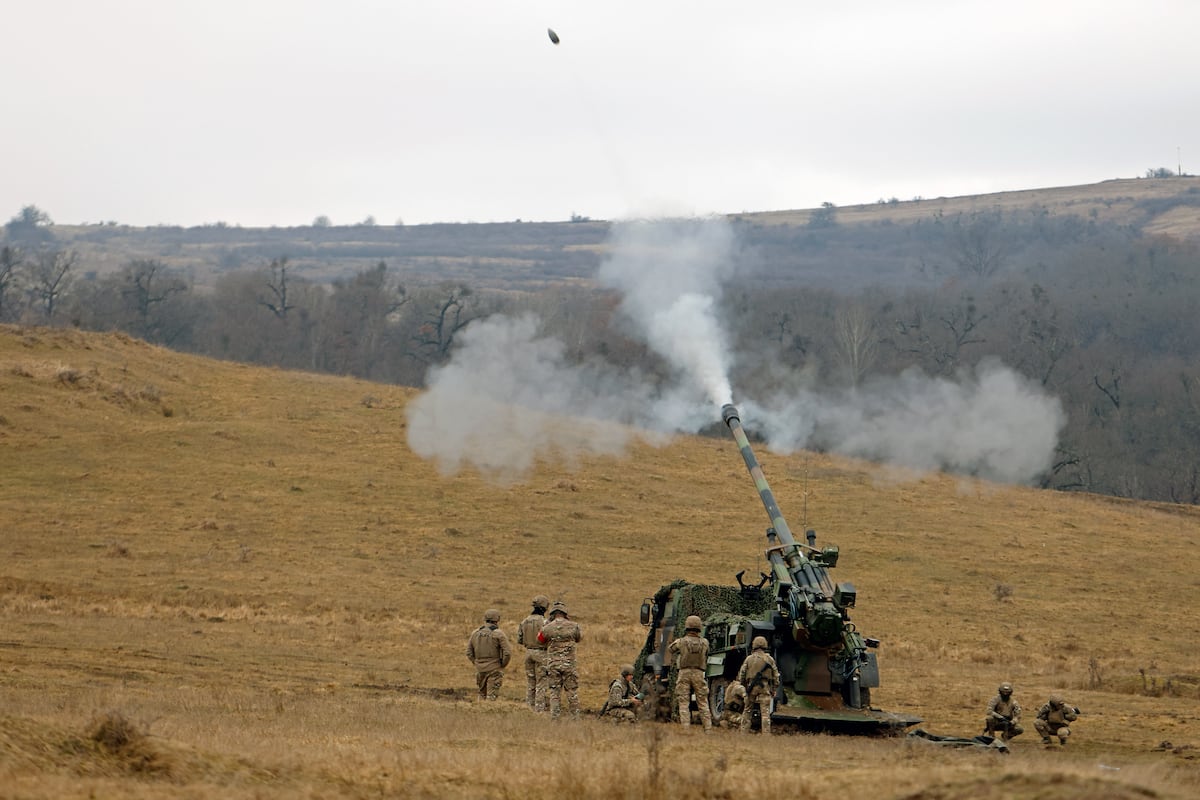
MILAN – NATO artillery units linked up their guns across European training grounds, testing their abilities to strike targets and repel a deluge of drones and missiles in an exercise scenario reminiscent of combat in Ukraine.
The multi-national drill was part of the U.S.-led exercise Dynamic Front, organized from Jan. 26 to Feb. 13, across five countries and nine training areas.
The event, which involved 23 nations, focused on validating artillery interoperability — how quickly participants could plug different systems together and share the targeting data needed to coordinate long-range strikes across borders.
Allied crews were thrown into the fire by simulating the magnitude and complexity of threats faced by troops in Ukraine. They were expected to conduct 1,500 strikes and intercept between 600 and 1,200 aerial threats daily in a major European conflict scenario, according to U.S. Army officials.
In a press briefing, as quoted by Star and Stripes , Brig. Gen. Steven Carpenter, leader of the 56th Multi-Domain Command Europe, said the massed artillery fires are meant to create a deterrence effect, with strikes “so unrelenting” that no adversary would dare to attack.
Participating units successfully set up the command systems necessary to coordinate strikes in one-sixth of the time it took in prior editions of the exercise, according to Stars and Stripes.
One of the core systems facilitating connectivity is the encrypted software suite ASCA, or Artillery Systems Cooperation Activities, NATO’s digital language for placing “warheads on foreheads,” as the U.S. military maxim goes.
Aside from digitally connecting different national artillery and command-and-control systems, it also provides live targeting data to troops stationed in other countries.
U.S. officers previously told Defense News that artillerists continuously refine ASCA based on exercise feedback. Over a dozen NATO nations have incorporated the system into their command-and-control suites.
Elisabeth Gosselin-Malo was a Europe correspondent for Defense News. She covers a wide range of topics related to military procurement and international security, and specializes in reporting on the aviation sector. She is based in Milan, Italy.
米兰——北约炮兵部队在欧洲各地的训练场上展开联合演习,测试其打击目标和击退大量无人机和导弹的能力,演习场景让人联想到乌克兰的战斗。
这次多国联合演习是美国主导的“动态前线”演习的一部分,该演习于 1 月 26 日至 2 月 13 日在五个国家和九个训练区域举行。
此次活动共有 23 个国家参加,重点是验证火炮互操作性——参与者能够多快地将不同的系统连接起来,并共享协调跨境远程打击所需的瞄准数据。
盟军机组人员被投入实战演练,模拟了部队在乌克兰面临的威胁的规模和复杂性。据美国陆军官员称,在模拟欧洲重大冲突的场景中,他们预计每天要进行1500次打击,并拦截600至1200次空中威胁。
据《星条旗报》报道,第56多域司令部欧洲司令史蒂文·卡彭特准将在新闻发布会上表示,集中炮火旨在产生威慑效果,打击“如此猛烈”,以至于任何对手都不敢发动攻击。
据《星条旗报》报道,参演部队成功建立了协调打击所需的指挥系统,所用时间仅为以往演习的六分之一。
促进连接的核心系统之一是加密软件套件 ASCA,即炮兵系统合作活动,这是北约的数字语言,正如美国军方格言所说,它相当于“把弹头放在额头上”。
除了将不同国家的火炮和指挥控制系统进行数字化连接外,它还向驻扎在其他国家的部队提供实时目标数据。
美国军官此前告诉《防务新闻》,炮兵会根据演习反馈不断改进ASCA系统。十几个北约国家已将该系统纳入其指挥控制系统。
伊丽莎白·戈斯林-马洛曾任《防务新闻》欧洲通讯员。她的报道涵盖军事采购和国际安全等广泛领域,尤其擅长航空领域的报道。她常驻意大利米兰。