Taiwan to continue strengthening asymmetric capabilities, reserve force台湾将继续加强非对称作战能力和后备力量
Taiwan’s National Defense Report for 2021 said China's anti-access, area denial campaign to prevent outside assistance forces from reaching the island is nearly complete.
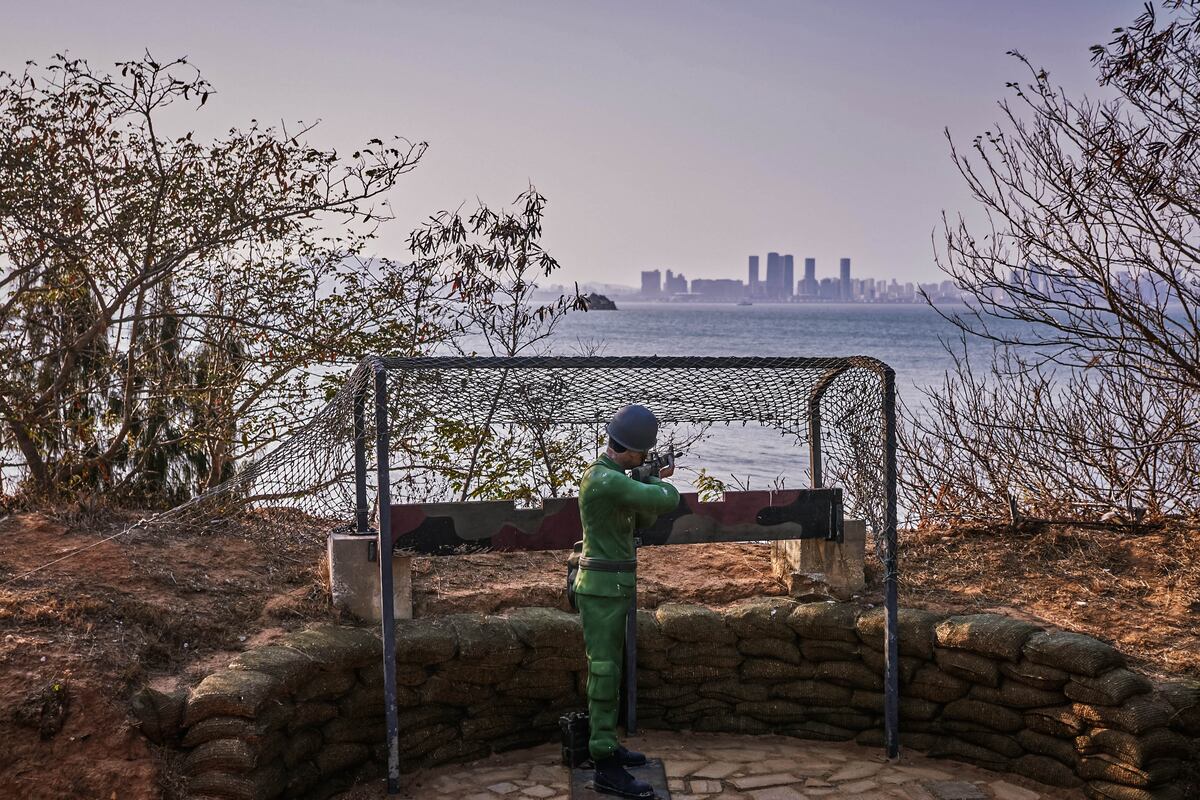
MELBOURNE, Australia — Taiwan is continuing efforts to develop asymmetrical defense capabilities as it tries to offset the increasing gap between its own forces and China’s military strength, according to its newly released defense report.
Taiwan accuses China of building up its capabilities to mount a multidomain offensive against the island. Taiwan’s National Defense Report for 2021, which was released last week in Chinese and English, said Beijing’s anti-access, area denial campaign to prevent outside assistance forces from reaching the island is nearly complete.
The report also outlined how Taiwan will improve its reserve forces — following reports of poor training and equipping of these units — and better integrate them with the country’s regular forces in the event of an invasion from China.
Taiwan is in the midst of efforts to transform its military into a combined arms force with capabilities to work together across domains. One of the key planks of this effort is the restructuring of its military into regional commands with forces from all three main services under each command.
The regional commands would mount an asymmetric defense of Taiwan during war. China views the self-ruling island as a rogue province, and Taiwan seeks to disrupt a potential future invasion before forces make landfall or even while an invasion force is assembling.
The strategy seeks to use the natural barrier of the Taiwan Strait as a force multiplier, with Taiwan’s military continuing to increase its weapons ranges to put Chinese airfields, ports and assembly areas that are directly across the waterway within their reach, thereby forcing Chinese troops to assemble farther away, lengthening their sea transit.
The U.S. cleared Taiwan to acquire ground-launched Boeing RGM-84 Harpoon missiles, and the Asian nation is working on developing a range of standoff land-attack and anti-ship missiles. These include the air-launched Wan Chien land-attack weapon; the ship- and ground-launched Hsiung Feng II, IIE and III anti-ship missiles; and short range ballistic missiles.
Taiwan’s reserve forces are manned by former conscripts who finished their full-time military service. Those forces were previously reported as badly trained, underfunded and poorly equipped.
The report reiterated that Taiwan’s reserve forces will operate with regular forces both in peacetime and wartime, and that the country will realign reserve unit organizations in order to enhance the effectiveness of joint command and control.
These efforts come as the Taiwanese Army stood up two additional infantry brigades and a reserve force training center this year, which is to be followed by three more infantry brigades and two more reserve force training centers by 2024.
The Defense Ministry also changes its authority to call up reserve forces, changing the time frame from the previous five to seven days every two years to the current 14 days annually.
Taiwan pledged to better equip its reserve forces by making the standard equal to that of regular forces. This will be done by evenly distributing equipment between the two groups, withdrawing obsolete equipment currently in reserve inventories, transferring excess equipment from regular units, repairing and retrofitting the current inventory, and increasing materiel acquisition.
Mike Yeo is the Asia correspondent for Defense News.
澳大利亚墨尔本——台湾最新发布的国防报告显示,台湾正继续努力发展非对称防御能力,以弥补自身军事力量与中国军事实力之间日益扩大的差距。
台湾指责中国正在增强能力,准备对台湾发动多域进攻。台湾上周发布的2021年国防报告(中英文版)指出,北京旨在阻止外部援助力量进入台湾的反介入/区域拒止作战行动已接近完成。
该报告还概述了台湾将如何改进其后备部队(此前有报道称这些部队的训练和装备不足),并在中国入侵的情况下更好地将其与该国的正规军融合起来。
台湾正致力于将其军队转型为具备跨领域协同作战能力的联合兵种部队。这项转型的关键举措之一是将军队结构调整为区域司令部,每个司令部下辖来自三军的部队。
战时,各区域司令部将对台湾实施非对称防御。中国视这个自治岛屿为叛离省份,而台湾则力图在敌军登陆前,甚至在敌军集结之际,阻止未来可能发生的入侵。
该战略旨在利用台湾海峡的天然屏障作为力量倍增器,台湾军方不断扩大其武器射程,使正对海峡对岸的中国机场、港口和集结区处于其射程之内,从而迫使中国军队在更远的地方集结,延长其海上运输时间。
美国已批准台湾采购波音公司生产的陆基RGM-84“鱼叉”导弹,而台湾正在研发一系列防区外陆攻和反舰导弹。这些导弹包括空射型“万战”陆攻导弹;舰载和陆基型“雄风II”、“雄风IIE”和“雄风III”反舰导弹;以及短程弹道导弹。
台湾的后备部队由已完成全职兵役的前义务兵组成。此前有报道称,这支部队训练不足、经费匮乏、装备落后。
报告重申,台湾的后备部队将在和平时期和战争时期与正规部队一起行动,并且台湾将调整后备部队的组织结构,以提高联合指挥和控制的效率。
台湾陆军今年增设了两个步兵旅和一个后备部队训练中心,并计划到 2024 年再增设三个步兵旅和两个后备部队训练中心。
国防部还改变了征召预备役部队的权限,将之前每两年征召五到七天的时间改为目前的每年征召十四天。
台湾承诺将提升后备部队的装备水平,使其与正规部队的装备水平持平。具体措施包括:在两军之间平均分配装备;淘汰后备部队库存中的过时装备;从正规部队调拨多余装备;维修和改造现有库存;以及增加物资采购。
Mike Yeo 是《防务新闻》的亚洲通讯员。