NATO’s newfound knack for hefty bulk buys has arms maker RTX perked up北约新近掌握的大宗采购技巧让武器制造商RTX兴奋不已
Company executive Tom Laliberty believes the alliance's joint purchasing model could also work in areas other than air-defense interceptors.
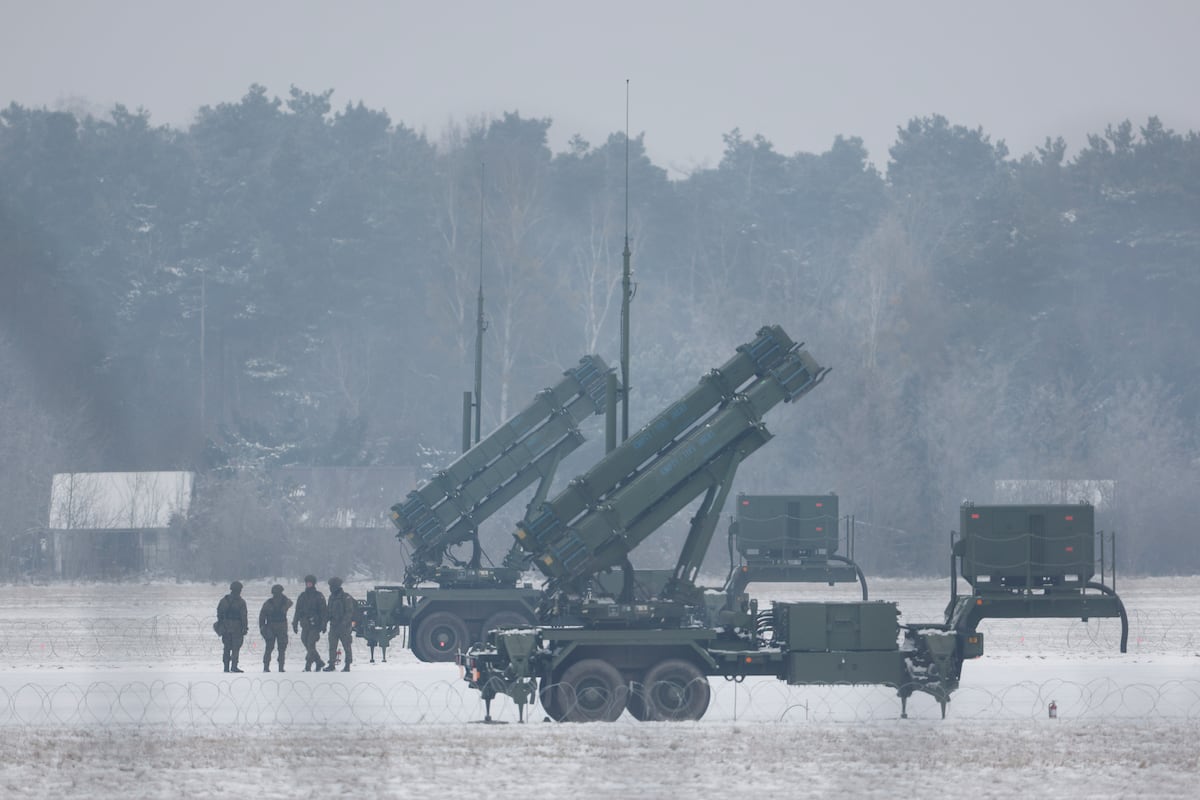
LONDON — NATO has increasingly pursued an aggregated business model for the procurement of air defense weapons for member states, a framework that RTX’s Raytheon considers promising for other armament programs.
The performance of the company’s Patriot systems in Ukraine has prompted sustained interest in the capability across Europe, where a significant number of nations have undertaken the modernization of their air defenses.
While some countries with higher defense budgets can afford to independently cover the costly price tag, others have had to look to their partners for support.
In January, the NATO Support and Procurement Agency ordered up to 1,000 Patriot Advanced Capability-2 Guided Enhanced Missiles-Tactical from MBDA and Raytheon’s joint venture Comlog, on behalf of Romania, Spain, Germany and the Netherlands.
Tom Laliberty, president of land and air defense systems at RTX’s Raytheon, touched on this joint procurement, an initiative he says the alliance is attempting to do with other weapon acquisitions.
“NATO aggregated the demand for these four countries, which is helpful for them to bear the costs for the PAC-2 missiles and allows it to determine who they will go to first based on urgency – it is replicating this model with the Stinger systems, widely used in Ukraine,” Laliberty told reporters at the Farnborough International Airshow here.
Earlier this month, NATO announced the signature of a $700 million contract in the name of several member states for the purchase of additional Stinger portable surface-to-air weapons.
When asked if the procurement model was desirable for the defense company, Laliberty referred to the blueprint as a successful one that the military alliance is “attempting to make a best-practice and do with other weapons.”
Currently, 19 countries operate Patriot, with Ukraine being the latest one, the defense executive said, and each plays a role in providing feedback that informs part of the upgrades the air defense system will get.
“We have these 19 partners, part of a share fair program, that contribute feedback back to us and the U.S. Army that we then use to update our softwares and threat databases – Ukraine is finding benefits in this, with our ability to take that data and upgrade the system so it is better prepared to face all sorts of threats in the rest of the world,” Laliberty said.
He noted that a growing challenge in recent years has been the ability among adversaries to carry out higher-level coordinated attacks using a greater variety of weapons, including low-cost unmanned aerial systems, ballistic missiles, hypersonic missiles and low-flying cruise missiles.
“When you look at all of that and think about how to effectively defend against this – you need layers of defense and tight coordination between those layers to ensure that you’re using each one of them and the capabilities in the most effective way,” Laliberty said.
Elisabeth Gosselin-Malo was a Europe correspondent for Defense News. She covers a wide range of topics related to military procurement and international security, and specializes in reporting on the aviation sector. She is based in Milan, Italy.
伦敦——北约越来越倾向于采用集中式商业模式为成员国采购防空武器,RTX 的雷神公司认为这种模式对其他武器项目也很有前景。
该公司“爱国者”系统在乌克兰的表现引发了欧洲各地对该能力的持续关注,欧洲许多国家都已着手对其防空系统进行现代化改造。
虽然一些国防预算较高的国家能够独立承担这笔高昂的费用,但其他国家不得不寻求伙伴国的支持。
1 月,北约支持与采购局代表罗马尼亚、西班牙、德国和荷兰,向 MBDA 和雷神公司的合资企业 Comlog 订购了多达 1000 枚“爱国者”先进能力-2 型战术制导增强导弹。
雷神公司(RTX)陆空防御系统总裁汤姆·拉利伯蒂谈到了这项联合采购计划,他表示,联盟正试图在其他武器采购中推行这项计划。
拉利伯蒂在范堡罗国际航展上告诉记者:“北约汇总了这四个国家的需求,这有助于它们承担PAC-2导弹的费用,并使其能够根据紧迫性决定首先向谁提供导弹——它正在用在乌克兰广泛使用的毒刺系统复制这种模式。”
本月初,北约宣布以几个成员国的名义签署了一份价值 7 亿美元的合同,用于购买更多的毒刺便携式地对空武器。
当被问及这种采购模式是否符合国防公司的需求时,拉利伯蒂称该蓝图是一个成功的蓝图,军事联盟“正试图将其作为最佳实践并应用于其他武器”。
这位国防高管表示,目前已有 19 个国家部署了“爱国者”防空系统,乌克兰是最新加入的国家,每个国家都在提供反馈意见方面发挥作用,这些反馈意见将为防空系统的升级提供信息。
拉利伯蒂说:“我们有 19 个合作伙伴,他们参与了一项公平共享计划,向我们和美国陆军提供反馈,我们利用这些反馈来更新我们的软件和威胁数据库——乌克兰从中受益匪浅,我们能够利用这些数据升级系统,使其更好地应对世界其他地区的各种威胁。”
他指出,近年来日益严峻的挑战是,敌对双方能够使用更多种类的武器(包括低成本无人机系统、弹道导弹、高超音速导弹和低空巡航导弹)进行更高级别的协同攻击。
“当你审视所有这些因素,并思考如何有效地防御这种情况时,你会发现你需要多层防御,并且这些层级之间需要紧密协调,以确保你以最有效的方式使用每一层防御及其能力,”拉利伯蒂说。
伊丽莎白·戈斯林-马洛曾任《防务新闻》欧洲通讯员。她的报道涵盖军事采购和国际安全等广泛领域,尤其擅长航空领域的报道。她常驻意大利米兰。