Senate bill mandates deeper cooperation with Mexico to fight fentanyl参议院法案要求与墨西哥深化合作,共同打击芬太尼。
The bipartisan legislation is the latest in a series of congressional proposals to crack down on fentanyl trafficking.
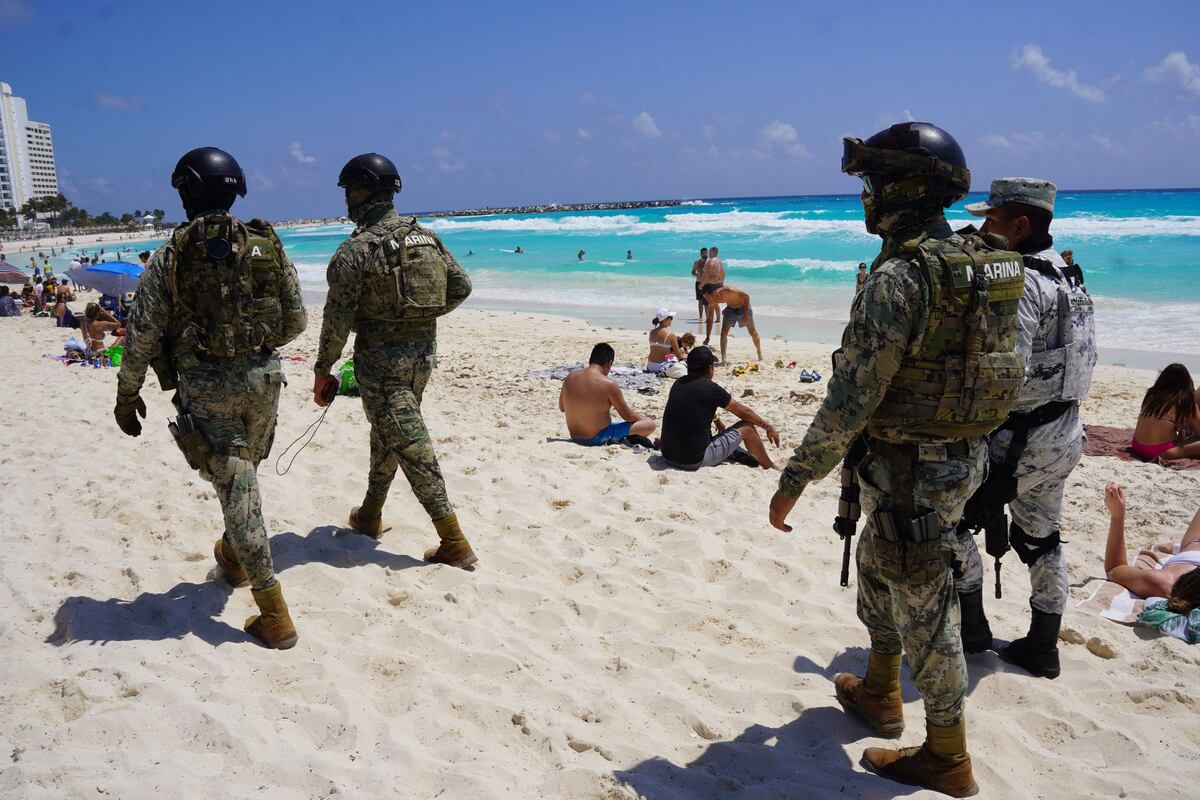
WASHINGTON ― The Senate’s annual defense policy bill includes a provision that would require enhanced cooperation between the U.S. and Mexican militaries to crack down on the illicit trafficking of fentanyl, the leading cause of drug overdoses in the United States.
The bipartisan legislation is the latest in a series of congressional proposals to crack down on fentanyl trafficking, even as Mexican President Andrés Manuel López Obrador remains hesitant to acknowledge the issue, and as nearly all Republican presidential candidates advocate for the unilateral use of force against Mexico-based drug cartels.
Sens. Joni Ernst, R-Iowa, and Tim Kaine, D-Va., added their Disrupt Fentanyl Trafficking Act as an amendment to the fiscal 2024 National Defense Authorization Act when the Senate Armed Services Committee advanced it in June.
“I’m taking the national security threat of fentanyl seriously by stemming this problem at its source: Mexican transnational criminal organizations,” Ernst told Defense News in a statement this week. “Mexico’s President Andrés Manuel López Obrador has refused to acknowledge Mexico’s role in the crisis, and the Biden administration has failed to fully engage Mexico and take this crisis seriously.”
López Obrador won his 2018 presidential campaign vowing to deescalate the war on drugs and preserve Mexican sovereignty, using the slogan “abrazos, no balazos,” or “hugs, not bullets.” He has refused to acknowledge that fentanyl production takes place in Mexico, and in March blamed the crisis on familial disintegration in the U.S. as well as “a lack of love, of brotherhood, of hugs.”
A January 2020 report by the U.S. Drug Enforcement Administration identified Mexico and China as primary sources for fentanyl trafficked into the United States, and said India is emerging as a source for related chemicals. China suspended fentanyl cooperation with the U.S. after former House Speaker Nancy Pelosi, D-Calif., visited Taiwan last year .
Mexican Defense Secretary Luis Cresencio Sandoval González acknowledged the issue in April, reporting that authorities have seized 37 fentanyl pill manufacturing sites in Mexico since López Obrador took office.
Kaine said his legislation with Ernst in the defense bill “is an urgently needed step forward in our work to protect Americans from fentanyl by utilizing Pentagon tools like counter-drug intelligence and involving Mexico as an active partner to disrupt Mexican cartel activity.”
The bill would require U.S. Defense Secretary Lloyd Austin “to enhance cooperation” with Mexican defense officials “to target, disrupt and degrade transnational criminal organizations within Mexico that traffic fentanyl.” It would also require a report on these efforts as well as a Pentagon strategy to disrupt fentanyl trafficking.
“While the current rhetoric from Mexico City may cause some dissonance and headlines, the actual, on-the-ground relationship between [the Mexican Secretariat of National Defense] and [the Mexican Navy] with the U.S. [Defense Department] has grown closer in the past 15 years than it was in the past 70 years,” said Inigo Guevara, the former director of analysis for Mexico’s Office of the National Security Council, who is now a managing director at Janes Strategic Services.
Guevara said the “ ‘abrazos, no balazos’ security policy has prevented the Mexican security forces from fully engaging in the fight against criminal organizations as they did in the last two previous administrations,” but noted that “recent orders for the Mexican armed forces to re-engage on this issue has prompted a flurry of operations at Mexico’s ports.”
Mexican President Andrés Manuel López Obrador speaks July 1, 2023, in Mexico City, Mexico. (Hector Vivas/Getty Images)
The two leading Republican presidential candidates , former president Donald Trump and Florida Gov. Ron DeSantis, have threatened a naval blockade on Mexican ports to stop the precursor chemicals for fentanyl from getting into Mexico.
Trump and DeSantis have also pledged to use military force against Mexico-based cartels, and the other leading Republican candidates have joined them in doing so. That includes former Vice President Mike Pence, former Gov. Nikki Haley and Sen. Tim Scott, R-S.C.
Rep. Dan Crenshaw, R-Texas, introduced a bill in January that would authorize the president to use military force in Mexico against cartels. It currently has 20 Republican co-sponsors, including two who lead panels on the House Armed Services Committee: Reps. Mike Waltz of Florida and Jack Bergman of Michigan.
Juan Pablo Bickel, a Latin America research analyst at the International Institute for Strategic Studies, expressed doubt that the proposals to use military force in Mexico would advance, but warned the rhetoric could further complicate bilateral security relations and other areas, such as trade.
“One of the biggest problems there is trust between the two sides,” Bickel told Defense News. “The rhetoric will just exacerbate [López Obrador] being apprehensive and trying not to cooperate.”
Bickel said another congressional proposal to give U.S. Southern Command jurisdiction over military relations with Mexico would fill a gap that would allow enhanced information sharing for counter-drug activities between the U.S. and its Latin American partners.
The House’s Pentagon spending bill, which the Appropriations Committee advanced along party lines in June, would move Mexico from U.S. Northern Command to U.S. Southern Command.
But Guevara argued that “Mexico’s presence in NORTHCOM, including physical liaison offices and desks, has been a major factor in U.S.-Mexico rapprochement over the past 20 years.”
“The reallocation of Mexico to SOUTHCOM would create a bureaucratic and logistical nightmare, as well as severely damage that relationship,” he warned.
Bryant Harris is the Congress reporter for Defense News. He has covered U.S. foreign policy, national security, international affairs and politics in Washington since 2014. He has also written for Foreign Policy, Al-Monitor, Al Jazeera English and IPS News.
华盛顿——参议院年度国防政策法案包含一项条款,要求加强美国和墨西哥军队之间的合作,以打击芬太尼的非法贩运,芬太尼是美国药物过量致死的主要原因。
这项两党共同提出的立法是国会为打击芬太尼贩运而提出的一系列提案中的最新一项,尽管墨西哥总统安德烈斯·曼努埃尔·洛佩斯·奥夫拉多尔仍然不愿承认这个问题,而且几乎所有共和党总统候选人都主张单方面对墨西哥境内的贩毒集团使用武力。
参议员乔尼·恩斯特(共和党,爱荷华州)和蒂姆·凯恩(民主党,弗吉尼亚州)将他们的《打击芬太尼贩运法案》作为修正案添加到 2024 财年国防授权法案中,当时参议院军事委员会在 6 月份推进了该法案。
“我严肃对待芬太尼对国家安全的威胁,正从源头上遏制这个问题:墨西哥跨国犯罪组织,”恩斯特本周在一份声明中告诉《防务新闻》。“墨西哥总统安德烈斯·曼努埃尔·洛佩斯·奥夫拉多尔拒绝承认墨西哥在危机中的角色,而拜登政府未能与墨西哥充分接触,也未能认真对待这场危机。”
洛佩斯·奥夫拉多尔在2018年总统竞选中承诺缓和毒品战争并维护墨西哥主权,他的竞选口号是“拥抱,而非子弹”。他拒绝承认芬太尼在墨西哥生产,并在3月份将这场危机归咎于美国家庭的解体以及“缺乏爱、兄弟情谊和拥抱”。
美国缉毒局2020年1月的一份报告指出,墨西哥和中国是芬太尼走私到美国的主要来源地,并称印度正在成为相关化学品的来源地。去年,美国前众议院议长、加州民主党众议员南希·佩洛西访问台湾后,中国暂停了与美国在芬太尼问题上的合作。
墨西哥国防部长路易斯·克雷森西奥·桑多瓦尔·冈萨雷斯在 4 月份承认了这个问题,并报告说,自洛佩斯·奥夫拉多尔上任以来,当局已在墨西哥查获了 37 个芬太尼药丸制造点。
凯恩表示,他与恩斯特在国防法案中提出的立法“是我们保护美国人免受芬太尼侵害工作中迫切需要的一步,该工作利用了五角大楼的反毒品情报等工具,并让墨西哥作为积极的合作伙伴来打击墨西哥贩毒集团的活动。”
该法案将要求美国国防部长劳埃德·奥斯汀“加强与墨西哥国防官员的合作”,以“打击、瓦解和削弱在墨西哥境内贩运芬太尼的跨国犯罪组织”。法案还将要求提交一份关于这些努力的报告,以及五角大楼打击芬太尼贩运的战略。
“尽管墨西哥城目前的言论可能会引起一些不和谐和头条新闻,但过去15年来,墨西哥国防部和墨西哥海军与美国国防部之间的实际、实地关系比过去70年都要密切,”墨西哥国家安全委员会前分析主任、现任简氏战略服务公司总经理伊尼戈·格瓦拉说道。
格瓦拉表示,“‘拥抱,不行动’的安全政策阻碍了墨西哥安全部队像前两届政府那样全面参与打击犯罪组织的斗争”,但他指出,“最近命令墨西哥武装部队重新参与这一问题,引发了墨西哥港口的一系列行动”。
墨西哥总统安德烈斯·曼努埃尔·洛佩斯·奥夫拉多尔于 2023 年 7 月 1 日在墨西哥墨西哥城发表讲话。 (赫克托·维瓦斯/盖蒂图片社)
两位领先的共和党总统候选人,前总统唐纳德·特朗普和佛罗里达州州长罗恩·德桑蒂斯,威胁要对墨西哥港口实施海上封锁,以阻止芬太尼的前体化学品进入墨西哥。
特朗普和德桑蒂斯也承诺将动用武力打击墨西哥境内的贩毒集团,其他主要的共和党候选人也加入了他们的行列。其中包括前副总统迈克·彭斯、前州长妮基·黑莉和参议员蒂姆·斯科特。
今年1月,德克萨斯州共和党众议员丹·克伦肖提出一项法案,授权总统在墨西哥动用武力打击贩毒集团。该法案目前已有20位共和党议员联署,其中包括两位众议院军事委员会的主席:佛罗里达州众议员迈克·沃尔兹和密歇根州众议员杰克·伯格曼。
国际战略研究所拉丁美洲研究分析师胡安·巴勃罗·比克尔表示,他对在墨西哥使用武力的提议能否推进表示怀疑,但他警告说,这种言论可能会进一步使双边安全关系和其他领域(如贸易)复杂化。
比克尔告诉《防务新闻》:“双方最大的问题之一是信任问题。这种言辞只会加剧洛佩斯·奥夫拉多尔的担忧,让他更不愿意合作。”
比克尔表示,国会提出的另一项提案,即赋予美国南方司令部对美墨军事关系的管辖权,将填补一个空白,从而加强美国与其拉丁美洲伙伴在禁毒活动方面的信息共享。
众议院拨款委员会在 6 月份按党派路线推进的五角大楼支出法案,将把墨西哥从美国北方司令部移交给美国南方司令部。
但格瓦拉认为,“墨西哥在北方司令部的存在,包括设立实体联络处和办公桌,是过去 20 年来美墨关系缓和的一个主要因素。”
他警告说:“将墨西哥重新划归南方司令部管辖,将会造成官僚和后勤方面的噩梦,并严重损害美墨关系。”
布莱恩特·哈里斯是《防务新闻》的国会记者。自2014年以来,他一直在华盛顿报道美国外交政策、国家安全、国际事务和政治。他还曾为《外交政策》、《Al-Monitor》、《半岛电视台英语频道》和IPS新闻撰稿。